2026 eFoil guides split the market by rider type and use case
The old idea of one best eFoil is fading fast. Buyers now split cleanly by rider type, from first-timers to wave chasers to travel riders.
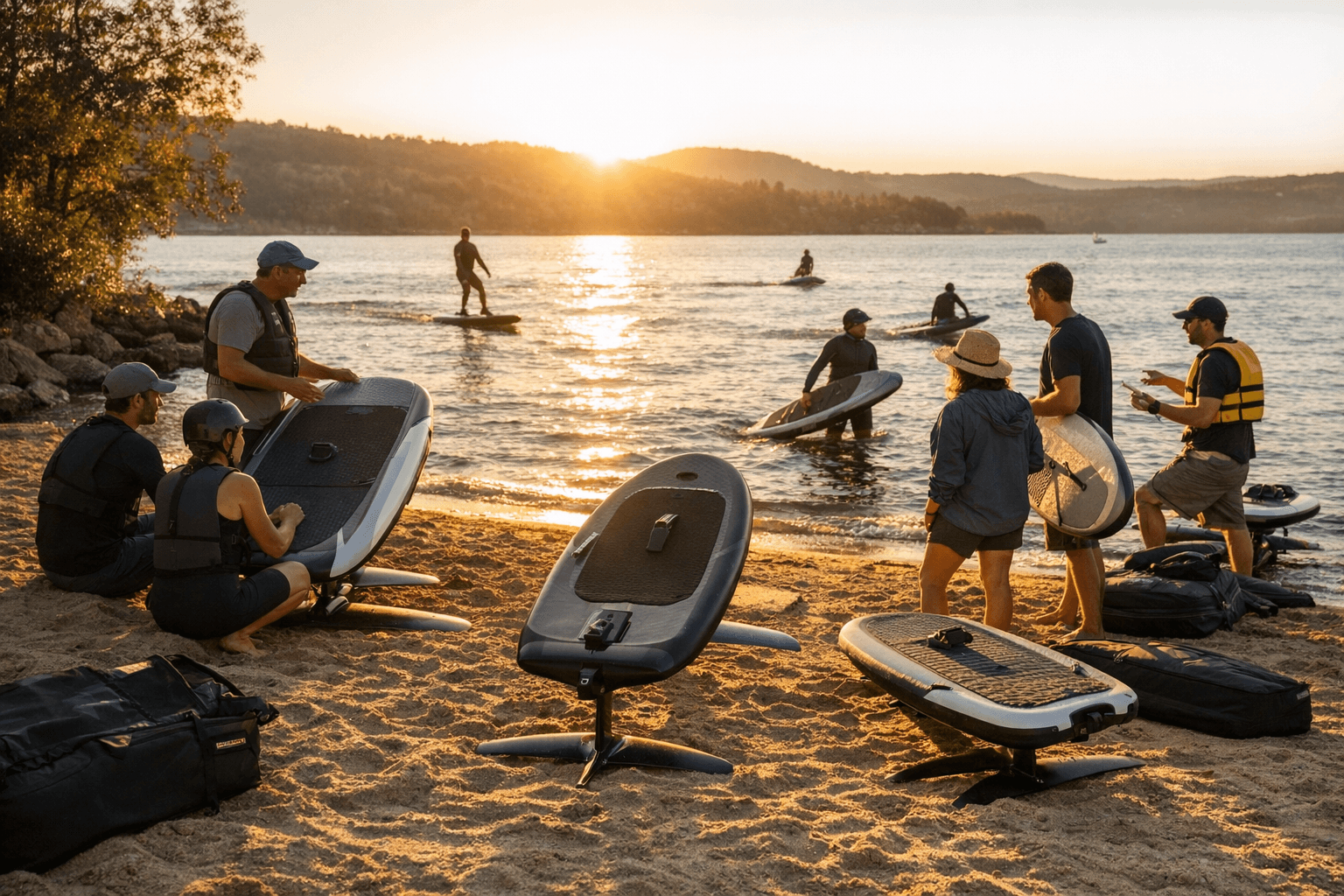
The old “one best eFoil” conversation is basically over. The boards that keep rising to the top now do so for very different reasons, and that is good news if you actually know how you ride, or how you want to ride.
The market has split into rider lanes
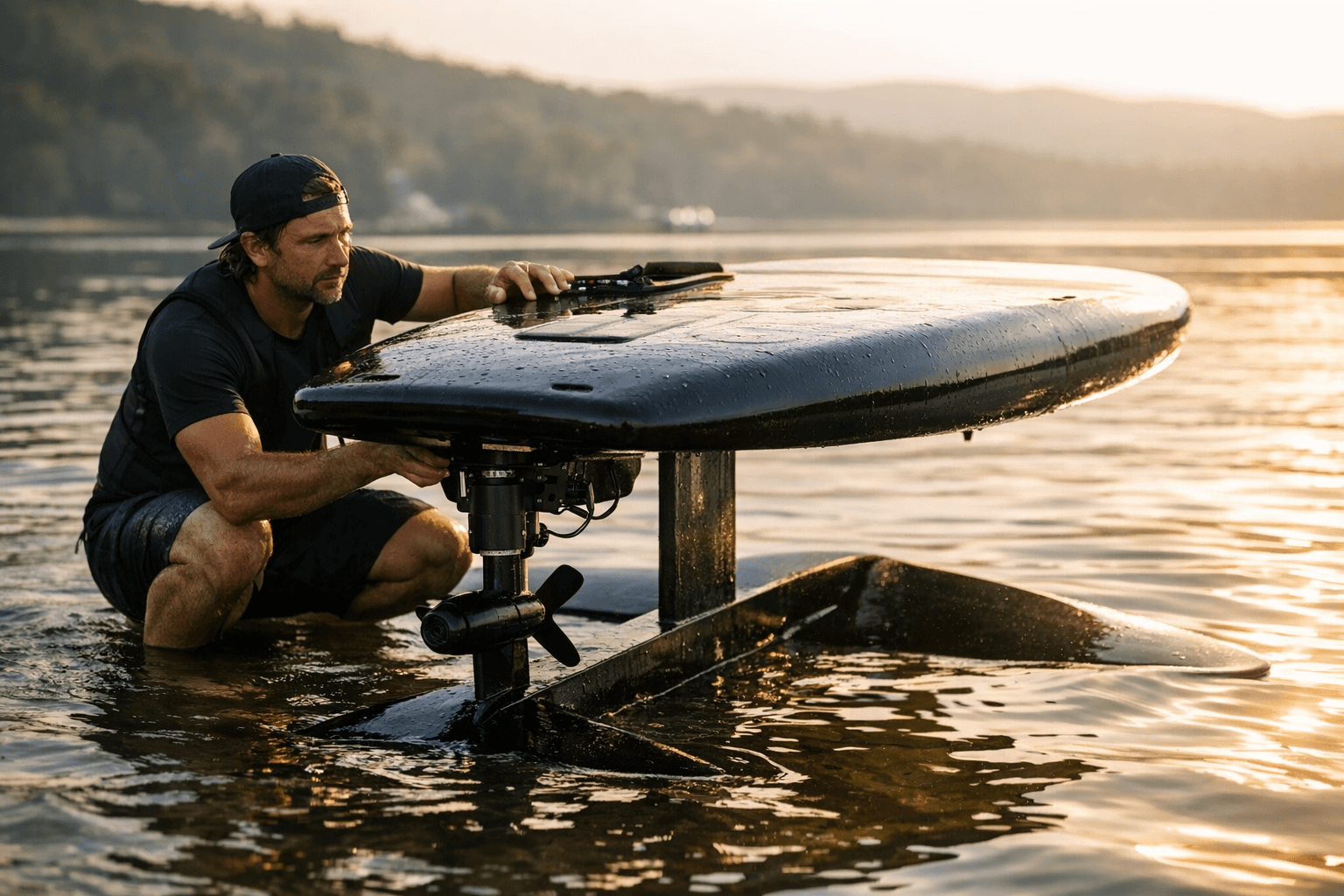
The clearest change in the category is that the useful questions are no longer “Which brand wins?” but “What kind of rider am I?” The current eFoil lineup spans beginner boards, travel-friendly builds, and premium performance models, all powered by the same basic formula: a motorized hydrofoil board with an onboard battery and a handheld remote. That means the real decision is no longer about whether eFoils work. It is about which version fits your size, your patience level, your luggage, and your long-term plans on the water.
That shift matters because the boards are no longer trying to be universal. Some are built to make the first 10 minutes less intimidating. Some are built to survive repeated loading, hauling, and airline abuse. Others are stripped toward lighter, sharper performance for riders who already know how to foil and want more response once the board lifts clear.
If you are buying your first eFoil, stability comes first
For a first-time buyer, the most important spec is not top speed or flash. It is stability, board volume, and how easily you can get up and stay up without feeling like the board is punishing every mistake. That is why the value picks keep clustering around friendlier shapes, bigger platforms, and boards that make repeated get-ups less draining.
Flite’s AIR keeps surfacing as the value pick for beginners because it aims at exactly that lane: approachable, easier to learn on, and less intimidating than the sportier end of the market. Waydoo’s EVO PRO Plus lands in a similar place, but with a budget-conscious angle that makes sense if you want to get into eFoiling without paying for features you will not fully use on day one. If you are teaching yourself, or buying for a partner who is brand new to foiling, those are the boards that make the learning curve feel manageable instead of expensive.
The tradeoff is simple. More stable boards are usually less twitchy and less playful once you are comfortable. That is not a flaw, it is the cost of making the first sessions easier and the first takeoffs more repeatable.
If you travel, portability becomes part of the performance
Travel riders have a different headache. Weight, portability, and durability suddenly matter as much as ride quality, because the board has to survive transport before it ever touches water. If you are stuffing gear into a truck, checking it on a flight, or moving it between launches, the best board is the one that does not become a second job.
That is where the category’s more travel-friendly options start to make sense. The broader market now acknowledges that some riders care less about the ultimate race feel and more about a board that can be moved, stored, and protected without drama. Travel-friendly boards are not always the lightest on paper, but the better ones balance compact packing, tough construction, and a setup that does not turn every session into a workshop.
This is also where upgrade path matters. A rider who starts with portability in mind may later want a more aggressive wing, a different mast, or a board with a more performance-driven layout. The strongest brands are the ones that let you grow without forcing a full reset.
If you want surf feel, look at response, range, and airborne behavior
The surf-feel crowd is chasing a different sensation entirely. Once the board is airborne, what matters is how the foil responds to weight shifts, how much range you really have before the session turns into a recharge countdown, and whether the board feels alive or numb underfoot.
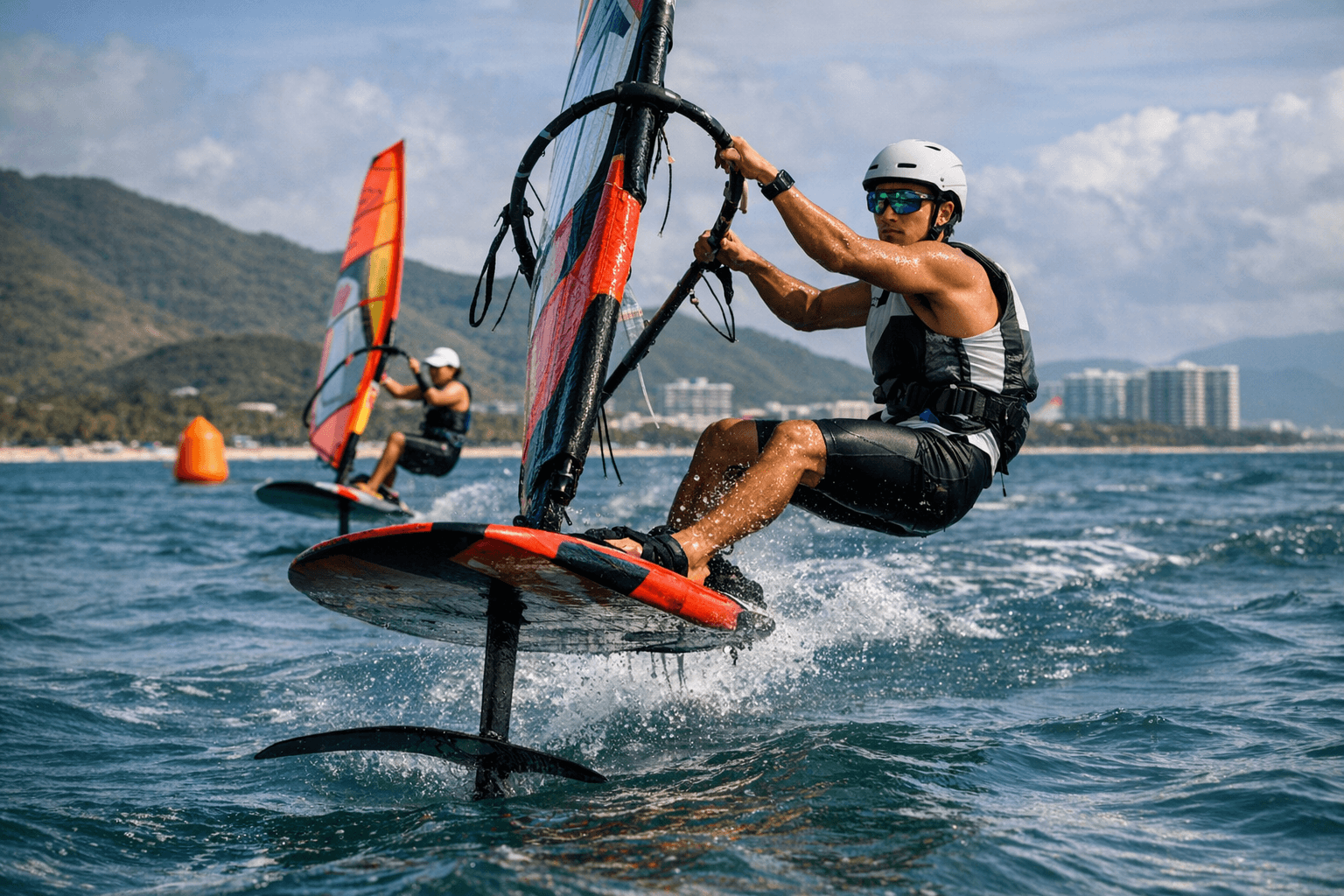
That is why Flite Ultra L2 keeps getting singled out for expert riders and wave-riding. It is aimed at the end of the spectrum where precision matters more than forgiveness. If you already know how to manage lift, pump, and line choice, a more responsive platform can make the ride feel closer to actual foil surfing than to a floating scooter with a prop.
This is the lane where people most often overbuy the wrong thing. A board with more power or more battery is not automatically better if what you really want is a cleaner, more surf-like feel. In this part of the market, the right board is the one that disappears under you and lets the foil do the talking.
If you already foil, assist systems may be the smarter upgrade
Not everyone needs a full eFoil. If you already foil and want added propulsion, Foil Drive and other assist systems make the most sense because they extend what you already know instead of replacing it. That is a different value proposition from buying a complete powered board, and for experienced riders it can be the more elegant one.
The appeal is obvious. You keep the board and foil feel you already like, but get help on takeoff, weaker days, or longer transitions. For riders who do not want to relearn balance from scratch, assist systems are a practical upgrade path rather than a new hobby disguised as one.
That distinction is important because it changes the purchase logic. If your goal is more sessions on marginal days, an assist setup can be the more targeted tool. If your goal is learning, teaching, or lending gear to new riders, a full eFoil still makes more sense.
Flite’s lineup shows how segmented the category has become
Flite’s own lineup tells the story better than any marketing slogan. With models such as ICON, PRO, ULTRA, AIR, Flitescooter, RACE, and Marc Newson, the brand is no longer pretending that one shape can satisfy every rider. Each model is aimed at a different level of experience, from easier access to high-performance use.
That modular approach is the real takeaway from the current market. It suggests the category has matured enough that buyers can choose by use case instead of brand hype alone. If you are new, stability and easy get-ups should lead the conversation. If you travel, portability and durability should set the terms. If you want surf feel, chase responsiveness and range. If you are already in the sport and just want more propulsion, an assist system may be the smartest money you can spend.
The best eFoil in 2026 is not a single board anymore. It is the one that matches the kind of sessions you actually want to have.
Know something we missed? Have a correction or additional information?
Submit a Tip