Essential Safety Checklist for Foiling: PPE, Protocols, E-foil Precautions
A practical safety checklist for foiling outlines PPE, on-water protocols, and e-foil electrical checks to reduce collisions, high-speed impacts, and battery hazards.
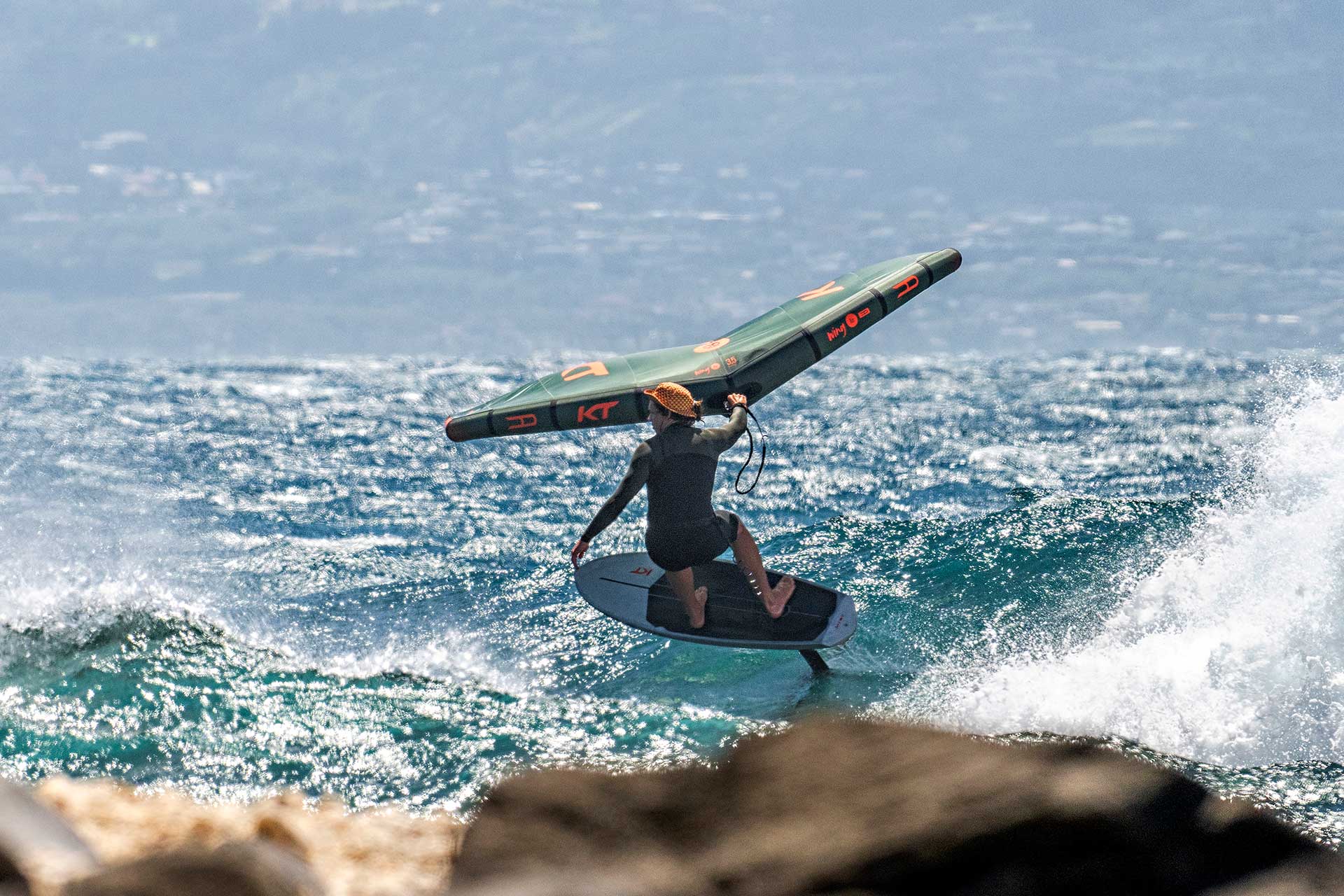
Foiling raises speed and reduces margin for error, so practical precautions matter for anyone who straps into a mast and wings. This checklist emphasizes personal protective equipment, on-water protocols, pre-session equipment checks, and emergency planning to cut the most common risks: collisions with your own foil or other users, high-speed water impacts, and electrical hazards on e-foils.
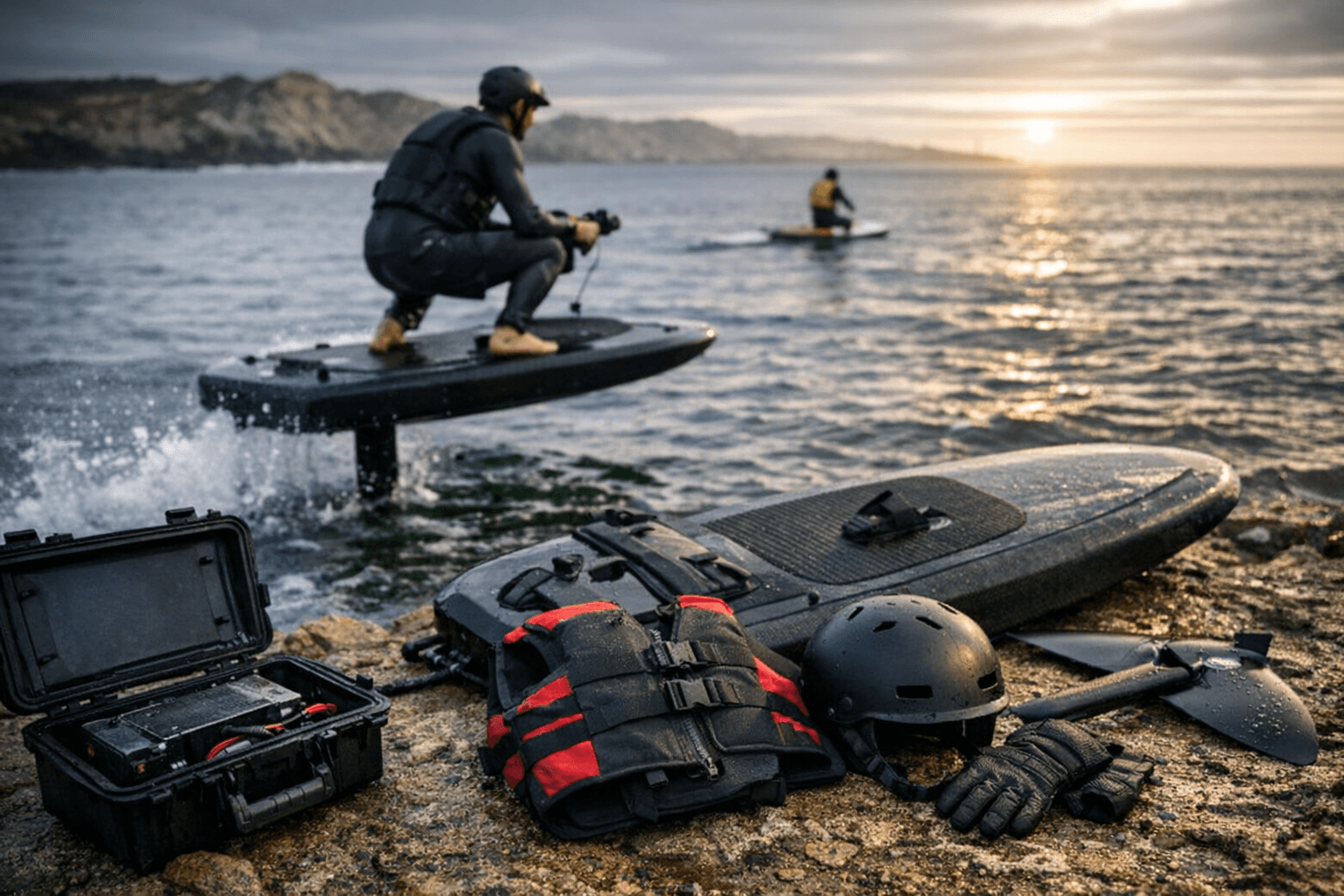
Start with PPE. Wear an impact vest with built-in protection for the sternum and ribs rather than a simple flotation vest, and choose a non-restrictive model that allows full range of motion. Use a helmet rated for water or multi-sport use; helmets are mandatory for beginners and recommended in fast or crowded conditions. For leash systems, fit surf foils and pump foils with quick-release systems; e-foil riders should use a tethered kill-switch plus a short safety leash for the board, and test the kill switch before every session. Neoprene booties or water shoes protect feet during launches and when handling boards ashore.
On-water protocols and etiquette reduce collision risk and help keep everyone safe. Scan the environment for swimmers, paddleboards, and other craft before dropping in and maintain a generous margin from shore, swimmers, and other users. When foiling fast, give more clearance than you think you need. Use a buddy system for first-time sessions so someone ashore or in the water can retrieve gear or call for help. Communicate intentions with nearby riders with simple phrases such as "I'm going out" or "I'm going to pump a run" and agree right-of-way behavior before crowded sessions. Respect no-foil zones and local regulations that limit foiling for safety or wildlife protection.
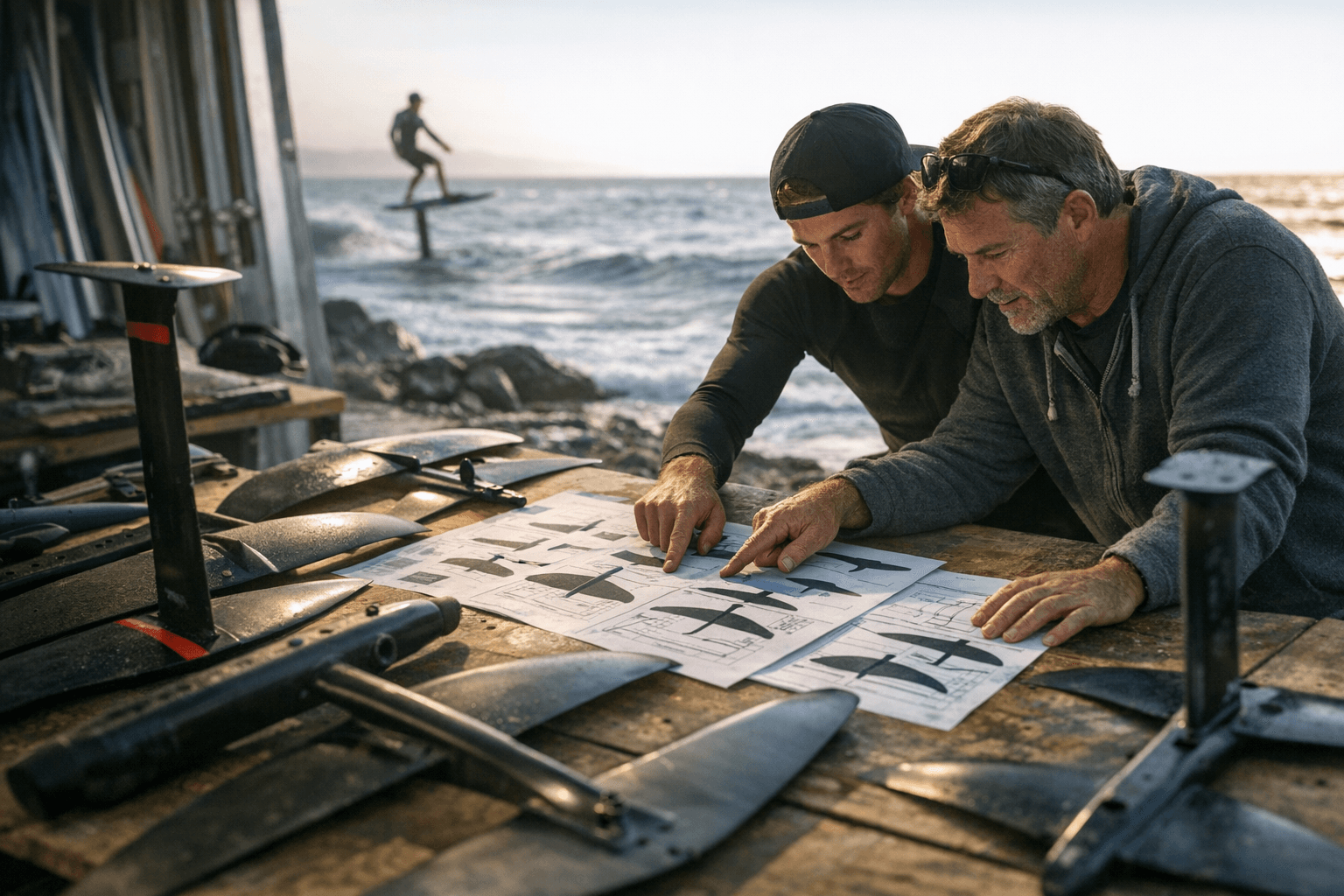
Equipment checks before every session catch many preventable failures. Inspect structural integrity for visible cracks, delamination, or loose fasteners in the mast, fuselage, wings, and board. For e-foils verify battery seals, the power-up sequence, reliable kill-switch and remote pairing, and that the battery is correctly seated and locked. Test board leash quick-release systems so you know how to operate them under stress.
Plan for emergencies. Have a strategy to get back to shore with a dead board by paddling, towing, or using the board as flotation. For e-foils practice power-off swim and board-recovery scenarios under safe supervision. Know local emergency numbers and the best pickup points for rescue or boat assistance.
Good habits and conservative progression dramatically reduce risk. Prioritise proper training with local schools or certified instructors, maintain your kit carefully, and make these PPE checks and on-water protocols part of your pre-session routine to keep foiling safe and fun.
Know something we missed? Have a correction or additional information?
Submit a Tip