Foil Assist Systems Explained: What Every Rider and Renter Should Know
Foil assist systems sit between a traditional foil and a full eFoil, delivering short bursts of electric power exactly when you need them most: takeoff, touchdown recovery, and session extension.

Foil-assist systems, sometimes called foil assist kits, e-masts, or FoilBoost/Foil Drive style devices, are rapidly becoming one of the most talked-about categories across hydrofoil sports. They are not eFoils, and they are not your standard unpowered foil setup. They occupy a deliberate middle ground, and understanding exactly where that middle ground sits changes how you approach every session, every rental decision, and every gear conversation at the water's edge.
What a Foil Assist System Actually Is
A foil assist is an electric motor system that mounts to your existing foil setup to help you get on foil faster and ride longer. The key word is "assist." It is an electric assist system designed to give you just the right amount of power when you need it, without replacing the pure, natural feel of foiling. Unlike an eFoil, where the motor does all the work, a foil assist simply helps you get up on foil faster, so you can seamlessly transition to riding waves, pumping, or harnessing the wind.
Think of the category as a spectrum. An eFoil provides continuous propulsion for the entire ride, while a foil assist gives you power only when you need it: during take-off, pumping, or catching waves. At the other end of the spectrum, a traditional foil is 100% rider-powered, demanding that every takeoff, every recovery, and every linking bump comes from your own effort. The foil assist sits squarely between the two, and that positioning is the entire point.
Rather than replacing technique or experience, foil assist systems function as a performance extension, enabling skilled riders to access more conditions, refine efficiency, and stay on foil longer.
How They Work
The motor provides power on demand through a wireless controller, giving you thrust when you need it while you still generate most of your speed through paddling, pumping, or wind power. Think of it as hybrid foiling. It works in harmony with your riding technique: when you are struggling to pop up on foil, a quick throttle pull gives you instant acceleration. Once you are up, you simply ease off the power and ride the waves, pump, or harness the wind, just like a traditional foil.
In real-world applications, this assist concept is most commonly delivered through integrated solutions such as a Foil Drive system. The Australian company Foil Drive is considered the pioneer of the foil assist system. Foil Drive launched in 2020 as the first universal electric assist system designed to work with any mast and any foil. The motor pod physically mounts between your board and mast, and Gen2 Foil Drive systems mount between your mast plate and the board, and because foil mast tracks are universal, this means it fits any board.
The streamlined motor and mounting system create minimal resistance when not in use, ensuring a smooth, uninterrupted ride. The entire assist system can weigh as little as 3.75 kg and is designed to assist your pop-up, then disappear out of the water for free foiling.
Who It Is For and When to Use It
Foil assist systems are not built for one rider type. The category applies broadly across disciplines and is especially valuable wherever an additional burst of propulsion expands what is physically possible on foil. The primary use cases are:
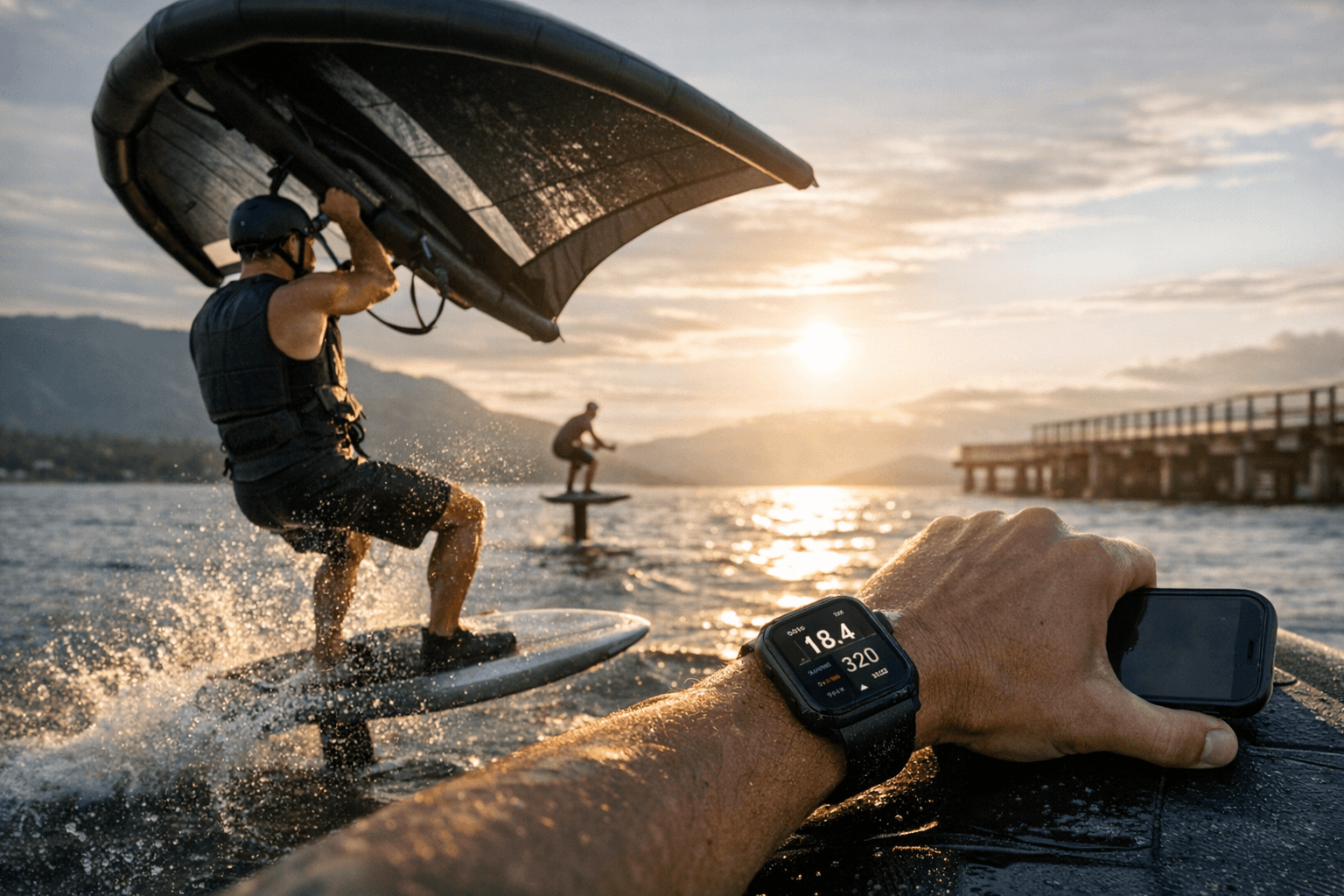
- Wing foiling in marginal wind: You can ride in 8-knot wind instead of waiting for 12 knots, or surf 1-2 foot conditions that normally would not work.
- SUP foiling for initial acceleration and lift: The assist helps you catch more waves per session and extends your riding window into smaller conditions.
- Downwind foiling to extend runs between bumps: In downwind, the assist is often used as a safety tool. If you are 5km offshore and lose the wind, you can motor home instead of paddling a foil board. It is also useful for linking bumps in variable conditions.
- Advanced foiling setups with smaller wings or higher-efficiency foils: Riders can use higher aspect foils and smaller wings, enjoying all the speed and reduced drag that would otherwise demand near-perfect technique to get airborne.
- Reduced physical load for fatigue or recovery: When you breach or touchdown, a quick burst gets you back on foil without restarting your entire run, conserving energy across the session.
Faster progression is another documented benefit: beginners get onto foil 3x more often per session because they are not burning energy on failed pop-up attempts, and more time on foil equals faster learning.

The Advantages, Stated Plainly
The case for adding foil assist to your quiver rests on four consistent benefits:
- Easier takeoff in difficult conditions: The assist removes the most energy-intensive moment in foiling, the pop-up, so marginal sessions become rideable sessions.
- Longer sessions with less fatigue: Energy you save on failed takeoffs and touchdowns compounds across a two-hour window on the water.
- Expanded riding range and flexibility: You can ride in a wider range of waves, wind, and swells without waiting for perfect conditions, making it ideal for prone, wing, and downwind foiling.
- Maintains the authentic foiling experience: Once airborne, you can ease off the power and let the foil take over, with minimal drag ensuring a smooth and efficient ride.
The system only uses power when needed, maximizing battery life and minimizing energy consumption compared to continuously running eFoils.
The Limitations Every Rider and Renter Needs to Know
Understanding what a foil assist system is not designed to do is just as important as knowing what it can do. Three constraints appear consistently across every implementation:
Not designed for continuous powered cruising. This is the sharpest distinction from a full eFoil. eFoils offer 60-90 minutes of continuous powered flight, while a foil assist gives 15-30 minutes if used like an eFoil, or 60-plus minutes if used for intermittent assistance during wave riding, wing foiling, or downwind runs. The system is optimized for bursts, not sustained motoring.
Requires battery management. Pump foiling drains batteries fastest: expect 40-50 minutes on a 249Wh battery because you are constantly on the throttle. Discipline matters. Wing foiling and downwind sessions, where the assist fires in short bursts, stretch runtime significantly further. Knowing your discipline and managing throttle use accordingly is an operational reality riders and renters must both plan around.
Adds complexity compared to pure unpowered foiling. Most foil assist systems mount the motor externally on the mast or inside a drive pod, which changes drag, swing weight, and how the setup feels during turns. Installation takes knowledge, and the electronics need to be managed correctly. Safe handling of the electronics is important, and batteries must be charged and maintained correctly to avoid defects.
Foil Assist vs. eFoil: The Clear Line
An eFoil is a complete, self-contained system with a motor built into the mast, while a foil assist is an add-on motor that attaches to your existing foil setup. System completeness is the obvious divide: eFoils are all-in-one packages, while foil assist requires you to already own a hydrofoil or purchase one separately. This makes eFoils easier for absolute beginners but limits versatility for experienced riders.
Weight tells part of the story too. Weight and portability differ significantly: a complete eFoil weighs 28-35 kg, while a foil assist setup weighs 18-24 kg total depending on your board and foil choice. The eFoil is a single heavy item; foil assist breaks down into modular pieces.
For riders who already own a quality foil setup, upgrading an existing board with a foil assist costs less than buying a full eFoil, making it an attractive option for riders on a budget.
A Note for Renters
If you are considering a rental session on a foil assist setup rather than a full eFoil, align your expectations carefully with the technology. Ask the rental operator which discipline the setup is configured for, confirm the battery state before you launch, and understand that the assist fires in bursts rather than propelling you continuously. You will still need enough foiling fundamentals to ride once you are up: the assist gets you there, but the foiling itself remains yours to execute. That is, ultimately, the whole appeal of the category.
Know something we missed? Have a correction or additional information?
Submit a Tip