Foil Drive and Lift X battle hurricane swell at Hatteras Inlet
Hatteras Inlet turned into a real-world filter for assist foils, with Foil Drive offering endurance and Lift X answering with powered range.
Hatteras Inlet as the pressure test
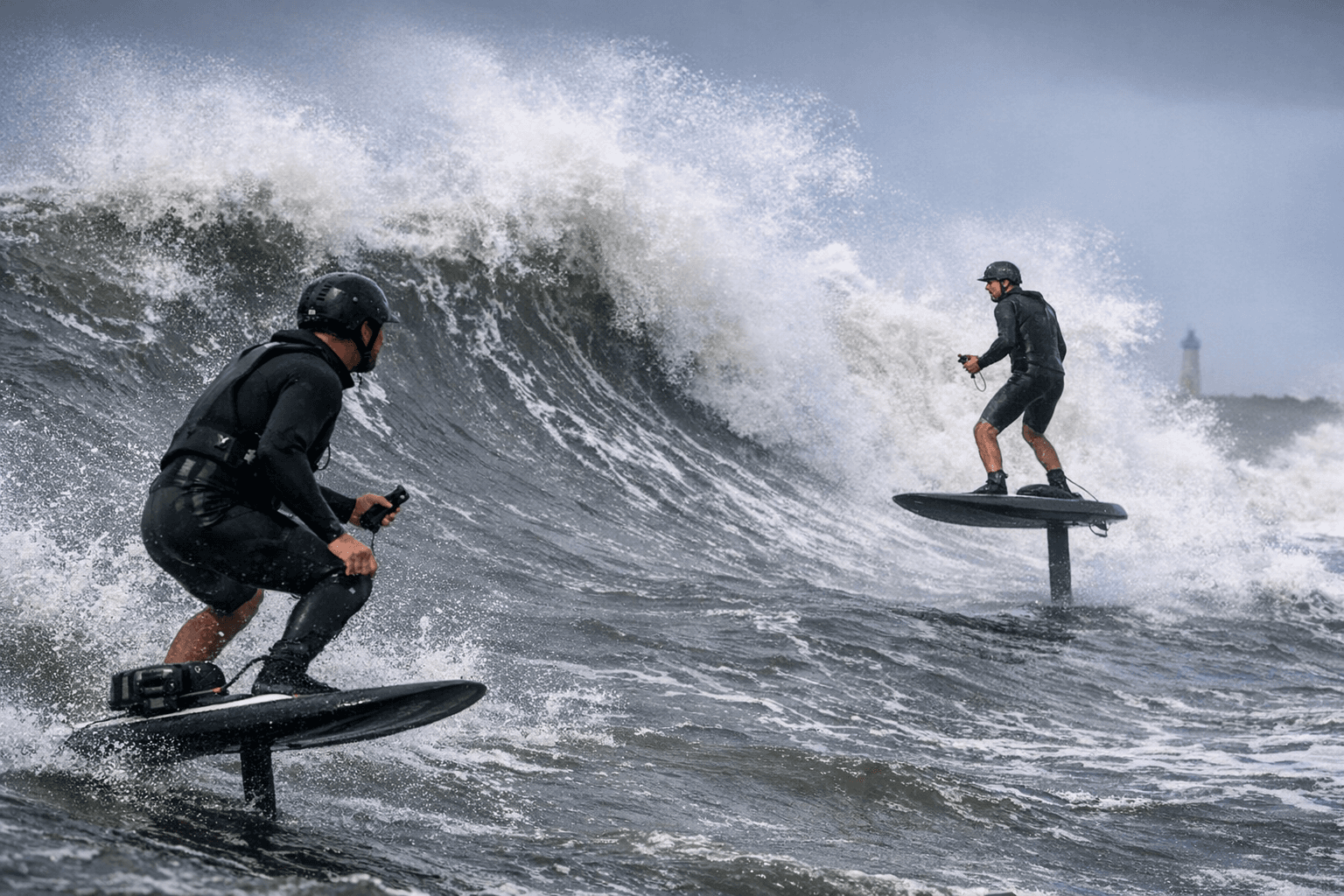
Hurricane swell at Hatteras Inlet is not the kind of water that flatters weak gear. The inlet is always moving, and tide, current, shoreline shape, and swell angle can all rewrite a session fast, which is exactly why this showdown matters more than a casual run through clean water. When Matt Nuzzo and Chris Rutledge went out under those conditions, the real question was not which setup looked cooler. It was which system gave a rider the best mix of power, timing, and reliability when the ocean was changing under their feet.
REAL Watersports framed the outing as a direct comparison between two very different ways of extending a foil session. Matt rode a Foil Drive Assist MAX setup, while Chris went with a Lift X. That pairing turns the day into a practical field test for anyone deciding whether they want a compact assist that stretches what a normal surf foil can do, or a more integrated electric platform built to push farther into powered flight. In a place like Hatteras Inlet, that distinction matters because the window to connect waves can be short and the cost of a missed takeoff can be a dead session.
Two systems, two philosophies
Foil Drive positions the Assist MAX as its flagship all-rounder, and that label fits the kind of rider it serves. The system runs on 40V, delivers up to 29kg, or 63.9 pounds, of maximum thrust, and is rated for average session time of up to 55 minutes. Those numbers point to a setup designed to give a rider enough punch to get moving, enough endurance to keep working a variable break, and enough flexibility to stay relevant when conditions are not handing out clean sets.
Lift’s LIFTX pushes the idea in a different direction. Lift describes it as a “first true hybrid eFoil” built for powered flight and surf foiling, with the ability to get upwind, chase swells, ride unassisted, or cruise. That makes the system feel less like a bolt-on assist and more like a platform meant to move with the energy on the water. In a storm swell environment, that matters because the rider who can cover ground and reposition quickly often gets the better wave count.
What Matt’s rig says about the Foil Drive approach
Matt’s setup was not just an assist unit bolted to a board. The gear list around the Foil Drive Assist MAX included Armstrong hardware, an integrated mast, foil components, and an Armstrong Surf Foilboard, which tells you the system is being treated as part of a serious surf foil build rather than a novelty accessory. That kind of rig tends to appeal to riders who already know how they want their foil to feel and want the motor to support, not replace, the session.
In real conditions, that can be the safer play when the goal is to squeeze every usable ride out of a shifting inlet. Foil Drive’s all-rounder identity fits riders who want assistance when they need it, but still want the board, mast, and foil to behave like a surf setup first. The Assist MAX’s 55-minute average session time and 29kg of thrust suggest a system that is built to last through changing tide windows without feeling like a one-note power tool.
What Chris’s rig says about the Lift X approach
Chris brought a Lift X setup, specifically a Lift X 4’8 with a High Prop Mast, and that detail is telling. Lift’s system is framed around powered progression, which makes it attractive to riders who want to blend eFoil capability with surf foiling and then use that extra range to get upwind or chase a line of swell. In a place like Hatteras, where the next wave may be a few hundred yards away and the current is trying to decide for you, that sort of mobility is a serious advantage.
The Lift X feels aimed at the rider who wants a more self-contained solution. It is not just about taking off from a standstill; it is about moving efficiently through water that does not stay cooperative for long. That can make it the better fit for someone who wants powered flight to open doors, then the option to go unassisted once the foil is alive and the line is working.
Why the Outer Banks makes the comparison sharper
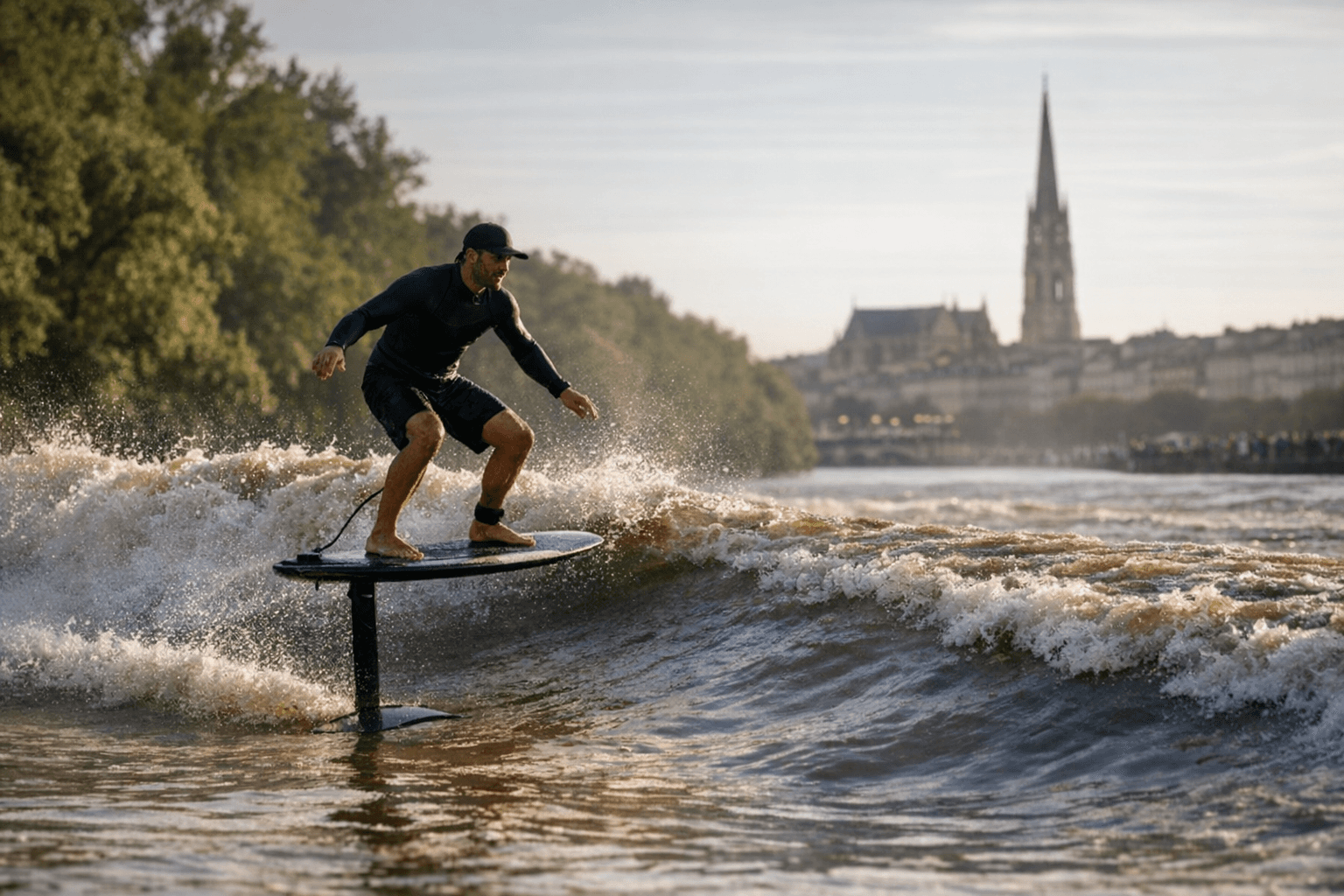
The Outer Banks is one of the best places in the country to make this argument because it offers both Atlantic Ocean surf and the shallow flatwater of Pamlico Sound. That mix has long made Cape Hatteras a magnet for foiling, and it explains why a session like this lands as more than a product demo. The same coast can support surf foiling, winging, and assisted riding, so the gear has to earn its keep across more than one type of water.
REAL Watersports is part of that story too. Founded in 2001 in Cape Hatteras, North Carolina, it says more than 50,000 students have gone through its kiteboarding, surfing, and foiling instructional programs. That gives the shop a kind of local authority that matters when it points riders toward gear in real conditions. This is not a detached theory exercise. It is a coastal test bed where equipment gets judged against the same currents and swell lines everyone else has to deal with.
Who each system suits when the swell is up
Seen through the lens of a hurricane swell day at Hatteras Inlet, Foil Drive looks like the better match for the rider who wants assist tech to feel like an extension of a surf foil. It suits the person who already reads waves well, wants help at the margins, and values a setup that can stay engaged through a whole session without turning the board into something unfamiliar. The Assist MAX’s thrust, voltage, and session time all point toward reliability when the timing window is tight.
Lift X, by contrast, looks like the stronger choice for the rider who wants more powered range and a more direct hybrid eFoil identity. It suits the foiler who wants to get upwind, chase energy, and then decide whether to ride with or without power once the line is set. In storm swell at Hatteras, that extra freedom can mean more waves, more repositioning, and less waiting on the ocean to hand you a perfect setup.
That is the real takeaway from the day at Hatteras Inlet. Assist foils are no longer just for calm-water experiments or beginner help. In the right hands, on the right coast, they are becoming the tools advanced riders use to turn a difficult swell into a longer, more usable, and more repeatable foil session.
Know something we missed? Have a correction or additional information?
Submit a Tip