Lift eFoils lean into modular performance and surf-inspired design
Lift’s eFoils still bet on tuning over simplicity, pairing surf-shaped boards with swappable batteries, propulsions and wings. The platform helps most when your riding is still evolving.
Lift’s pitch is still about feel, not just range
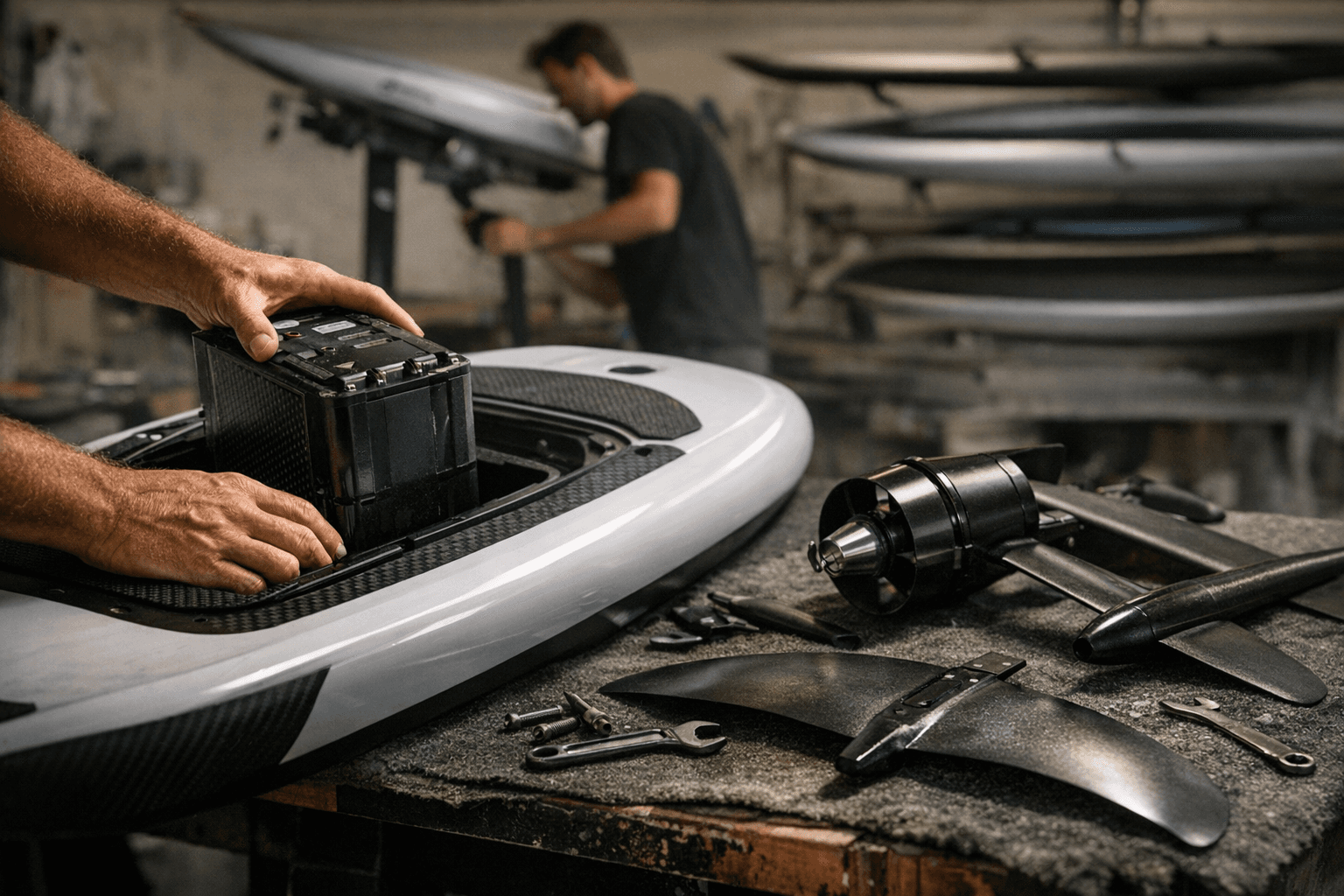
Lift is not selling an eFoil as a fixed appliance. The current lineup leans hard into the idea that the board should change with the rider, with swap-friendly batteries, propulsions and wings that let you tune the setup instead of living with one preset personality. That matters in a market where a lot of brands are chasing convenience or the lowest entry price. Lift is still making the case that the real value is how the board feels under your feet and how that feel can evolve over time.
That is the right lens if you care about more than just top speed or ride time. The current page pushes riders to think about the interaction between board size, wing choice, propulsion type and battery choice, which is exactly how experienced eFoil buyers talk when they are trying to match a setup to surf style, dock starts or shared family use. The message is clear: the platform is the product.
The shapes still signal surf first
Lift’s design language still reads more like surf hardware than electric gadgetry. The compact 4'8 board is positioned as something that takes off easily, which is a practical clue for buyers who want a board that stays manageable when the conditions are messy or when learning starts to wobble. The 4'7, 49-liter shape developed with John and Nathan Florence pushes that point even further. That collaboration says Lift wants credibility from surf performance, not just from being an electric board with a motor bolted on.
That surf-first bias matters because it changes how you should read the rest of the system. If the board shape is intended to feel alive and adjustable, then the modular bits are not decoration. They are there to let the rider shift the personality of the board, from calmer and more stable to more reactive and freer. For buyers who value a board that can grow with them, that is the whole argument.
What modularity actually buys you
The biggest upside of Lift’s modular approach is progression. If you are a first-time buyer, the value is not in building the most aggressive setup on day one. It is in starting with a stable configuration and knowing you can move toward a faster, looser, more surf-like feel without replacing the entire board. Swapping batteries, propulsions and wings gives you a path instead of a dead end.
That is especially useful for riders who know they will get better quickly. A learner often starts by wanting lift, balance and easy takeoff, then discovers that the board feels too locked down once foot placement, pump timing and line choice become second nature. Lift’s system is built for that handoff. You can change the feel of the ride in ways that actually matter on the water, instead of treating your first purchase as something you will outgrow and sell.
The upgrades that matter most
Not every modular change carries the same weight. The battery choice affects how the board fits your sessions, your transport routine and how much downtime you are willing to tolerate between rides. Propulsion choice changes how the board sounds, feels and likely how it behaves during takeoff and cruising. Wing choice is where the ride really starts to shift, because that is the piece that can make a board feel calmer, faster, looser or more planted.
Lift’s current setup, with the 32-inch Carbon 55 folding propeller, shows that it is still thinking in systems rather than single-spec bragging rights. A folding prop is not just a parts story. It speaks to how Lift wants the board to behave when it is not just in straight-line cruise mode. Combined with the board size and wing selection, it gives riders a more adjustable feel, which is the main reason platform buyers pay attention in the first place.

Where modularity earns its keep for real riders
For a first-time eFoil buyer, the platform makes sense if you want one purchase to cover more than one phase of learning. A stable board with the option to tune later is more forgiving than trying to buy the final form on day one. That said, the smart move is to resist overbuilding. If you are still learning throttle control, stance and recovery, the expensive part is not the modularity itself. It is buying performance you cannot use yet.
For progression-focused riders, Lift’s approach is easier to justify. This is the person who wants to start with a forgiving setup, then tune toward a quicker takeoff or a more surf-like feel as confidence rises. The 4'8 board and the Florence-shaped 4'7, 49-liter board fit that mindset because they suggest the board can move from accessible to expressive without abandoning the surf reference point.
For multi-rider households, modularity can save money only if people actually share similar needs. If one rider is light and cautious while another wants a sharper, more aggressive feel, a swappable system has real value. If everyone in the house wants a different experience, the platform can turn into a drawer full of expensive parts and a weekend spent reconfiguring instead of riding.
The old Lift4 message still explains the strategy
Lift’s older LIFT4 launch video still matters because it spelled out the company’s long game. The board was framed around style, longevity and performance, with quieter operation, charging in less than 45 minutes and ride times up to 2.5 hours. Those claims were based on feedback from more than 15,000 riders, which gave the launch more weight than a typical product tease. Even now, that history helps explain why Lift keeps leaning on refinement rather than novelty.
That matters because the current product language is not a departure. It is a continuation. Lift has been telling riders for years that premium eFoil ownership should feel tuned, not generic. The new page simply sharpens that argument with more explicit modularity and more obvious surf cues.
Where the platform starts to feel expensive
The same modularity that makes Lift appealing can also make it feel more complicated than a simpler, fixed-spec board. Every choice opens another decision: battery, propulsion, wing, board size. That is fantastic if you enjoy dialing a setup and you know what kind of water time you want. It is less attractive if you want to buy once, charge it, and stop thinking about equipment.
That is the real buyer-service takeaway. Lift’s modular performance claim is strongest for riders who want the board to evolve, not for riders who want the least expensive path into eFoiling. If you are the kind of buyer who cares how the setup changes from a calm first session to a sharper second season, Lift still offers one of the clearest examples of a premium eFoil ecosystem built around feel, surf identity and long-term tuning.
Know something we missed? Have a correction or additional information?
Submit a Tip