Lift Foils and the Company That Still Thinks Like a Surfer
How a small team from Puerto Rico helped define electric foiling by staying rooted in real riding culture rather than chasing mass market trends The reason Lift Foils is worth covering is not just that it sells electric foil boards.

The reason Lift Foils is worth covering is not just that it sells electric foil boards. It is that the company still frames the category from the rider outward. In a market that can easily drift toward luxury gadget culture, Lift keeps returning to a much older idea, that the best water sports products come from people trying to solve a problem they felt in their own bodies first.
That story starts in Puerto Rico, where Lift has been making performance hydrofoils since around 2010. The company remains closely tied to its family roots. Nick Leason is the engineer and surfer who pushed the original concept forward, while Michael Leason brought manufacturing experience and helped turn the idea from a prototype into a real business. That matters, because it explains why Lift feels different from brands that entered foiling through lifestyle marketing first and hardware second.
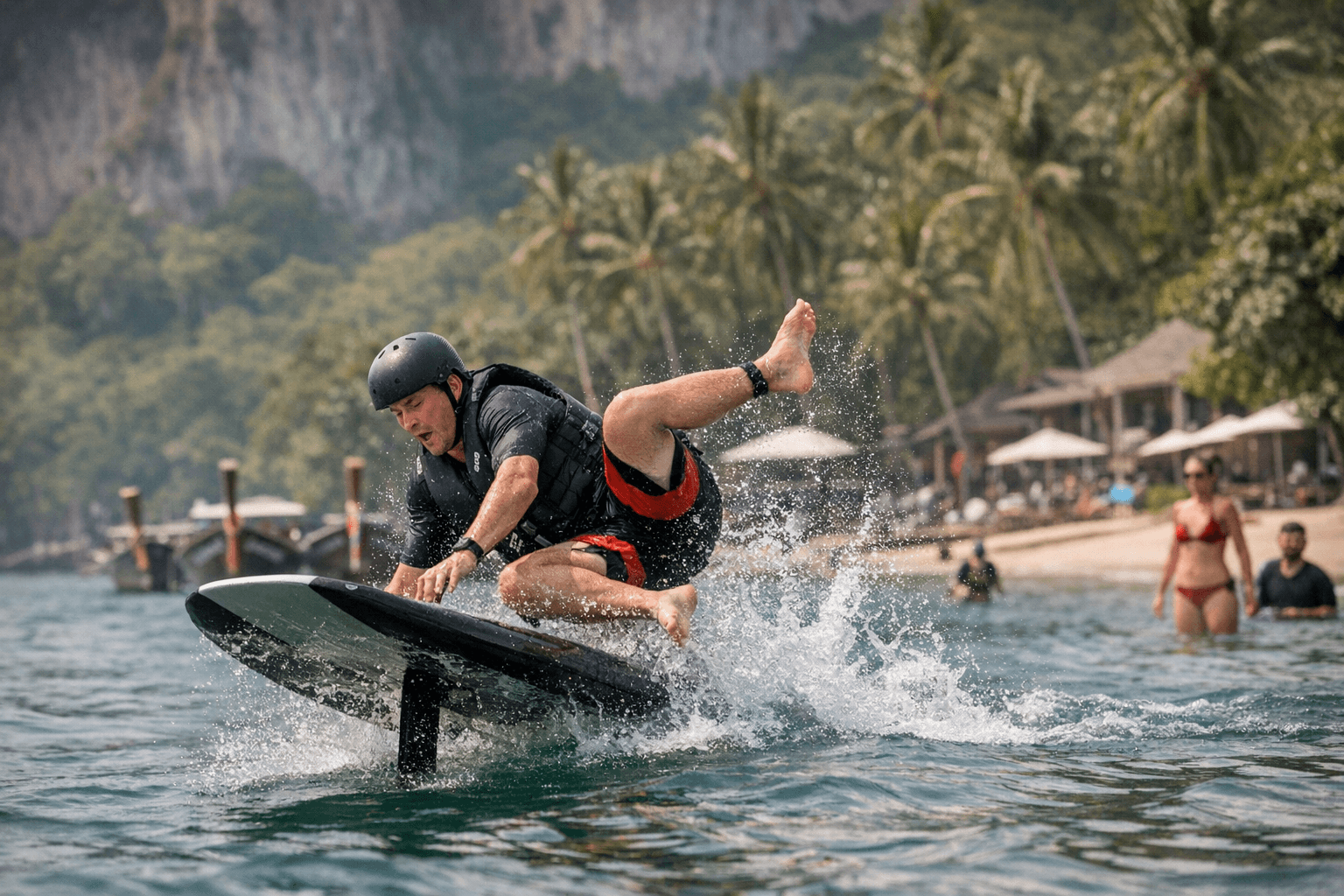
The key moment in Lift’s history came in 2015, when the company introduced what is widely considered the first commercial eFoil. The idea was simple but powerful. Take battery technology, electric motors, and control systems that were already improving rapidly, and apply them to a board that could rise above the water without wind or waves. Instead of waiting for conditions, riders could create them.

That origin shaped the company’s culture. Lift has consistently positioned itself as a performance driven brand, focused on how the board feels under a rider rather than how it looks on a dock. Its communication still leans on testing, iteration, and long development cycles. For a sport that looks futuristic from the outside, Lift’s DNA is surprisingly traditional. It feels closer to a surfboard shaping bay than to a consumer electronics lab.
The current product line shows how that philosophy is evolving. Lift’s newer models are not just about making the ride easier. They are about expanding what is possible. The LIFT5 refined the original eFoil concept into something more stable and widely usable. The newer LIFTX pushes further, blending powered riding with surf style foiling. Riders can use the motor to get into position, then cut power and glide using pure foil dynamics.

This is not just a technical update. It reflects a deeper direction. Instead of simplifying the sport into a one dimensional product, Lift is trying to reconnect it with its roots in wave riding and flow. The company is effectively asking whether electric assistance should replace traditional riding, or simply unlock it.
That tension defines Lift’s position in the market. As eFoiling grows, more brands are entering with cleaner branding, simpler onboarding, and broader appeal. Lift’s advantage is different. It has credibility with serious riders and a history that is tied directly to the development of the sport.

The challenge is scale. Products that stay close to core culture often grow slower than products designed for mass adoption. But they also tend to define the standard everyone else follows. Lift is not just competing on hardware. It is competing on what eFoiling should feel like. That makes it more than a manufacturer. It makes it one of the companies shaping the identity of the sport itself.
Know something we missed? Have a correction or additional information?
Submit a Tip