Rim Drive Technology Powers ENVGO NV1 Hydrofoil With Silent Electric Propulsion
ENVGO's NV1 uses a 5 kg, 5 kW rim drive thruster that kills gearbox noise at the dock, a detail that separates this foiling boat from every conventional electric hull competing for the same slip.
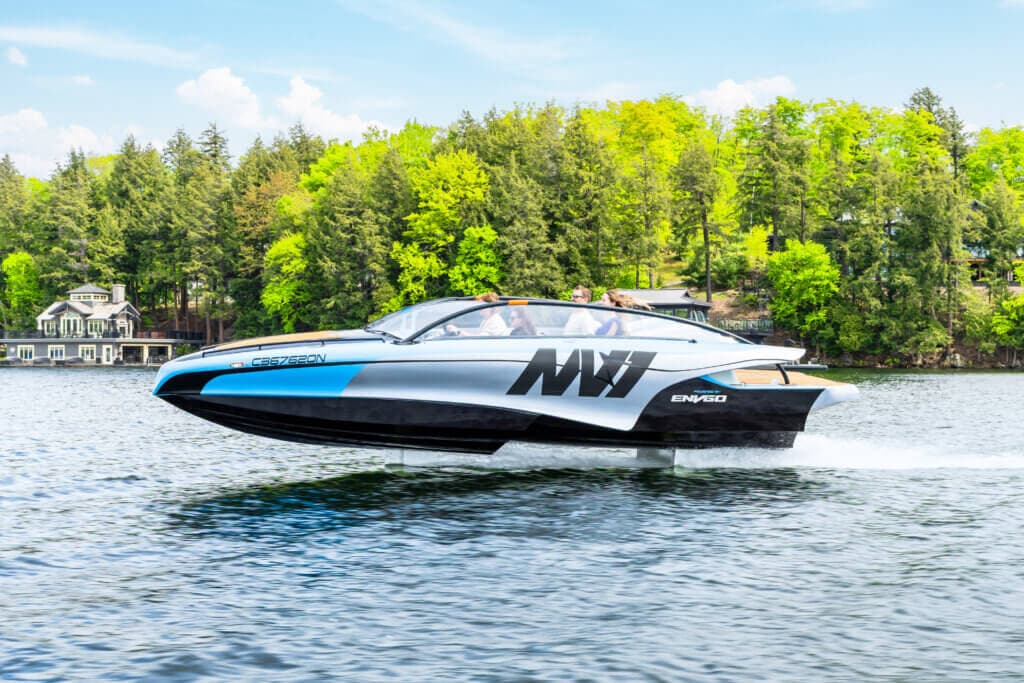
A 5-kilogram thruster does not sound like a breakthrough. In the ENVGO NV1, it is the component that makes a 330-horsepower electric hydrofoiling boat near-silent at the dock and precise enough to station-keep in a tight marina berth without prop wash. Rim Drive Technology, the Dutch propulsion specialist behind the NV1's maneuvering system, published a detailed account on April 2 of how its peripheral motor architecture was selected and integrated into the vessel.
The difference between rim drive and conventional thruster design comes down to what is missing. A standard stern thruster runs a propeller from a central shaft through a gearbox, and that shaft-and-gearbox combination is the primary source of mechanical noise at low RPM. Rim drive eliminates both by mounting the motor at the blade's outer rim, driving the propeller from the periphery rather than the center. The result is a system with fewer bearings, fewer shaft seals, and no gearbox to service, which Rim Drive Technology linked directly to the NV1's low acoustic signature and its maintenance profile.
For foilers who have spent time on eFoils and are now eyeing a full foiling boat, the propulsion geometry comparison is worth understanding before writing a check. Open propellers, whether on a conventional electric outboard or an inboard thruster, expose blade edges to kelp, fishing line, and dock ropes at the worst possible moment: during slow-speed approach. Jet drives avoid that risk by routing water through a dedicated intake, but that intake can ingest surface debris and degrade low-speed thrust. Rim drive sits at a different point on that tradeoff: the blade is shrouded within the drive ring, reducing the exposed surface area that catches lines, while the peripheral motor eliminates the gearbox maintenance cycle entirely. For a foiling hull with retractable underwater components, that simpler below-waterline maintenance story matters every time the boat comes out of the water.
ENVGO's brief for the system had three requirements, according to Rim Drive Technology's account: silence, weight efficiency, and absolute control at low speed. The 5 kW thruster delivers on the first two with a stated weight of 5 kilograms, a power-to-weight ratio that leaves little room for argument. For a hull that must manage its trim during a seven-second foil transition from displacement to flight, aft mass is not abstract.
The NV1 itself is a 25-foot, six-seat vessel driven by a dual-motor 330 hp electric drivetrain and an 80 kWh battery pack, built by Mike Peasgood and the Waterloo, Ontario team that previously developed the Aeryon SkyRanger R70 autonomous aerial system. In foiling mode at 80 kph the boat claims 100 km of range, roughly four times the efficiency of a conventional electric hull at comparable size, because the hydrofoils remove the hull from water contact almost entirely. The NV1's flight-control software manages foil angle in real time using aerospace-grade algorithms inherited from that UAV heritage.
Both ENVGO and Rim Drive Technology identified OEM licensing as the logical next step if the NV1 concept scales, framing the rim drive not as a bespoke fix for one hull but as a modular propulsion component available to the next generation of foiling platforms. Marina operators and regulators are the audience that matters most for that pitch: both groups have made low-wake, low-noise certification increasingly non-negotiable, and a thruster that addresses both without adding mechanical complexity is an easier case to make than defending an open prop in a quiet waterfront zone.
The last ten meters into a dock have always been where foiling boat concepts either prove themselves or expose their limits. The NV1 built its answer into the propulsion spec from the start.
Know something we missed? Have a correction or additional information?
Submit a Tip