U-Boat Worx Super Sub Uses Hydrofoil Wings to Fly Underwater
U-Boat Worx's $5.75M Super Sub hits 10 knots at 300m depth using rear hydrofoil wings, applying the same lift-and-stability physics that every foil surfer feels under their feet.
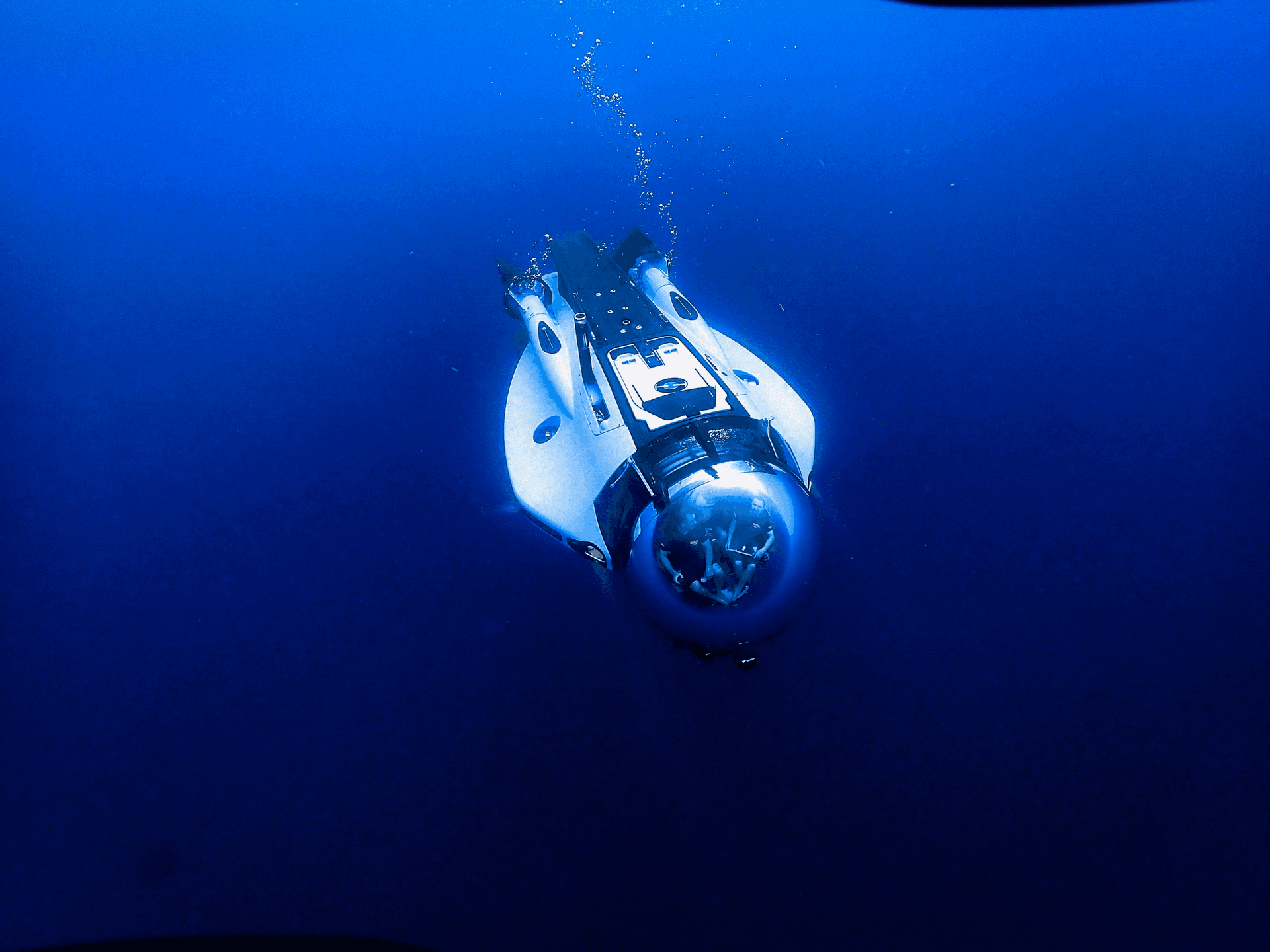
Hydrofoil wings generate lift the same way whether they're bolted below a carbon surf mast or faired into a pressure hull, and U-Boat Worx just proved the second version works 300 meters underwater. The Dutch submersible manufacturer revealed the updated Super Sub in late March 2026, a three-person craft that uses rear-mounted hydrofoils to reach 10 knots, roughly three times what conventional personal submersibles manage and fast enough to outpace a bottlenose dolphin. DNV certification came after sea trials off Curaçao, and the first unit is already heading to its buyer at a $5.75 million price point.
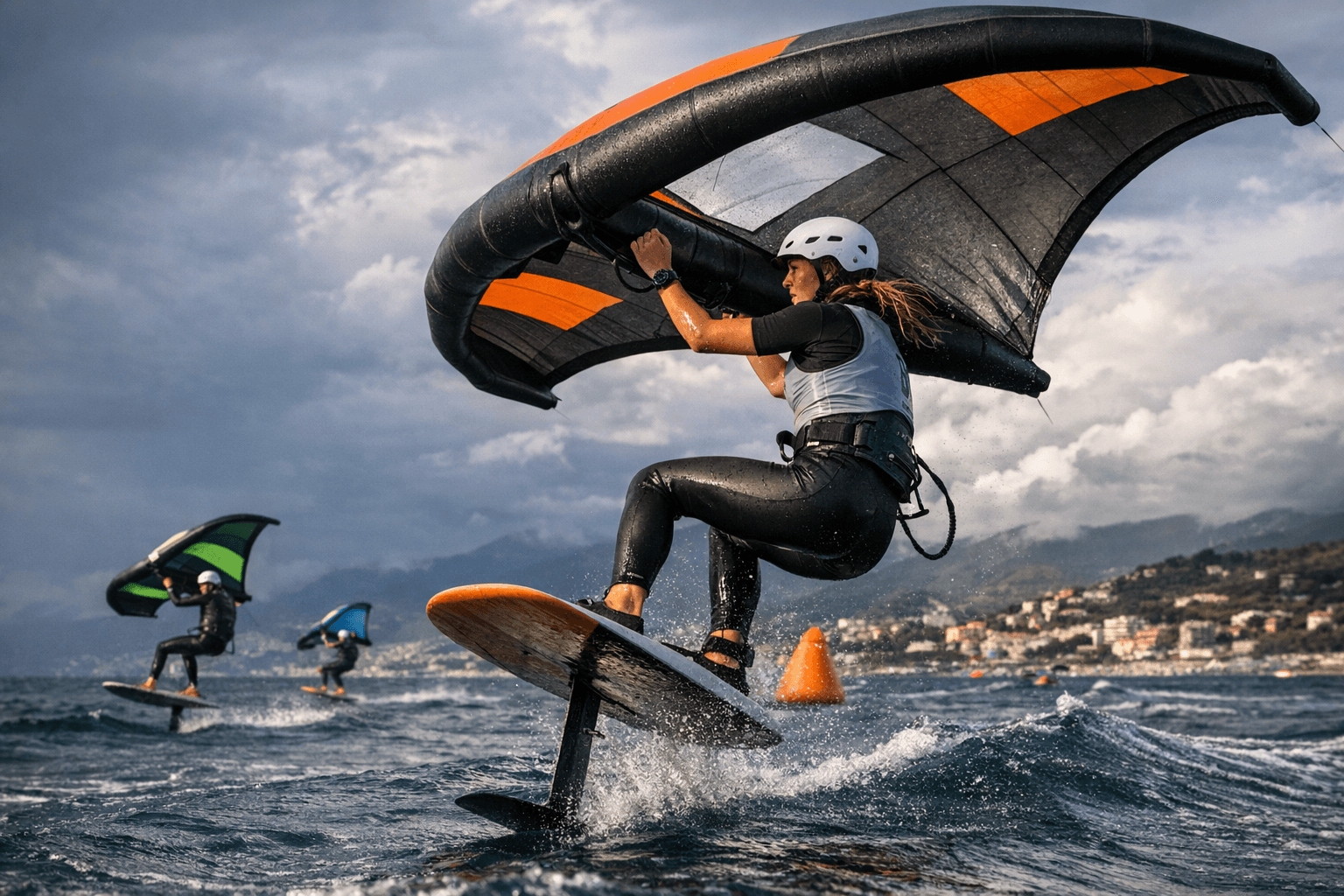
The wing physics are immediately familiar to anyone who has spent time on foil. As water flows over the asymmetric foil profile, it generates lift perpendicular to flow direction. On a surfboard, that lift hoists the hull clear of surface drag. On the Super Sub, the rear-mounted wings serve the same function as a rear stabilizer on a surf foil setup: they resist pitch rotation, hold the hull on vector, and let the propulsion system work efficiently rather than constantly correcting attitude. Without those wings, U-Boat Worx's 100 kW thruster package, four 25 kW units and two 6 kW units, would burn through reserves fighting yaw and pitch at speed. With them, the 62 kWh battery extends to eight hours and a 10-nautical-mile operational range. Every eFoil rider who has noticed how battery life stretches once a board is stable on foil is experiencing the same trade-off.
The wings also unlock the 45-degree climbs and dives and 30-degree banked turns that define the Super Sub's handling. U-Boat Worx developed the SHARC controller specifically for this craft, a joystick system that routes input through both thrusters and control surfaces simultaneously. It is a closed-loop pitch-and-yaw system: the mechanical equivalent of the constant micro-corrections a foil surfer makes through foot pressure and body weight, now automated and executed in real time. Auto-depth and Auto-heading functions hold position without pilot input, drawing on that same feedback architecture.
Surface foil riders know ventilation as the sudden ingestion of air into the foil's low-pressure zone, which collapses lift instantly. Underwater, there is no air to ingest, so ventilation is off the table. But the Super Sub's wings at 10 knots create large enough low-pressure regions that cavitation becomes the operative risk: localized water vaporization that produces bubble collapse, vibration, and progressive foil erosion. Managing cavitation at sustained speed requires swept leading edges, careful profile thickness selection, and depth-pressure awareness. These are the same engineering questions that hydrofoil race circuit designers are beginning to face as boards push past 40 knots. The Super Sub had to solve them on a fully submerged, pressure-stable platform where speed is sustained rather than wave-dependent, which produces cleaner empirical data than intermittent wave-powered foiling ever could.
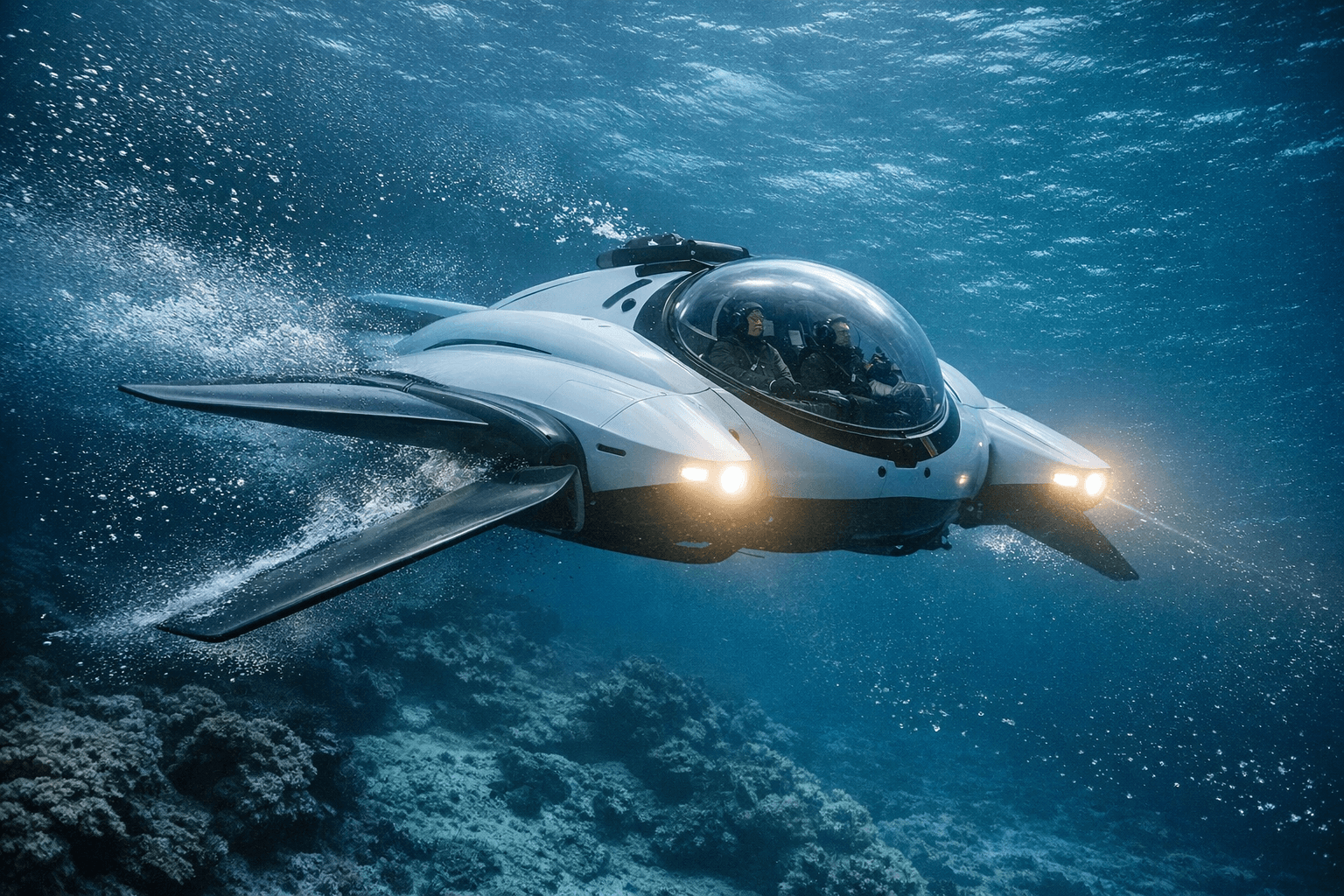
DNV certification required demonstrating that wing control surfaces remain recoverable under failure: the system must return to a neutral stable state rather than pitching into an unrecoverable dive. Roy Heijdra, Head of Marketing at U-Boat Worx, framed the achievement this way: "It's not just a submarine, it's an experience. The moment it dives, accelerates, and carves through the water at 9 knots, people will understand what makes the Super Sub unlike anything on the market."
For consumer foil builders, the most actionable signal is the control architecture itself. Closed-loop pitch stabilization via combined thruster and control-surface feedback, validated under DNV scrutiny on a manned, pressure-critical platform, is exactly the system architecture that active-stabilization foil boards require. Several eFoil and wing foil brands are already prototyping boards that auto-correct pitch via small electric actuators in the fuselage. The Super Sub's SHARC system proves the concept is buildable, certifiable, and rideable at scale. The gap between that submarine controller and a production foil board with auto-pitch is narrowing, and the engineering precedent set 300 meters underwater may be what pushes it across the line.
Know something we missed? Have a correction or additional information?
Submit a Tip