How vintage fountain pens fill, from eyedroppers to piston-fillers
The filler is the fastest way to read a vintage pen: it tells you ink capacity, repair risk, and whether you’re buying a simple sac job or a project.
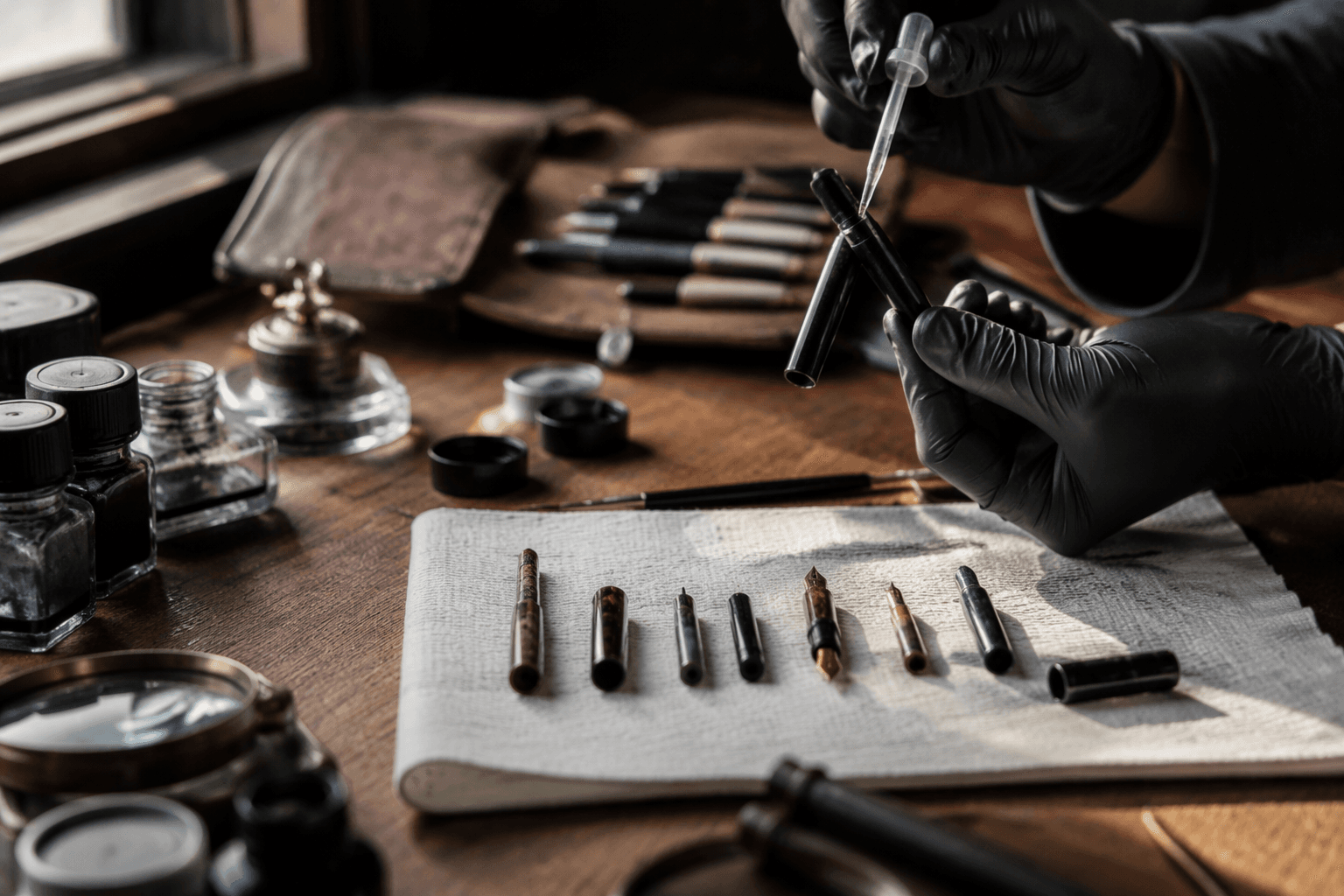
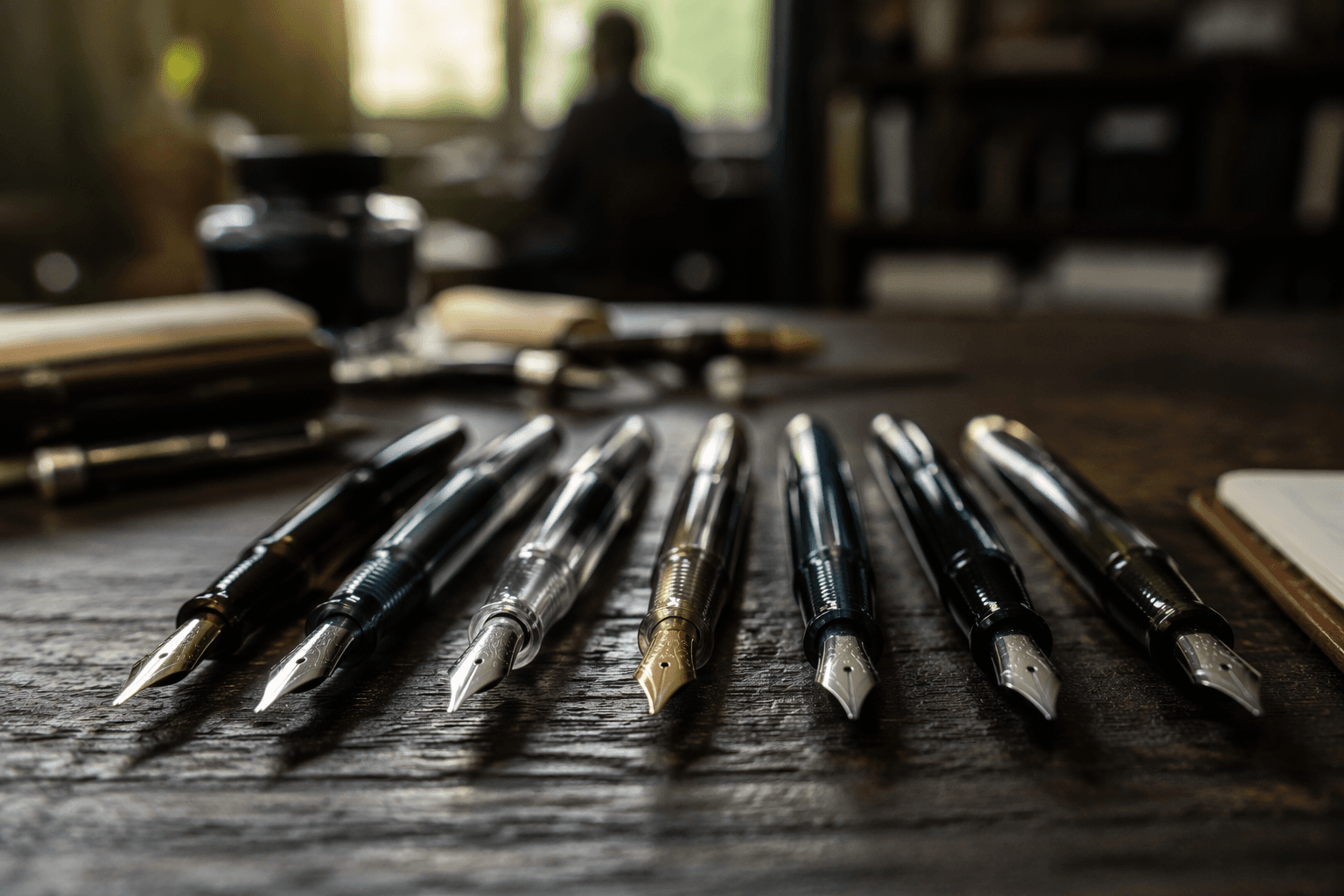
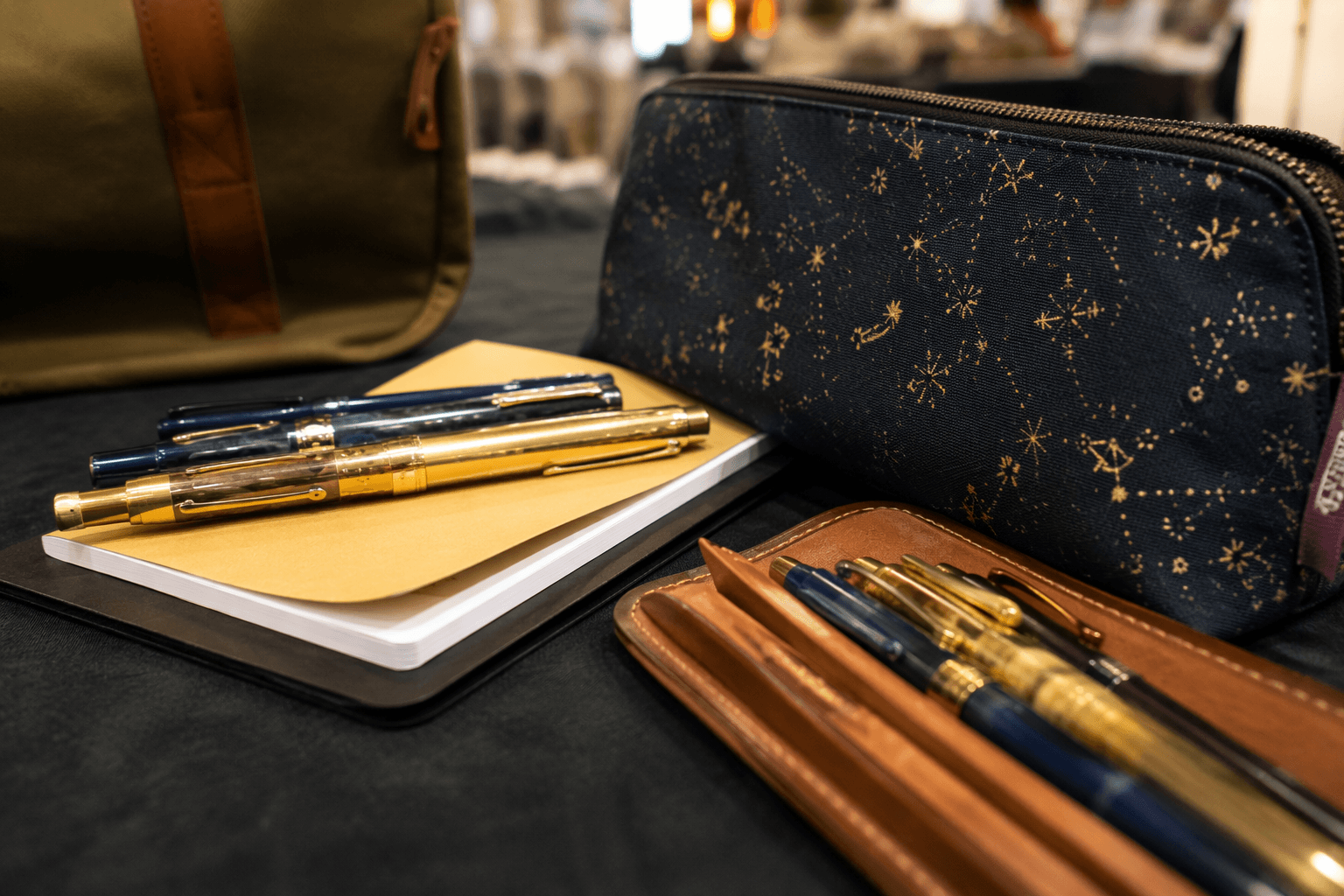
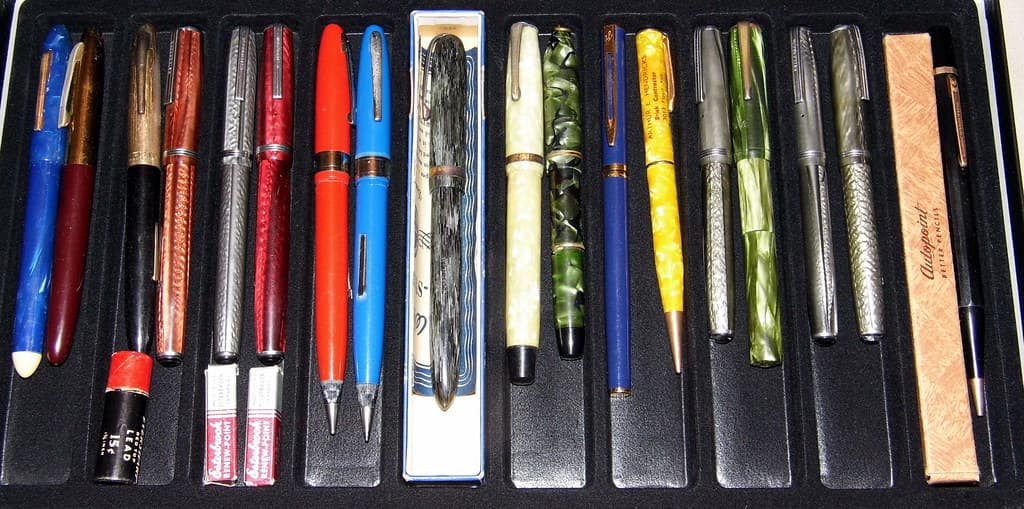
A vintage fountain pen can look clean on a tray and still hide a restoration headache, but the filling system usually gives the game away fast. If you can identify the mechanism at a glance, you can judge maintenance, ink capacity, and risk long before you worry about the brand name or nib imprint.
Read the mechanism first
David Nishimura’s vintage pen instructions page separates eyedroppers, retracting-nib safeties, lever-fillers, button-fillers, piston-fillers, crescent-fillers, and twist-fillers. Vintage Fountain Pen Doctor’s broader Greenberger Classification also treats filler design as the key diagnostic, not a footnote.
The quickest show-floor question is simple: do you see a plain barrel, an external lever, a hidden button, a crescent and lock ring, a piston mechanism, a threaded twist, or a nib that disappears into the barrel? That one look tells you whether you are dealing with a direct reservoir, a sac-based filler, an internal piston, or a safety pen built for portability and sealing before modern cartridges existed.
Eyedroppers: the simplest read, and the cleanest test
Eyedroppers are the least mechanical of the group. The barrel itself is the ink reservoir, so there is no lever, button, piston, or sac to inspect, just the barrel, section fit, and threading. That simplicity makes them easy to understand, but not automatically easy to buy: if the barrel is cracked or the seal between section and barrel is weak, the whole system becomes a leakage problem.

For a beginner, an eyedropper is a reasonable first vintage pen only if the body is sound and the pen has been properly set up. The upside is straightforward construction and no hidden filler hardware to fail. The red flag is structural damage, because a barrel crack is a much bigger issue here than on a sac pen with a replaceable bladder.
The sac-based family: the workhorse core of vintage pens
Walter Chang’s Captain’s Cabin lays out the basic vintage pattern: most of these fillers work by compressing a rubber ink sac, which then draws ink in as it reinflates. That is the backbone of the classic lever-filler, button-filler, crescent-filler, and many twist-era designs, and it is why old sac material matters so much when you are shopping.
This family is usually where maintenance begins to matter more than the logo on the cap. If the sac is intact or has already been replaced, the pen may be a practical user. If the sac has hardened, perished, or gone sticky, you are looking at a restoration, not a ready-to-write pen.
Lever-fillers: the classic external clue
Lever-fillers are easy to identify because the side lever is visible, and that makes them one of the most approachable vintage mechanisms to diagnose on sight. Vintage Fountain Pen Doctor dates the first lever-filling fountain pen to Sheaffer in 1907, though some sources point to an earlier Whitney lever. Either way, the lever is the tell, and the repair path is usually a resac rather than a full mechanical rebuild.
For a new buyer, a lever-filler is often one of the safest vintage bets if the lever moves freely and the pen has not been left to rot with a failed sac. The risk climbs when the lever is stuck, the pressure bar feels wrong, or the barrel shows signs of long-term ink damage.
Button-fillers: same sac principle, different hardware
Button-fillers belong to a separate historical family from lever-fillers even though both work by compressing a rubber sac. Instead of an outside lever, you are dealing with an internal button and pressure bar, which changes the feel of the pen and the inspection process. The mechanism may be cleaner on the outside, but it is harder to assess quickly because more of the working parts are hidden.
That hidden hardware is the restoration issue. A button-filler can be perfectly serviceable, but if you cannot confirm smooth button travel or a healthy internal action, you are trusting the seller more than the pen itself.
Crescent-fillers: instantly recognizable, but still sac-based
Conklin is the name most closely tied to the crescent filler, and the design is one of the most distinctive early American systems. The C-shaped lock ring has to be aligned under the crescent before the crescent is pressed, which flattens the sac and then lets ink be drawn in when the crescent is released. That sequence is part of the appeal, because you can often identify the system from across a table.
The same mechanism also gives you an inspection clue. If the lock ring is missing, the crescent is frozen, or the action feels rough, you are looking at a pen that may be more project than purchase. A working crescent-filler is still a sac system underneath, so restoration risk follows the same basic rules as the other compressed-sac fillers.
Piston-fillers: internal parts, internal judgment
Piston-fillers replace the sac with an internal piston, so you are no longer judging a bladder that can be swapped out easily. That changes the buying calculus immediately: the external question is whether the piston moves smoothly, and the deeper question is whether the internal seal is healthy. The filler may feel elegant, but the serviceability is different from a simple resac.
In a tray, this is the system where you should pay close attention to motion. If the piston is stiff, gritty, or immobile, assume more than casual cleaning will be needed. For a beginner, a piston-filler is best bought only when the action is clearly smooth or when the pen has already been restored.
Twist-fillers: compact and mechanical, but less forgiving
Twist-fillers rely on a threaded action to create suction, which makes them feel more engineered than a plain lever pen. They sit in a middle ground: more mechanically involved than an eyedropper, usually less instantly legible than a lever-filler, and often more dependent on healthy threads and clean internal parts. That makes them appealing, but not especially forgiving if the mechanism has been abused.
If you are new to vintage pens, the safest rule is to buy a twist-filler only when the action is clearly smooth and the seller can show that the filler operates correctly. If the threads bind or the mechanism feels vague, walk away and wait for a better example.
Retracting-nib safety pens: the pre-cartridge specialist’s tool
In retracting-nib safety pens, the nib pulls back into the barrel, combining portability with a sealing system that made real sense before modern cartridge pens. They are also among the most specialized vintage fills you will encounter. A 2023 restoration video dated a French trademarked safety pen called Mylord to probably the 1910s to 1930s.
For shopping, that usually means caution. If the nib does not retract cleanly, or if the sealing action seems compromised, treat the pen as a restoration project rather than a ready-to-use purchase.
This article was produced by Prism’s automated news system from verified source data, official records, and press releases, then run through automated quality and moderation checks before publishing. The system is built and supervised by the people who set the standards it runs under. Read our full AI policy.
Did this article answer your question?