Animas Museum Opens Old Spanish Trail Exhibit Tracing Southwest Colorado Routes
Animas Museum in Durango hosted the formal opening of the traveling exhibit "Old Spanish Trail: Connecting a Network of Paths," bringing regional trail history and artifacts to southwest Colorado visitors.
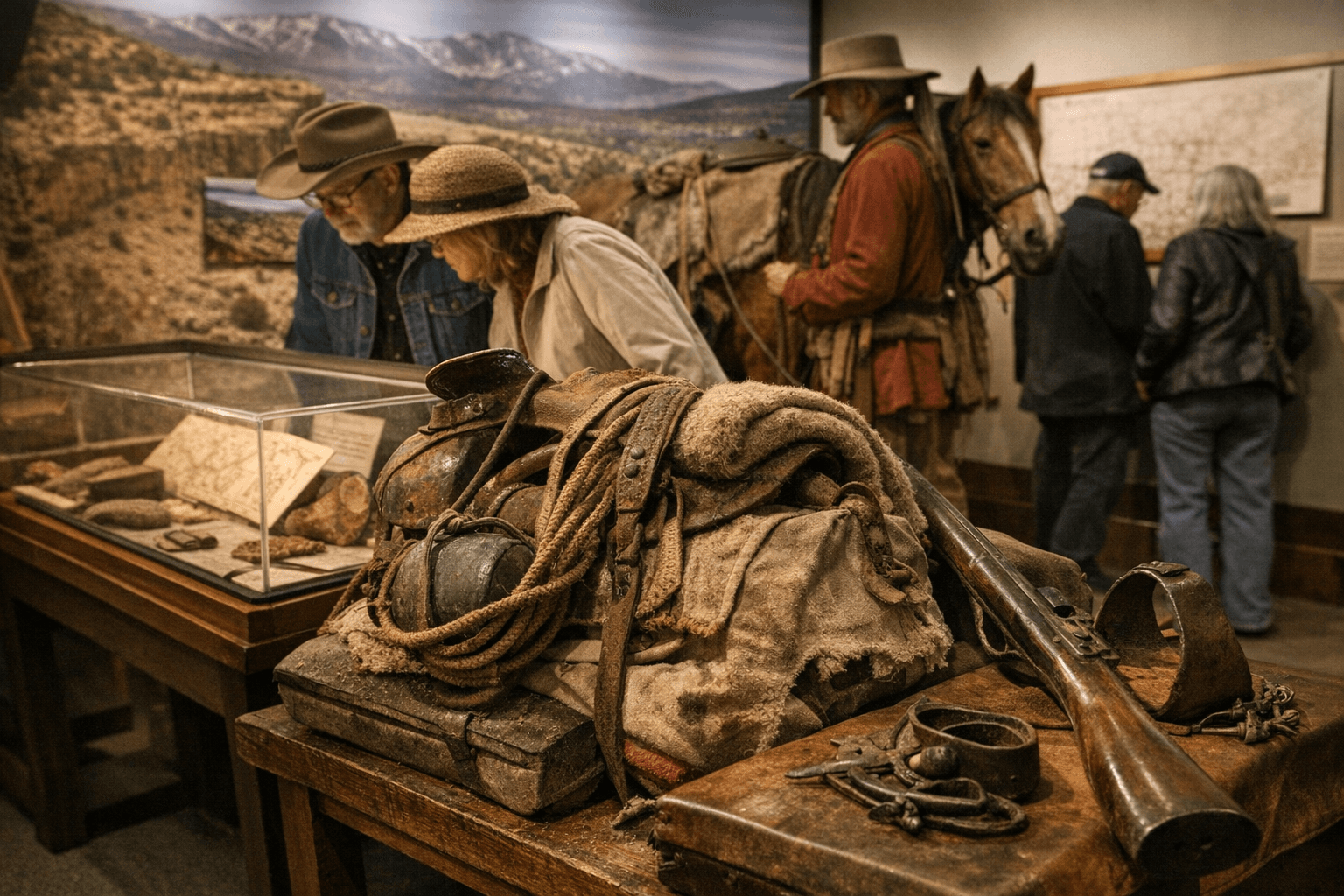
The Animas Museum in Durango hosted the formal opening of the traveling exhibit "Old Spanish Trail: Connecting a Network of Paths," a show that traces historic routes through present-day southwest Colorado and links local audiences to a broader Southwestern story. The exhibit is part of a multi-institution presentation that has appeared in other venues and highlights the Old Spanish Trail's role in trade, travel, and community formation across the region.
The exhibit title appears in materials from multiple institutions. The Nevada State Museum at Las Vegas announced, "The Old Spanish Trail: Connecting a Network of Paths Exhibit Opens Nov. 15," and described the route as "the approximately 700-mile network of trails that linked the Los Angeles area with the land that would become Nevada, Arizona, New Mexico, Utah, and Colorado through areas of high mountains, arid deserts, and deep canyons." That description frames the exhibit's regional reach and the physical challenges of routes that evolved from indigenous trade and migration corridors into historic pack routes.
Visitors to the traveling exhibit can expect historical context that follows how "The Old Spanish Trail was primarily a horse and mule pack route linking the village of Santa Fe to the Pueblo of Los Angeles" and how those paths "evolved from a network of indigenous trade routes and exploratory routes that crossed the modern states of New Mexico, Colorado, Utah, Arizona, Nevada, and California." The story matters locally because it illuminates how routes crossing southwest Colorado helped shape settlement patterns, economic links, and contemporary outdoor trail use.
Museums contributing to the exhibit and related programming underscore hands-on and outdoor connections. The Museum of the West, managed by Museums of Western Colorado, notes that "The Museum of the West houses historical, archeological exhibits and artifacts related to the Old Spanish Trail, Western Colorado art, and history." Its site at the renovated C.D. Smith Warehouse at 5th and Ute Avenue offers interactive features where visitors can "'Ride' in a reproduced Mud Wagon Stagecoach from the 1880’s," "Take the elevator up the Tower for a fascinating, 360° view of the Grand Valley and the Old Spanish Trail," and "get their Passports stamped." Museums of Western Colorado materials describe the Old Spanish Trail North Branch as a corridor that "extends Northward from Sante Fe, NM through the San Luis Valley, westward over Cochetopa Pass to Grand Junction, CO and terminates where it reconnects to the main branch near the Utah/Colorado state line," tying the exhibit directly to local geography and outdoor recreation routes available for hiking, mountain biking, or horseback travel.
Artifact highlights associated with the traveling exhibit include an 1860 wool Rio Grande blanket acquired for the Nevada State Museum collection after fundraising by the Friends of Nevada State Museum. The museum reported, "The Friends of Nevada State Museum, the museum’s volunteer association raised funds to acquire a wool Rio Grande blanket dating back to 1860 to add to the collection." The blanket is described as "made of Spanish Churro sheep wool dyed with indigo blue," an object that helps connect material culture to trail-era daily life.
For readers in Durango and across the Four Corners, the exhibit offers closer access to a transregional story that intersects local trails, museums, and outdoor programs. Check museum calendars and program pages for current dates, hours, and related events to plan visits and see which artifacts and interactive elements are on view at each host institution.
This article was produced by Prism’s automated news system from verified source data, official records, and press releases, then run through automated quality and moderation checks before publishing. The system is built and supervised by the people who set the standards it runs under. Read our full AI policy.
Did this article answer your question?