BLM Paleontologist Explains How Moab Rocks Reveal Ancient Environments
BLM paleontologist Dr. Emily Lessner shows how Moab-area rocks reveal ancient climates and habitats, giving locals tools to read rock clues and spot likely fossil-bearing horizons.
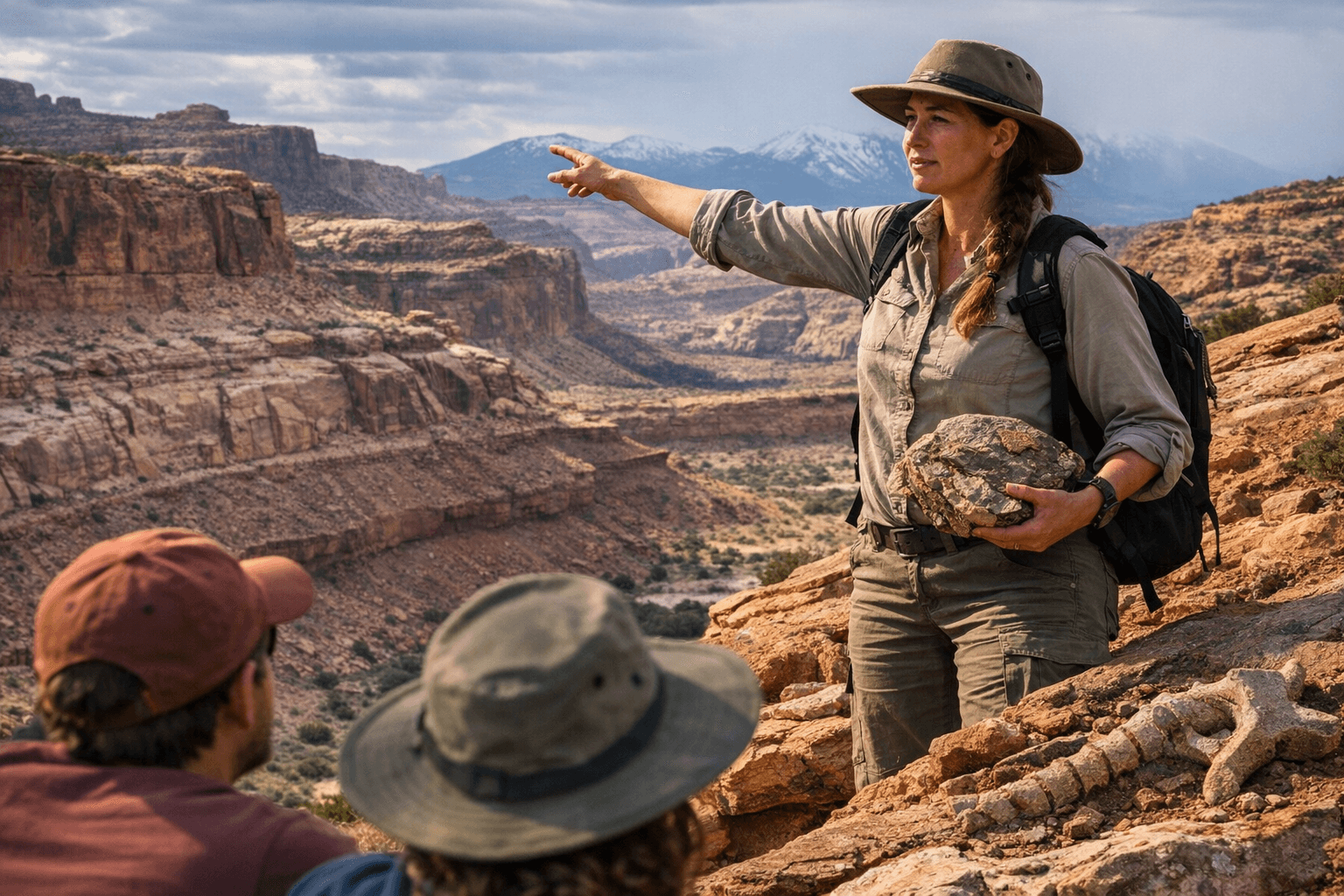
Dr. Emily Lessner, the Bureau of Land Management paleontologist for eastern Utah, is walking a Utah Friends of Paleontology (Gastonia chapter) audience through the methods geologists and paleontologists use to read ancient environments from rocks. In a Jan. 28, 2026 presentation titled "Reading the Landscape: Interpreting Paleoenvironment from Geology," Lessner explains how rock types, sedimentary structures, and local stratigraphy combine to reveal what southeastern Utah looked like in different geologic periods.
Lessner draws a direct line from field observation to interpretation, showing how variations in grain size, layering, and structural clues point to past depositional settings and climate signals. The talk underscores how careful attention on a canyon rim or trail outcrop can locate the horizons most likely to contain fossils, turning casual hikers and weekend rock hounds into sharper field observers. Lessner, who earned a PhD from the University of Missouri, brings BLM field experience to explain why a sequence of rocks is more than scenery - it is a map of changing environments across deep time.
The presentation is aimed at both enthusiasts and the general public and was offered free to the community. Attendees receive practical context for reading strata in the Moab area, learning how to interpret local stratigraphy so they can place a single outcrop within a larger geologic story. That perspective helps community members understand why some cliffs preserve desert dunes while others record coastal or river systems, and why those differences matter when searching for fossils or planning field outings.
Lessner emphasizes the practical payoff of these skills: knowing which rock packages tend to preserve plant or animal remains helps people make more informed decisions in the field. For eastern Utah, where public lands and iconic desert exposures draw hikers, photographers, and amateur paleontologists, the ability to identify likely fossil-bearing horizons can make field time more productive and educational. The talk also links scientific observation to stewardship by encouraging careful, informed engagement with fragile paleontological resources.
Reading the landscape equips readers to translate outcrops into environmental snapshots - a valuable skill on Moab trails from Dead Horse Point to Canyonlands margins. For community members, the immediate takeaway is sharper eyes on the trail and a better sense of where the region's deep-time stories are written in stone. Expect more local outreach from the Friends of Paleontology and BLM experts as they continue to bring field skills back to the community and into the field.
Know something we missed? Have a correction or additional information?
Submit a Tip

