Cam Jones Sets White Rim FKT, Besting Swenson by Five Minutes
Cam Jones completed the 100-mile White Rim in 5 hours and 23 minutes on April 3, a route most riders take three to four days to finish.
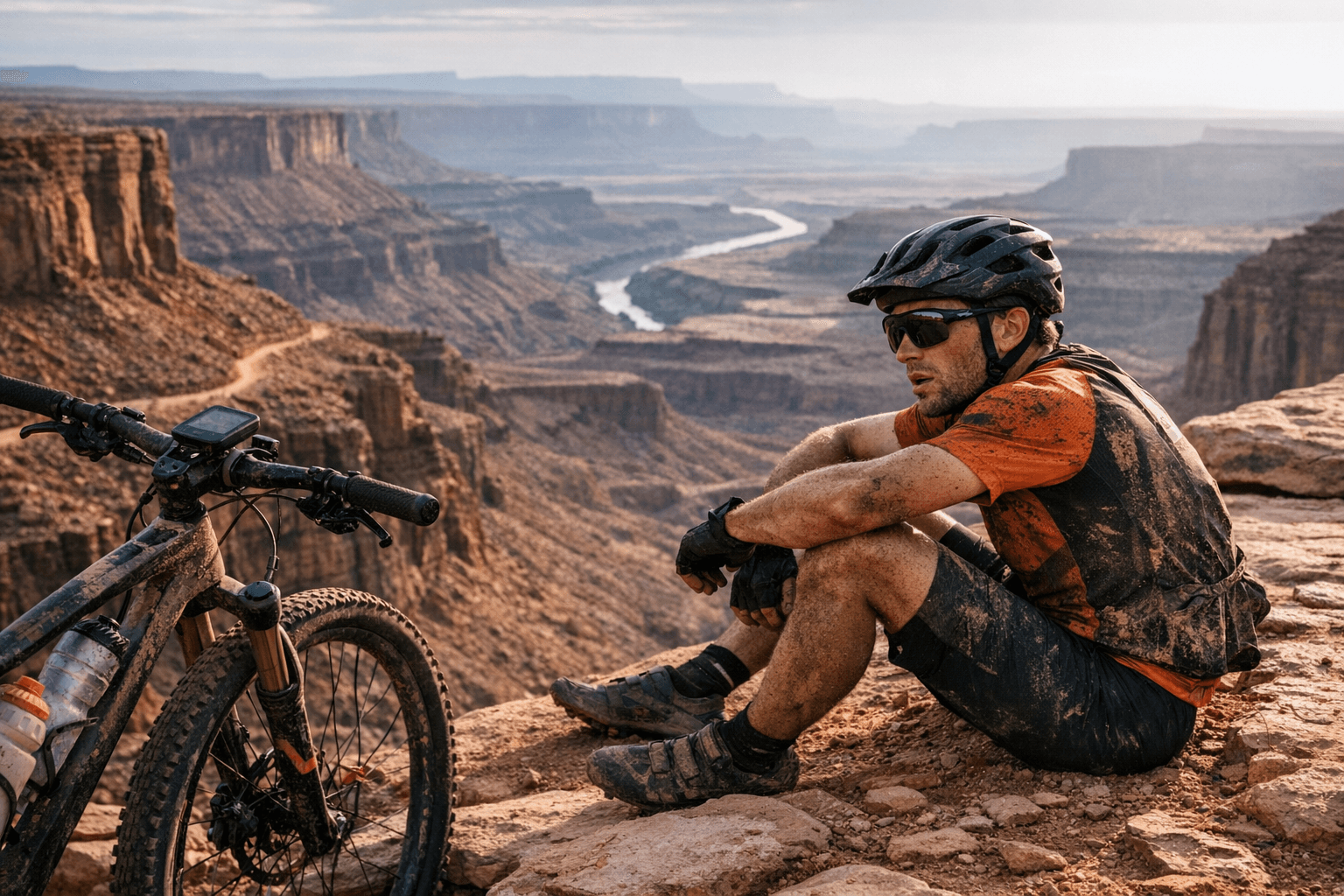
The White Rim Road threads 100 miles of packed sediment, sand, and slickrock through Canyonlands' Islands in the Sky district, a loop that most riders parcel into three or four days of camping and jeep-road navigation. Cam Jones covered it in 5 hours, 23 minutes, and 27 seconds.
The 25-year-old New Zealand-born rider posted a new Fastest Known Time on April 3, cutting nearly five minutes from Keegan Swenson's 5:28:21 mark, which Swenson had set on March 3, 2021. That margin carries extra weight given the competitive pedigree of Swenson's record: he had wrested it from gravel racer Pete Stetina by just six seconds that same day, a gap that turned the White Rim FKT into one of the more storied benchmarks in the American desert riding calendar.
Jones arrived at the White Rim as the reigning Unbound Gravel champion and 2025 Life Time Grand Prix overall winner, riding a Scott Spark World Cup RC configured with drop bars and a short, negative stem for an aerodynamic and controlled position on rough terrain. The full-suspension setup was a deliberate call: where previous contenders have leaned on hardtail builds, Jones used the travel to carry speed through the technical sections that bleed the most time on a route this long and this uneven.
Preparation was equally precise. Before the attempt, Jones called Hannah Otto, the women's White Rim FKT holder, to gather route-specific intelligence on pacing, conditions, and the course's mechanical demands. That conversation reflects something Canyonlands locals already know: route literacy on the White Rim is as important as fitness. The desert's sand traps, exposed ridge lines, and fast-changing weather can unravel a strong effort in any of a dozen places. Jones said he'd followed the route's FKT history closely and felt motivated to be "part of that story" after hearing previous riders' accounts. The attempt, which included a film collaborator to document the ride, was woven into a broader U.S. competitive season itinerary rather than treated as a standalone project.
Across the full 100 miles, Jones averaged roughly 18.7 miles per hour on surfaces where most recreational riders are simply trying to keep their tires tracking straight.
For anyone planning a White Rim day or overnight, Jones' effort maps out what is possible at the extreme end and points to the logistics that make or break any attempt. The route carries zero water resupply, meaning food and hydration planning starts before the first pedal stroke. NPS permitting requirements and vehicle-support rules apply throughout, and those rules differ from what riders encounter on non-federal land, so checking current National Park Service policy before finalizing any support plan is non-negotiable. Moab-area outfitters and shuttle operators remain the sharpest local resource for current road conditions, permit windows, and gear advice calibrated to Islands in the Sky terrain, and demand from those services is likely to increase now that the route has a fresh headline attached.
Whether Swenson, who has shown no reluctance to contest records he previously held, returns for another pass at the White Rim is the question the Four Corners FKT community will be tracking through the season.
This article was produced by Prism’s automated news system from verified source data, official records, and press releases, then run through automated quality and moderation checks before publishing. The system is built and supervised by the people who set the standards it runs under. Read our full AI policy.
Did this article answer your question?