Colorado bear-safety bill advances, targets negligent trash attractants statewide
Colorado’s bear bill moved forward with an 8-4 vote, and it could turn careless trash, pet food and birdseed into bigger fines across bear country.
A forgotten trash can, a bag of birdseed on the porch, or pet food left outside could carry more risk in Colorado bear country if HB26-1342 becomes law. The measure moved out of the House Agriculture, Water & Natural Resources Committee on an 8-4 vote on April 14, sharpening the state’s response to the attractants that keep pulling black bears into campgrounds, trailhead neighborhoods and mountain-town yards.
The bill, introduced March 27 by Reps. Katie Stewart of Durango and Meghan Lukens of Steamboat Springs, with Sen. Janice Marchman of Loveland as a sponsor, would lower the legal standard from intentional luring to criminal negligence. It would also repeal the current first-warning requirement and raise the fine for a third or subsequent offense from $2,000 to $5,000. Under the bill as introduced, officers could also issue fines of up to $200 for a first offense.
That shift matters because Colorado Parks and Wildlife says the state is already living with the scale of the problem. The agency estimates 17,000 to 20,000 black bears in Colorado, and in 2024 it received more than 5,000 reports of black-bear sightings and conflicts. More than half of those reports were tied to trash and food waste. CPW spent nearly 6,000 staff hours responding to human-black bear conflicts that year, and nearly $800,000 on supplies, grants and salaries related to the work. In 2024 alone, 68 black bears were relocated and 98 were euthanized because of incidents with humans.
Stewart framed the bill as a public safety response to bears that learn fast and return to reliable food sources. CPW’s own guidance backs that up: most conflicts trace back to human food, garbage, pet food, bird seed or other attractants. The bill’s legislative declaration says population growth, development, tourism, drought and other food failures are likely to increase those conflicts, and its draft includes exemptions for agriculture and food that is grown and harvested.
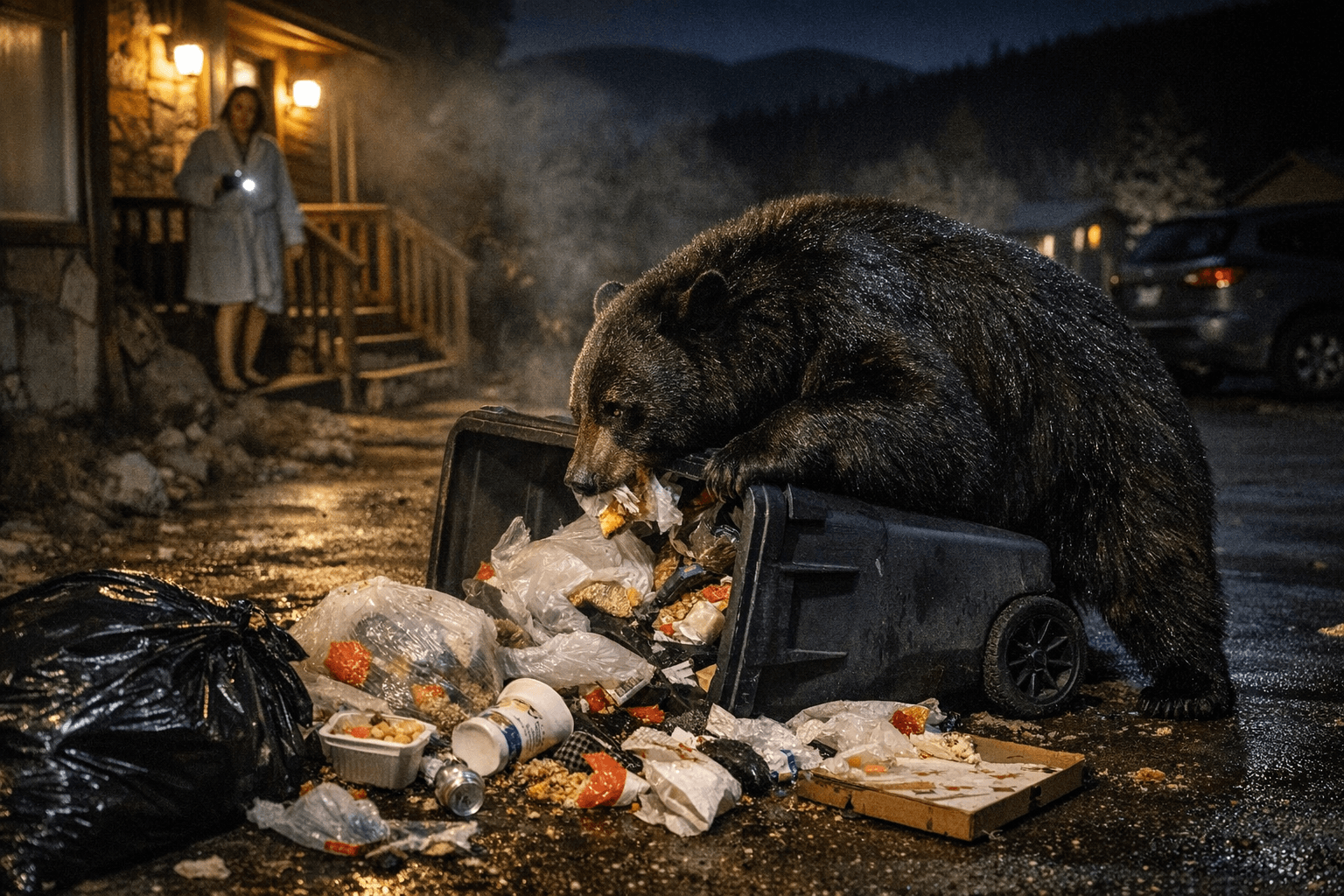
For Four Corners communities, the practical effect is easy to see. In Southwest Colorado, CPW has already been pressing local governments to tighten trash rules and code enforcement. La Plata County, Mancos and Silverton used CPW grant money for bear-resistant trash containers and enforcement in 2025, part of a $1 million statewide Community Grant Program in its fourth cycle. CPW also said in July 2024 that conflicts in southwest Colorado were spiking before hyperphagia, with officers setting many more traps than the year before and warning residents to call early when problems start.
The pattern is familiar to anyone camping, vanlifing or living near the trail: one cooler is enough to teach a bear where the food is. After that, tents, hard-sided campers, trash, pet food, bird feeders and even homes can all become part of the same route. Colorado is now weighing whether the people who leave the attractants should face a sharper penalty before the next bear season deepens that lesson.
This article was produced by Prism’s automated news system from verified source data, official records, and press releases, then run through automated quality and moderation checks before publishing. The system is built and supervised by the people who set the standards it runs under. Read our full AI policy.
Did this article answer your question?