Durango Launches Drone First-Responder Program to Reach Scenes in Under a Minute
Durango's new drone program reaches most calls in under a minute, nearly 7 minutes faster than human crews, for just $12,000 a year.
When a swimmer goes under on the Animas or a structure fire ignites in a downtown alley, the difference between a six-minute response and a 60-second one matters enormously. That gap is exactly what Durango's new Drone-as-First-Responder program is designed to close.
Durango Police Chief Brice Current and Durango Fire Protection District Chief Randy Black presented the program to the Durango City Council last week, outlining a system already under lease with infrastructure in place at Fire Protection District Station No. 2. The drones are built to launch automatically within ten seconds of dispatch and reach most calls in the city within a minute, streaming live video directly to responding officers, firefighters and 911 dispatchers before any human crew arrives on scene.
The math is stark. Durango's average human first-responder time runs between six and eight minutes. A drone running out of Station No. 2 covers that same ground in under 60 seconds, operating within a roughly two-mile radius that encompasses river access points, downtown traffic corridors and the kind of terrain-heavy calls that define emergency response in a mountain town.
The annual lease cost sits at about $12,000, a modest figure for the operational capability it adds. Chief Current walked the council through the standard workflow: dispatch triggers the launch, live video feeds to first responders en route, the drone returns to base post-call, and all flight data gets logged automatically.
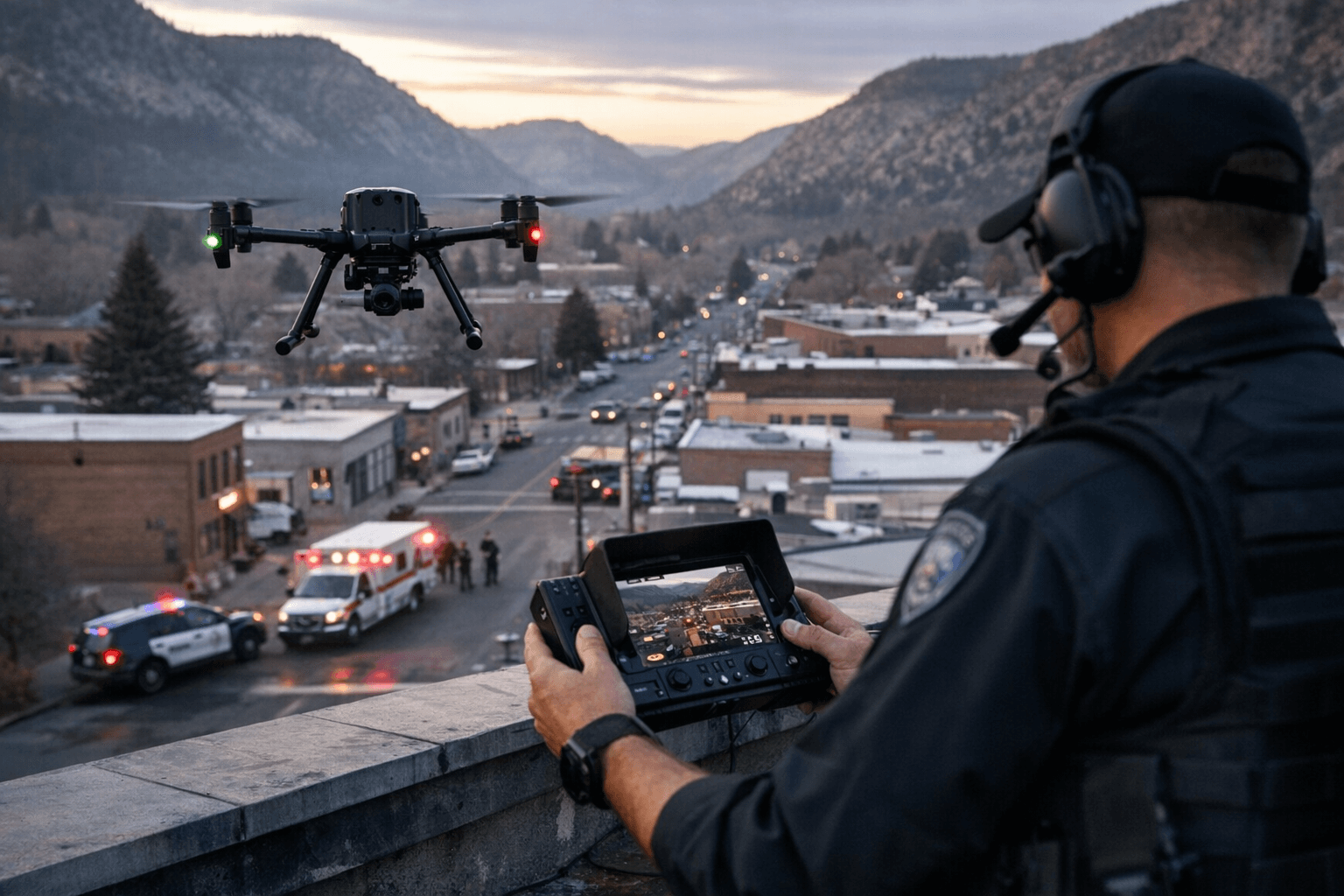
That logging piece carries its own significance. Current was direct about the program's boundaries: flights are restricted to active emergency calls, not general monitoring or surveillance. "Every flight is logged, published and public-facing," Current said, framing the transparency posture the department intends to maintain.
Fire Chief Black highlighted the hardware's value beyond straight speed, pointing to thermal imaging and specialty camera modes as critical tools for water rescues and wildfire detection. For a city that contends with seasonal river recreation traffic and sits in fire-prone terrain, the ability to hand fire crews a thermal read of a scene before they step off the truck changes the tactical picture considerably.
The infrastructure is already built into Station No. 2. Flights were not yet activated at the time of the council presentation, but the program appears positioned for a near-term launch as operational protocols are finalized. For a community that sees heavy outdoor recreation use and regular influxes of visitors unfamiliar with local hazards, having aerial eyes on a scene before the first engine rolls is no longer hypothetical.
Know something we missed? Have a correction or additional information?
Submit a Tip