How to explore Canyons of the Ancients without causing damage
Canyons of the Ancients rewards restraint: stay on trail, leave artifacts alone, and let a 176,056-acre cultural landscape outlast your visit.
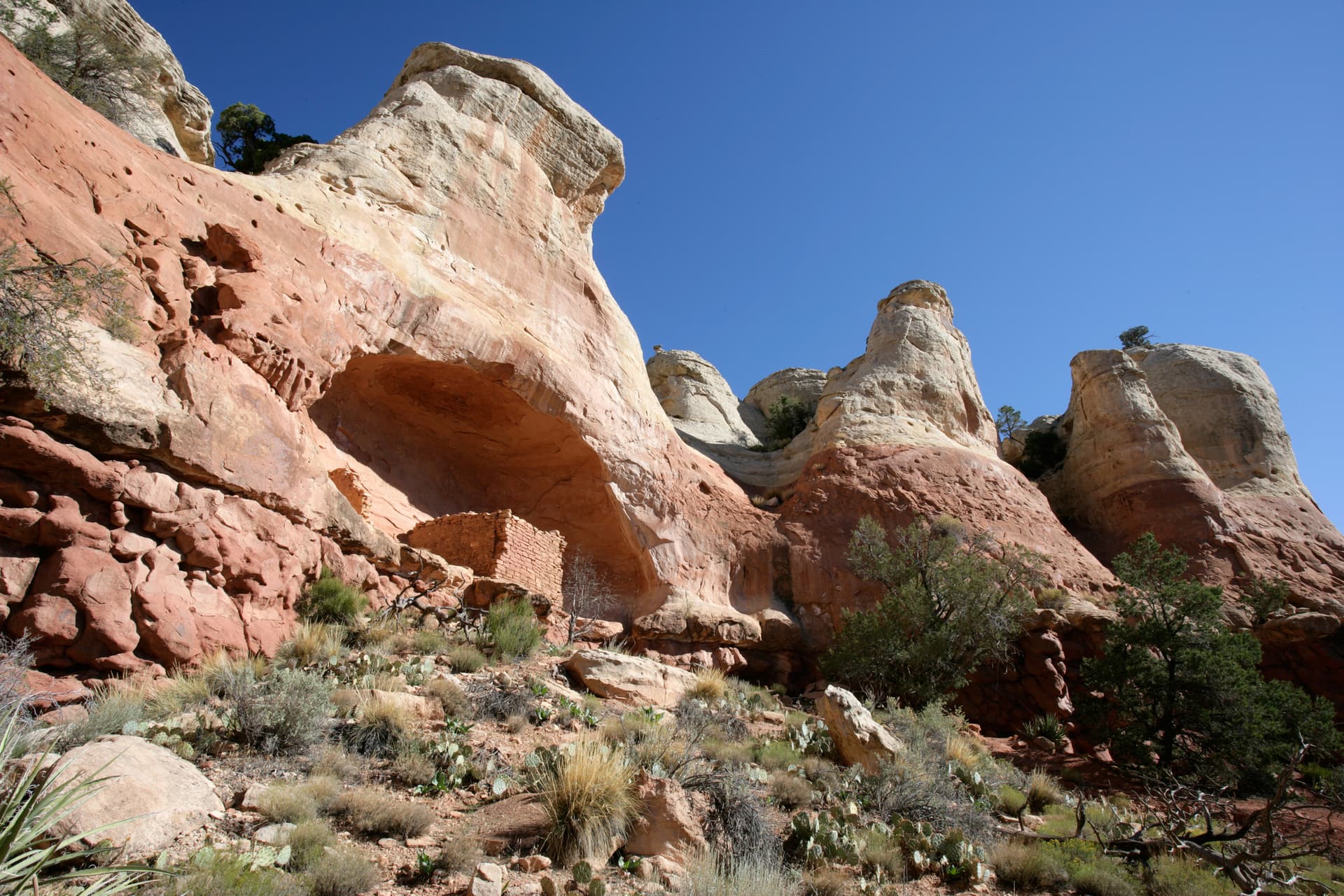
Canyons of the Ancients National Monument holds more than 8,300 documented archaeological sites and may still have over 30,000 more waiting to be recorded. Like the broader Four Corners, the place feels huge, open, and full of discovery, but the smartest first move here is learning how to keep your own footprint small.
Start with the scale of what you are walking into
Canyons of the Ancients National Monument covers 176,056 acres and has the highest known density of archaeological sites in the United States. That is not scenery in the casual sense. It is a living record of more than 12,000 years of human history, packed with villages, kivas, field houses, cliff dwellings, petroglyphs, and ancient roadways.
The monument was created on June 9, 2000, by Presidential Proclamation 7317 signed by President William J. Clinton, and the BLM marked its 20-year anniversary in 2020.
Walk like the ground is part of the artifact
The core visitor rules are straightforward. Stay on designated trails, avoid disturbing ancient structures, and leave what you find where you find it. That applies whether you are crossing open sage, edging past a ruin, or stopping for a quick look at a stone wall that seems sturdy enough to lean on. In this landscape, sturdy looking is not the same as safe to touch.
If you want the simplest field rule for first-time visitors, use this one: walk between ancient walls, not on them. The same logic applies to loose stones, pottery fragments, and any object that looks like a souvenir. One potsherd in your hand is one less piece of context in the ground.
Keep your hands off the rock art
National Park Service archaeology guidance is direct on the things people are most tempted to touch. Do not dig. Do not use metal detectors, and do not bring them into national park settings. Do not remove artifacts. Do not touch pictographs or petroglyphs, because oils from skin and even light abrasion can damage them.
That rule is especially important in a place like Canyons of the Ancients, where the monument’s cultural resources include Fremont rock art, Ute traditional cultural sites, the Old Spanish National Historic Trail, and historic mines and ranches. The land carries multiple eras at once. Treat every wall, stone surface, and painted figure as irreplaceable. Take the photograph and leave the surface alone.
Photograph with restraint, not ambition
The best ruin photos here are the ones that do not require a physical shortcut. Use the trail edge, a low angle, or a zoom lens rather than climbing up for a tighter frame. Avoid standing on walls, entering fragile spaces, or rearranging objects to make the composition cleaner.
A good rule for this monument is to photograph the site as a witness, not as a prop. That means no moving stones for a better shot and no touching petroglyph panels for scale.
Make the visitor center your first stop
The Canyons of the Ancients Visitor Center and Museum in Dolores is the smartest place to begin if you are new to the monument. BLM calls it the premier archaeological museum in Southwest Colorado and the headquarters for Canyons of the Ancients National Monument. It also curates almost 4 million artifacts from the surrounding area, which gives you a much deeper read on the landscape before you head out to it.
The monument sits about 10 miles west of Cortez, about 50 miles west of Durango, and about a dozen miles from Mesa Verde National Park, while the visitor center itself is about 17 miles from Mesa Verde.
Use the broader landscape as your guide, not just the ruins
Canyons of the Ancients is part of a living landscape shaped by thousands of years of Indigenous presence and later Spanish explorers and settlers. Stewardship here is not only about protecting a single ancient culture or one famous ruin. It includes ancestral communities, the Old Spanish National Historic Trail, and later ranching and mining activity.
You are respecting a corridor of cultural memory stretching from the Great Sage Plain toward the San Juan Mountains. A careless shortcut can leave broken edges and disturbed surfaces.
Bring the brochure mindset, not the scavenger mindset
The monument brochure doubles as a visitor map and a safety-and-archaeology guide, and it is worth treating it that way. It helps you stay oriented while also keeping you from wandering where you should not go. For families, the junior explorer approach works well: leave artifacts where you find them, walk between ancient walls, and use your eyes instead of your hands on rock images.
This article was produced by Prism’s automated news system from verified source data, official records, and press releases, then run through automated quality and moderation checks before publishing. The system is built and supervised by the people who set the standards it runs under. Read our full AI policy.
Did this article answer your question?