Moab approves study for safer, ADA-accessible Colorado River access at Lions Park
Moab moved a south-bank Colorado River access idea at Lions Park into a formal study, with a $198,407 contract fully covered by a state grant.
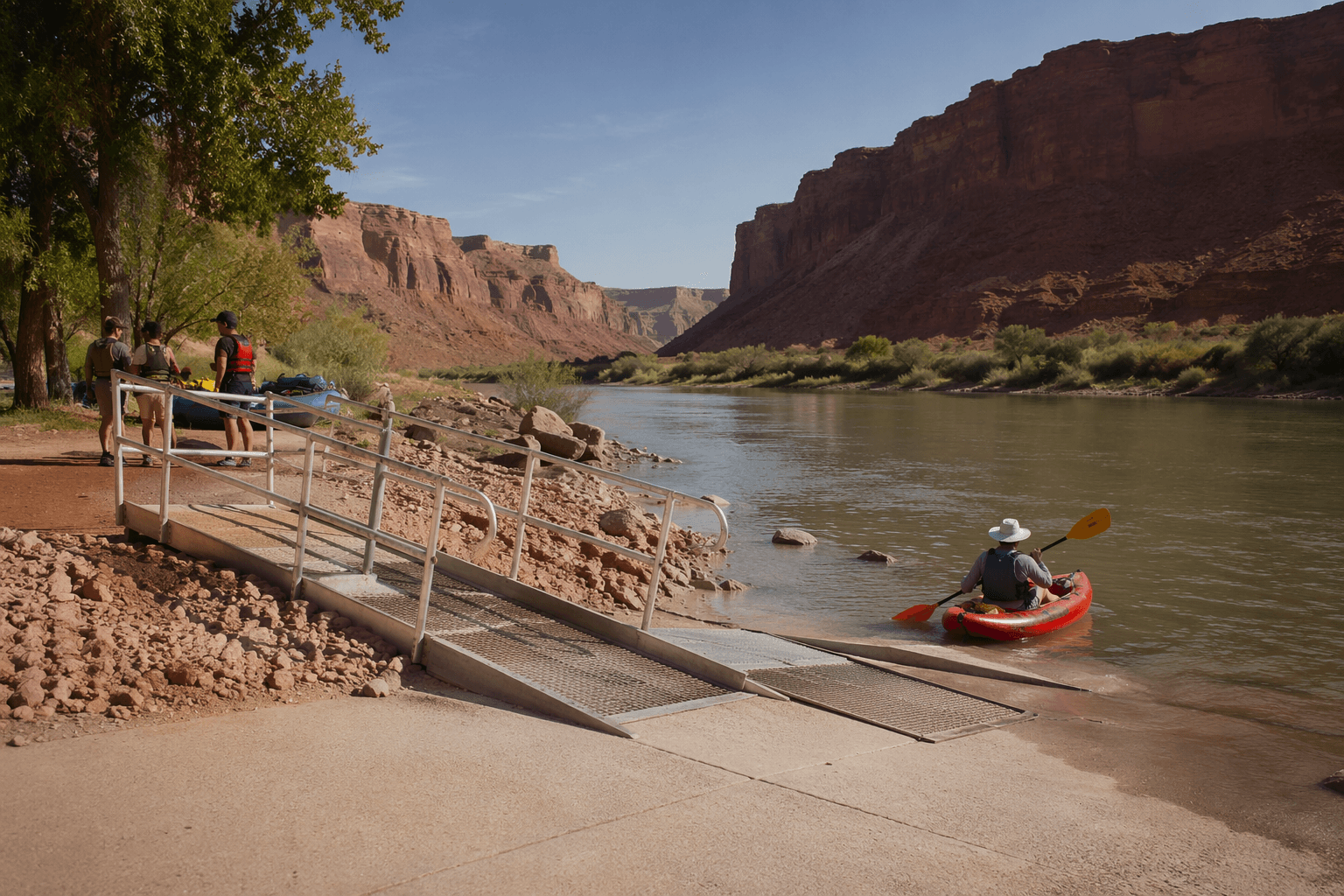
Moab took a concrete step toward making the Colorado River easier to reach at Lions Park, approving a study that will test whether swimmers, paddleboarders and kayakers can get safer, ADA-accessible access from the south bank. The city council backed a $198,407 contract with River Restoration, and the work will be paid for by a $200,000 Utah grant, so no local match is required.
The study is meant to do more than sketch a launch point. It will review environmental rules, vegetation and habitat changes, concept designs for safe access, and the costs and next steps needed to connect river access with the park and trail system already in place. Patrick Trim, the city’s parks, recreation and trails director, presented the item, and the city expects the feasibility work to be finished by April 2027.
The project has been years in the making. The south-bank idea was flagged in the 2022 Moab Town Boat Ramp Action Plan, which grew out of planning that began in fall 2021 and involved the City of Moab, Utah Department of Natural Resources, the U.S. Bureau of Land Management, the National Park Service, Grand County Search and Rescue, and boating experts. That plan focused on the motorized ramp on the north bank, but it also pointed to a future nonmotorized phase at Lions Park. Moab later won a Utah Outdoor Recreation Initiative grant in December 2024 to study that possibility.
Lions Park already functions as one of Moab’s key outdoor gateways. The site has parking, restrooms, a transit bus stop, a bridge over the Colorado River, a pavilion, water, a bouldering area and trail connections, and the RFP described it as a heavily used recreation hub at the U.S. 191 and SR-128 intersection. The city said it serves a regional area of about 10,000 people and a Moab area that draws more than 3 million visits each year, which helps explain why pressure on river access keeps growing.
The biggest hurdles are physical and legal, not just financial. Trim told councilmembers the study must account for bank conditions, river dynamics, vegetation, environmental sensitivity and ownership issues. Lions Park is city property, but the riverbank and river bottom are state sovereign lands managed by the Utah Division of Forestry, Fire and State Lands, and the city’s RFP noted that UDOT owns most of the northern Lions Park property, which the city operates and maintains, while Grand County owns part of the area near the pedestrian bridge. City Manager Michael Black said other land managers would need to be involved, and the council was told there is no existing federal river access there.
The move also comes as UDOT pushes ahead with the $12.5 million Colorado River Trail Gap project along State Route 128, which began construction on April 28, 2026 and will close a 0.647-mile gap between Lions Park and Grandstaff Canyon. Together, the trail project and the Lions Park study show Moab building out the river corridor piece by piece. For now, the south bank is still a question on paper, but the city has finally put a timeline and funding behind whether it can become a real gateway instead of just a promising idea.
This article was produced by Prism’s automated news system from verified source data, official records, and press releases, then run through automated quality and moderation checks before publishing. The system is built and supervised by the people who set the standards it runs under. Read our full AI policy.
Know something we missed? Have a correction or additional information?
Submit a Tip