Moab river gear shop thrives on local guides’ lived experience
Moab’s river economy runs through a small Highway 191 shop where guides and boaters buy custom gear built by people who run the same water. One aluminum frame shows how lived experience becomes local craft.
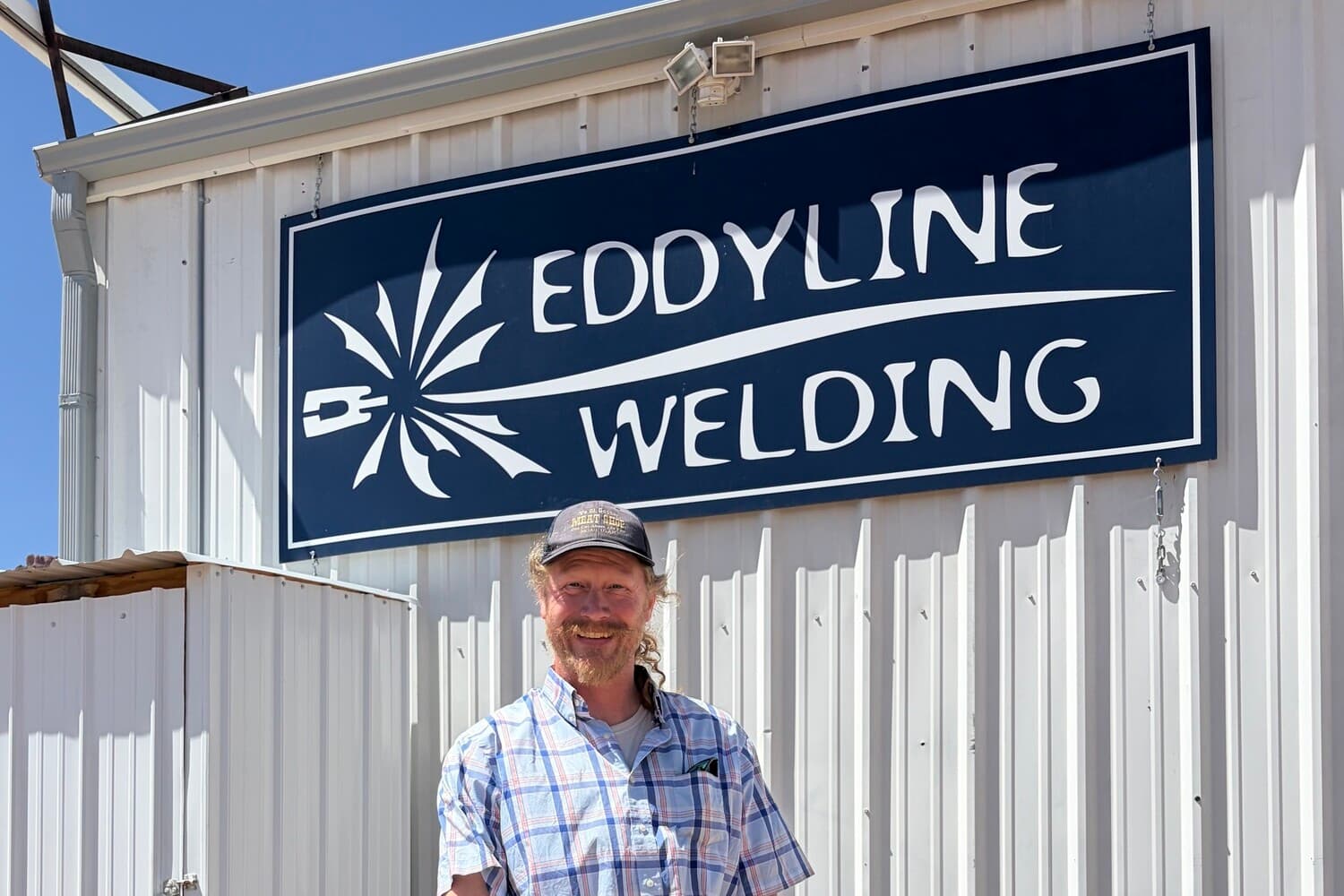
In Moab, the river economy does not stop at the boat ramp. It shows up on Highway 191 in a shop where the people welding aluminum frames and repairing boats are also the ones running the Colorado River, carrying the same gear, and solving the same problems their customers bring through the door.
That is what makes Eddyline Welding more than a fabrication stop. It is a place where river knowledge, labor, and local identity overlap, and where a custom frame is not just a product but a response to how desert boating actually works.

A shop shaped by the same water its customers run
Eddyline Welding describes itself as a custom river fabrication and repair business in Moab, guided by 25 years of rafting experience. That matters because river gear is unforgiving: if a frame does not fit right, a dry box does not sit level, or a table does not hold under load, the mistake follows you onto the water.
The shop has been building custom river gear near the Colorado River for nearly 15 years, and that long presence is part of why it fits Moab so cleanly. This is a town where many people own their own watercraft and many others work as commercial guides, so the need for repairable, made-to-fit equipment is constant rather than occasional.
What Eddyline builds for the river
The company’s work centers on custom aluminum raft frames and cataraft frames, but the list stretches well beyond the bare skeleton of a boat. Eddyline also fabricates dry boxes, tables, sand stakes, and other river-trip gear, the kind of equipment that turns a day float or a multiday run into something organized, secure, and durable.
Boat repair is part of the service too, which is another clue to how the business functions in Moab. River gear in this part of the world gets used hard, hauled often, and expected to last through sun, sand, and repeated loading, so a shop that can both build and repair becomes part of the regular life of the river community.
Eddyline also serves as an authorized dealer for NRS, Sawyer Paddles & Oars, Engel Coolers, Canyon Coolers, and SeaDek marine products. That mix of custom fabrication and branded gear means boaters can outfit, repair, and refine a setup in one place instead of piecing it together from a string of separate stops.
Why lived experience changes the product
The key detail in Eddyline’s appeal is not just that it fabricates gear. It is that the staff understands the gear from the inside, because they run the same water and use the same equipment they build.
That kind of lived experience changes what a customer gets. A guide asking for a frame is not only buying aluminum and welds; they are buying the judgment of people who know how a rig should sit, how gear should pack, and how a boat needs to feel when the day turns long or the water changes. In a niche outdoor economy, that knowledge is part of the product itself.
A 2017 profile in Moab Sun News captured that specialization clearly, noting that Mike DeHoff, Colin Topper, and Paige Stuart had made a full-time occupation out of fabricating river-related gear that could be cut, bent, and welded from aluminum. That focus on river gear, rather than general welding, is what gives the shop its identity.
How one custom frame becomes a local solution
The clearest way to understand Eddyline is to follow one piece of gear from problem to finish. A boater needs a frame that fits a specific raft or cataraft, holds dry storage securely, and matches the way that person actually runs the river. A standard off-the-shelf setup may be close, but close is not enough when the boat is loaded for a multiday trip or being used season after season by a guide.
At Eddyline, that problem becomes a design conversation. The company says it can help with designing custom aluminum boating gear, then builds the frame, box, floor, table, or transom to suit the boat and the user. The result is a piece of equipment that reflects local use patterns rather than mass-market assumptions, which is exactly why custom fabrication still matters here.
The handoff that kept the shop rooted
When longtime employee Alex Miller bought the company from founder Mike DeHoff in 2023, the important part was continuity. The handoff kept the Moab shop intact instead of folding it into something generic, and that helped preserve a business model built around local river life.
That continuity matters because the demand is real and daily. Local guides need gear that can be repaired, adjusted, and trusted. Private boaters need equipment that matches their rigs and the kinds of runs they actually do. Eddyline’s survival as a specialized shop says as much about the depth of the river community as it does about the company itself.
River access, infrastructure, and the bigger Moab picture
Eddyline also sits inside a wider river world that is changing in visible ways. Mike DeHoff has been involved in Returning Rapids, a Moab-based citizen-science effort tracking changing rapids and river conditions as Lake Powell recedes, which shows how local river users are not only boating but also documenting the landscape they depend on.
That broader context has real consequences. A 2024 Moab Sun News report said the Glen Canyon area received $166 million in Federal Emergency Management Agency disaster supplemental funds in 2023 for low-water infrastructure work, including a new take-out ramp near Hite Bridge. In other words, the same river culture that fuels custom fabrication also drives public investment in access, safety, and adaptation.
Visiting the shop
Eddyline Welding lists its Moab address as 2540 S Highway 191, Moab, Utah 84532. The contact page lists weekday hours of Monday through Friday from 9 a.m. to 4:30 p.m. MST, with Saturday and Sunday by appointment.
That address on Highway 191 is more than a point on the map. It is where Moab’s river identity gets turned into aluminum, one custom frame at a time, by people who know the Colorado River not as a market but as a lived-in place.
This article was produced by Prism’s automated news system from verified source data, official records, and press releases, then run through automated quality and moderation checks before publishing. The system is built and supervised by the people who set the standards it runs under. Read our full AI policy.
Did this article answer your question?