Moab Wastewater Tests Detect Measles as Utah Cases Top 440
Moab wastewater has tested positive for measles repeatedly even as just 3 local cases are confirmed, a gap that matters with Jeep Safari's 60th edition now underway.
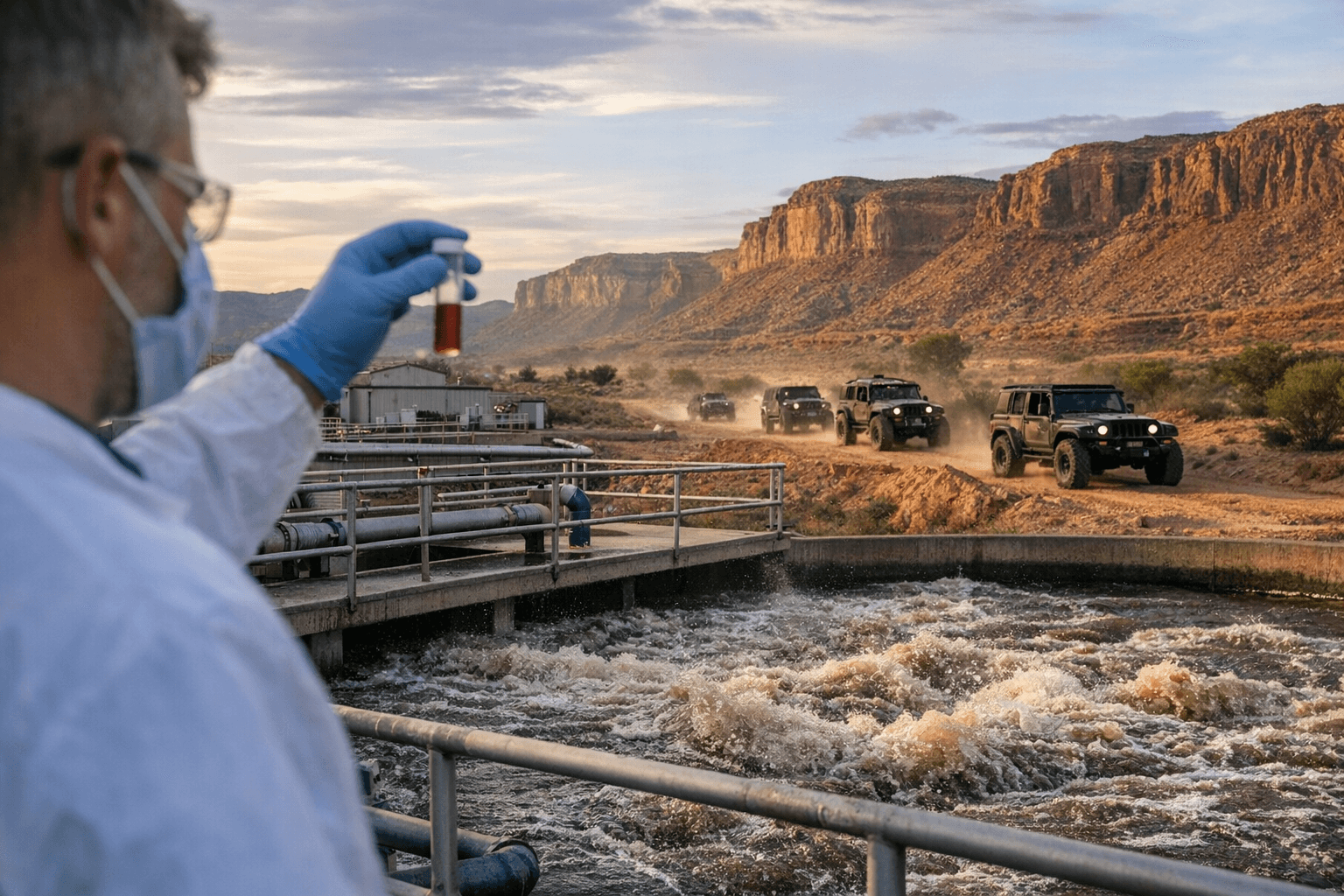
Easter Jeep Safari's 60th edition opened March 28 along Moab's red-rock corridors, drawing thousands of rigs and riders to nine days of trail runs and the kind of shoulder-to-shoulder community that makes the annual pilgrimage iconic. That same week, public health monitoring labs confirmed that measles virus fragments had appeared in Moab's wastewater, not once but repeatedly, even as only three confirmed clinical cases had been identified in the community.
The gap between those two numbers is exactly what wastewater surveillance is designed to catch. When measles shows up in a community's sewage stream, it signals that at least one person in or traveling through the area was infected and actively shedding the virus, according to Utah Department of Health and Human Services guidance. The test cannot say whether it is one visitor or several, but the signal arriving at the start of Moab's highest-traffic spring window carries clear weight for anyone joining group activities this week.
Statewide, Utah had logged more than 440 confirmed measles infections since the outbreak began, a figure that throws Moab's local count of three into sharp relief. Local public health officials noted that tourism heightens transmission risk in gateway communities: transient populations, high contact rates in lodging and shared transportation, and daily congregation in tight spaces all amplify any circulating pathogen. Grand County's vaccination rates run slightly above the state average, which offers some baseline protection, but measles spreads efficiently enough that wastewater detection alone warrants a change in behavior.
For anyone arriving in Moab this spring, the most direct step is confirming MMR vaccination status before joining group activities. Two doses of the MMR vaccine provide roughly 97% protection against measles. People unsure of their status should contact their healthcare provider or watch for pop-up vaccination clinic announcements from local public health authorities. Early measles symptoms, appearing seven to 14 days after exposure, include a high fever above 101°F paired with cough, runny nose, or red eyes; a rash typically develops after four days of fever. Anyone experiencing those signs should stay off trail and seek testing before returning to shared spaces.
The settings that define a Moab spring week, packed shuttle vans to trailheads, multi-day river raft trips, guiding company vehicles, and festival staging areas, are exactly the congregate environments where measles spreads most efficiently. Easter Jeep Safari runs through April 5, bringing nine consecutive days of close-contact trail culture to the Colorado Plateau's busiest corner. Local health officials are monitoring the situation and may announce targeted clinics or new exposure locations as the event week unfolds; keeping an eye on updates from the Southeast Utah Health Department costs nothing, and for anyone unvaccinated heading into that kind of crowd, it is the most important pre-trip prep item on the list.
This article was produced by Prism’s automated news system from verified source data, official records, and press releases, then run through automated quality and moderation checks before publishing. The system is built and supervised by the people who set the standards it runs under. Read our full AI policy.
Did this article answer your question?