Mountain Village accelerates wildfire mitigation, reshaping trails and recreation areas
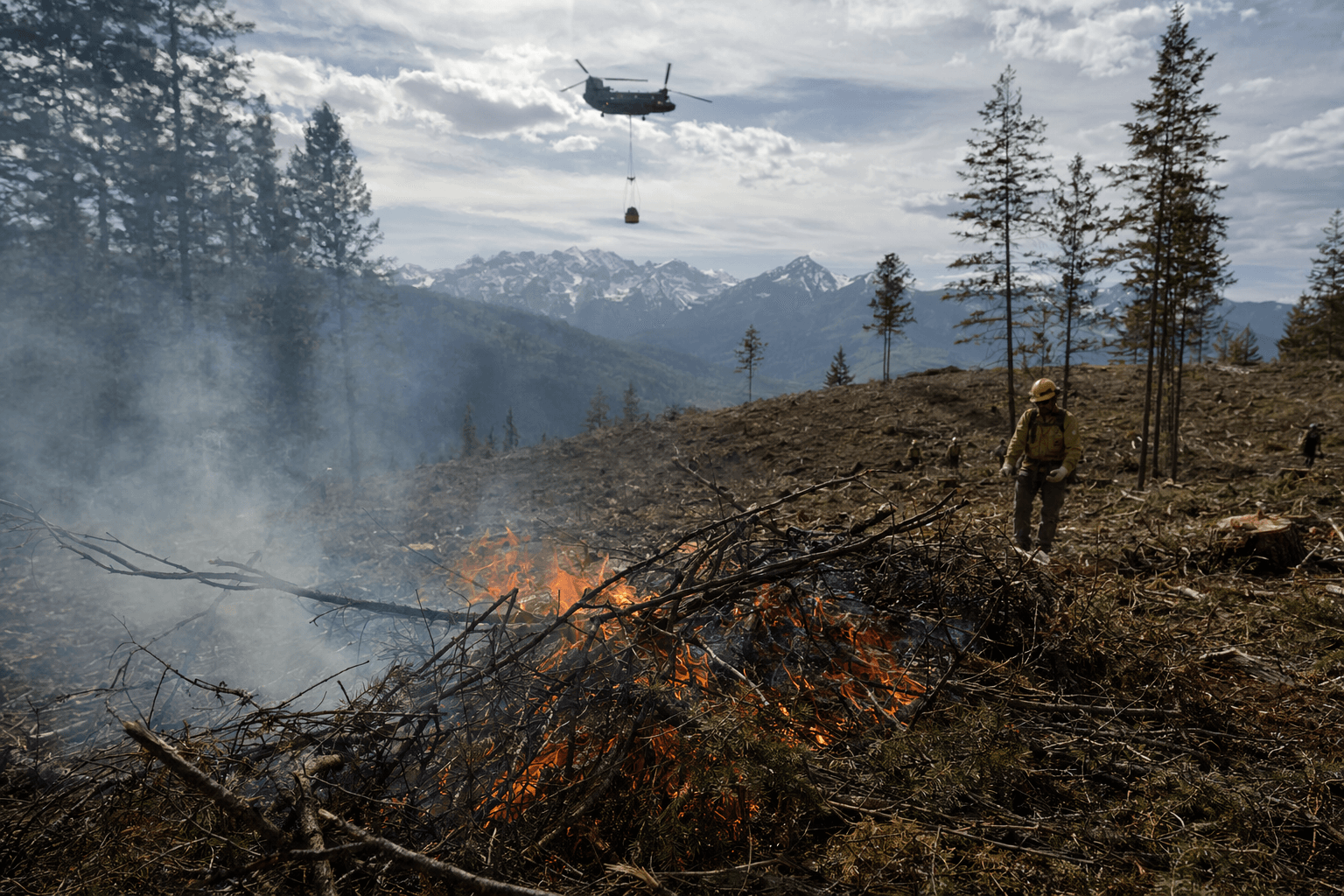
Mountain Village’s mitigation push is changing what trail users see now, from thinning crews and slash pile burns to helicopter-linked work on the Valley Floor.

What changes on the ground
The most visible summer shift in Mountain Village is not a new trail sign or a fresh overlook. It is the forestry work itself, showing up along forest edges, neighborhood borders, and the corridors that connect town to the Valley Floor. Chainsaws, brush removal, pile burns, and thinning crews are becoming part of the recreation landscape, and the point is simple: keep a wildfire from turning access, scenery, and evacuation routes into losses later.
That is why the town is treating wildfire mitigation like a live summer issue rather than a background maintenance job. Forester Rodney Walters said 2025 was especially active, with 42 forestry, hazard-tree, mitigation, and defensible-space projects started and 38 completed. The pace matters because every project is aimed at reducing fuel loads, improving forest resilience, and building shaded fuel breaks that can slow the intensity and spread of fire before it reaches homes or the trails people use every day.
Where you will notice it first
If you spend time around the recreation corridors, the work is already easy to spot. Walters said crews are removing standing dead trees and other down fuel, thinning selected trees to reduce stress on the remaining canopy, and using the cut material in habitat and river-restoration work on the Valley Floor. That means the byproducts of hazard reduction are not simply being hauled away and forgotten. They are being folded into restoration work along the San Miguel River, where the town has tried to connect fire safety with ecological repair.
The scale is not small. Mountain Village said it burned 485 slash piles over the winter and plans to build roughly 500 more, which tells you this is not a one-season cleanup. It is an accelerating management cycle, and trail users will see the effects as open understory, fewer dead trees, and more obvious signs of active forest work near the route network.
The town is also targeting vulnerable trees before insect damage gets worse. More than 2,000 pheromone packets were distributed to help protect trees from bark beetles, concentrated on the north side of Mountain Village from Granite Ridge to Lawson Overlook. That is the kind of detail hikers and riders may not notice at first glance, but it matters because beetle stress and wildfire risk often feed each other. A forest under insect pressure is a forest that becomes more fragile when fire weather arrives.
What the shaded fuel break is meant to do
Mountain Village’s biggest move is the Community-Scale Shaded Fuel Break Project, backed by an $825,303 Colorado State Forest Service Forest Restoration and Wildfire Risk Mitigation Grant announced in April 2025. The town said the grant covers 43 percent of the project and helps complete three high-priority shaded fuel break areas over four years. Planned at roughly 100 acres, the project is designed to create a more defensible landscape in the places where mountain forest, town infrastructure, and recreation routes sit close together.
The numbers show why the town is pushing so hard. Mountain Village said work on the fuel break began in 2024, when crews removed more than 2,200 trees totaling more than 52,000 cubic feet of fuel from steep terrain between Mountain Village and the Valley Floor. Some of that material was flown by helicopter and placed on the Valley Floor for habitat restoration along the San Miguel River. That is highly technical work, and the terrain makes it expensive, labor-intensive, and noisy. It also explains why the town leans on chainsaw crews, helicopter operations, and winter pile burning to move the project forward.
When finished, Mountain Village says the fuel break is designed to help protect over 844 homes, 118 businesses, and two critical emergency evacuation routes. That is the share hook in plain sight: one project on steep terrain is being asked to protect the places where people sleep, work, and leave town if fire threatens. For a resort community where recreation and daily life overlap so tightly, the project is not abstract forestry. It is access planning.
Trail users already saw how that can affect a route. The US Forest Service scheduled partial closures of Trail #431, the River Trail, from June 9 through July 31, 2025 for helicopter timber transportation operations tied to the shaded fuel break work. That kind of closure is exactly what residents and visitors should expect when fuel reduction moves into steep, connected terrain. It is temporary disruption now in exchange for a better chance of keeping the corridor open when fire danger rises.
Why neighborhood edges matter as much as trailheads
The work does not stop at the tree line. Around Village Court Apartments, hazard trees and brush were removed within 10 feet of structures, a reminder that defensible space is part of the same story as the shaded fuel break. In a place where homes sit close to forest and trail, the first line of wildfire defense is often the space between a building and the vegetation around it.
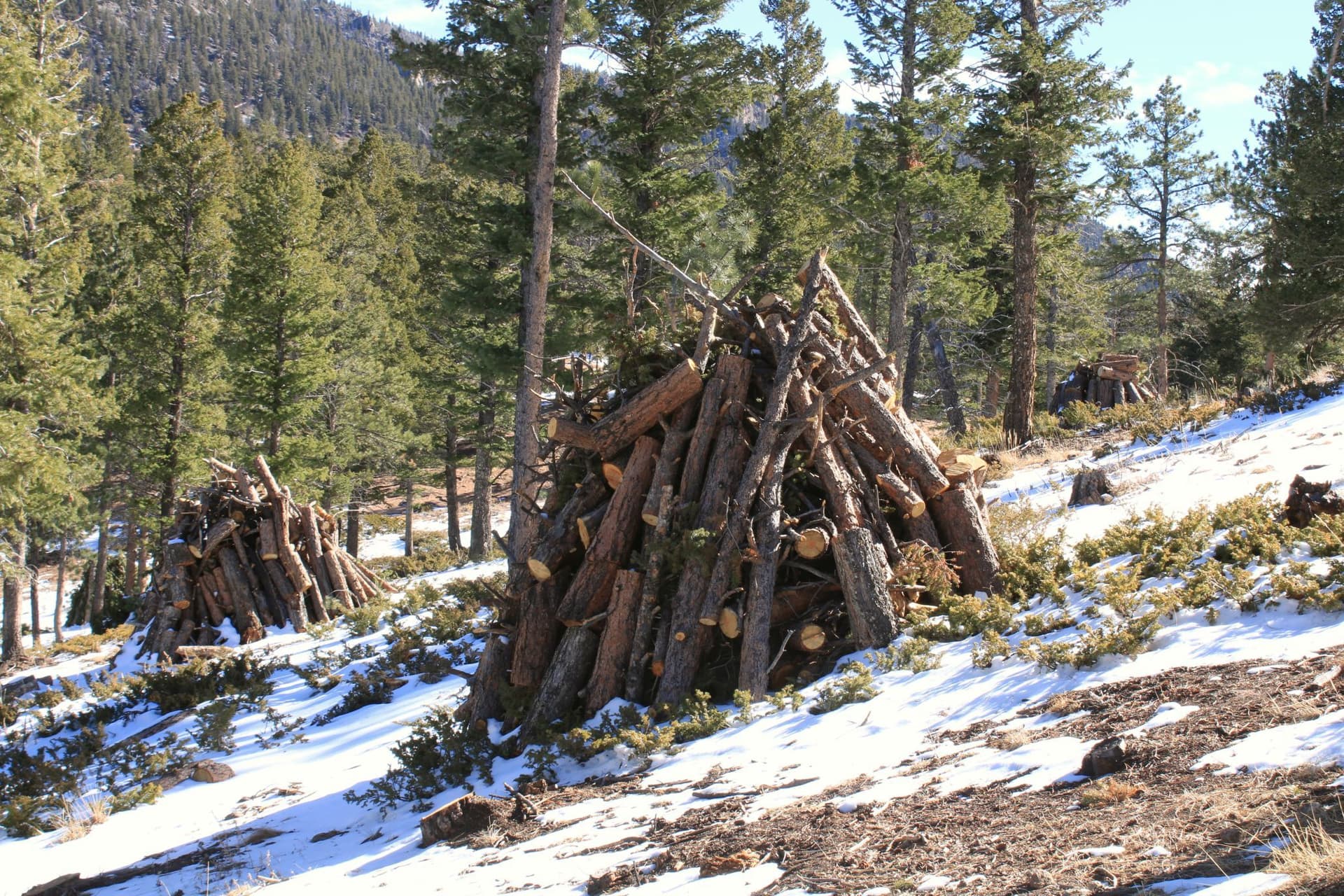
That same logic carries into community cleanups. Mountain Village announced Clean Up Days for May 13 at Village Court Apartments and May 14 in the Meadows neighborhood. The timing signals how wildfire readiness is becoming part of regular neighborhood life, not just a project for foresters. Brush removal and cleanup in shared spaces may feel routine, but in this town, routine is one of the ways risk gets reduced before fire season peaks.
How the town plans for the worst day
Mountain Village’s preparedness culture is built around a hard reality: there are very few routes into and out of Telluride and Mountain Village. The town’s wildfire safety letter pushes residents and visitors to think about evacuation before they need it, not after smoke is already in the drainage. That matters in a community where access, lodging, lifts, trailheads, and homes are woven together so tightly that one closure can ripple through daily life.
The town’s wildland-fire plan identifies safe areas including The Peaks Resort & Spa, Mountain Village Center, and parts of the Telluride Golf Course if evacuation is not possible or safe. That is a practical map, not a theoretical one, and it shows how the town is trying to plan for both movement and shelter under pressure. Mountain Village’s defensible-space program also draws on a 2014 Rapid Wildfire Risk Assessment that covered more than 1,900 homes and properties in the fire district, giving the town a long-running framework for identifying where risk is highest.
The staff forester can conduct home site visits from April 1 to October 31, and the town has a Community Development Code section dedicated to wildfire mitigation. In February 2025, council also discussed distributing MCH pheromone packets to help prevent Douglas fir beetle kill, with a possible rollout in summer 2026. Taken together, those details show a town that is treating wildfire as part of forest health, neighborhood safety, and recreation access all at once.
That is what trail users are walking into this summer: not a static mountain setting, but a landscape being actively reshaped so the next fire does less damage, closes fewer routes, and leaves more of Mountain Village usable when the season turns again.
This article was produced by Prism’s automated news system from verified source data, official records, and press releases, then run through automated quality and moderation checks before publishing. The system is built and supervised by the people who set the standards it runs under. Read our full AI policy.
Did this article answer your question?