Navajo National Monument guided tours help visitors plan responsibly
Navajo National Monument is not a quick roadside stop. Guided access, seasonal timing, and tribal-federal rules determine what you can see and how much planning it takes.
At Navajo National Monument, the real planning question is not whether to stop, but whether you are ready for guided access, seasonal limits, and a slower pace. Established in 1909 inside the Navajo Nation in northeastern Arizona, the monument protects Betatakin, Keet Seel, and Inscription House, and each site asks for more than a casual pull-off visit.
Why the guided-tours page matters
The monument’s guided-tours page is less about convenience than it is about setting expectations before you arrive. This is a place where access is part of the story: the dwellings are fragile cultural resources, and the surrounding landscape matters to Diné and other Indigenous communities as much as the ruins themselves. A guided visit helps explain why certain places are limited, why some areas close, and why the monument treats interpretation and protection as two sides of the same job.
That matters in the Four Corners because travelers often stack stops across a tight route, from Monument Valley to Canyon de Chelly and beyond. Navajo National Monument fits that pattern only if you understand that it is not built for a quick photo and a drive on. The park uses guidance to shape behavior, reduce damage, and give visitors the context that makes the sites legible instead of just scenic.
What you can actually see
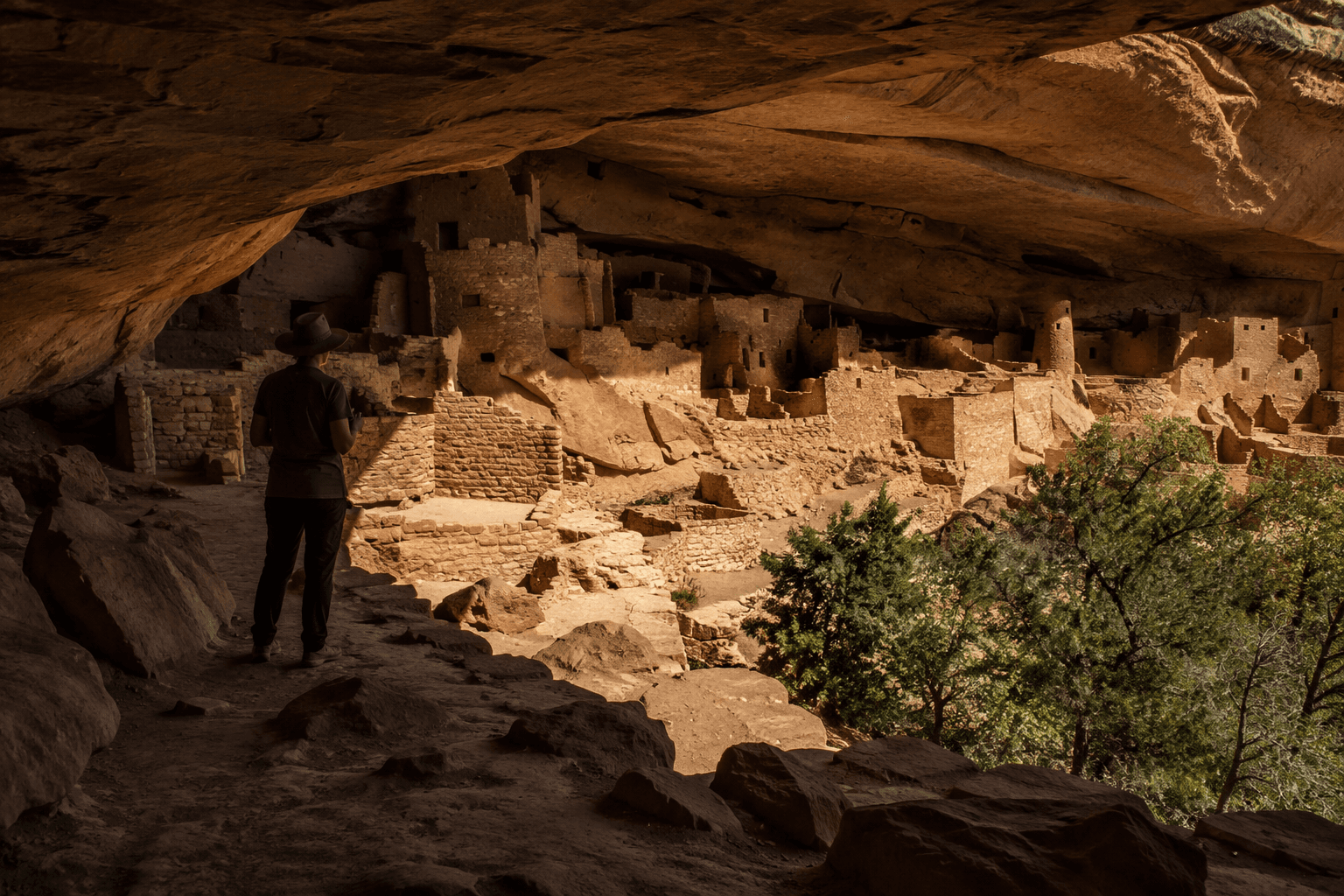
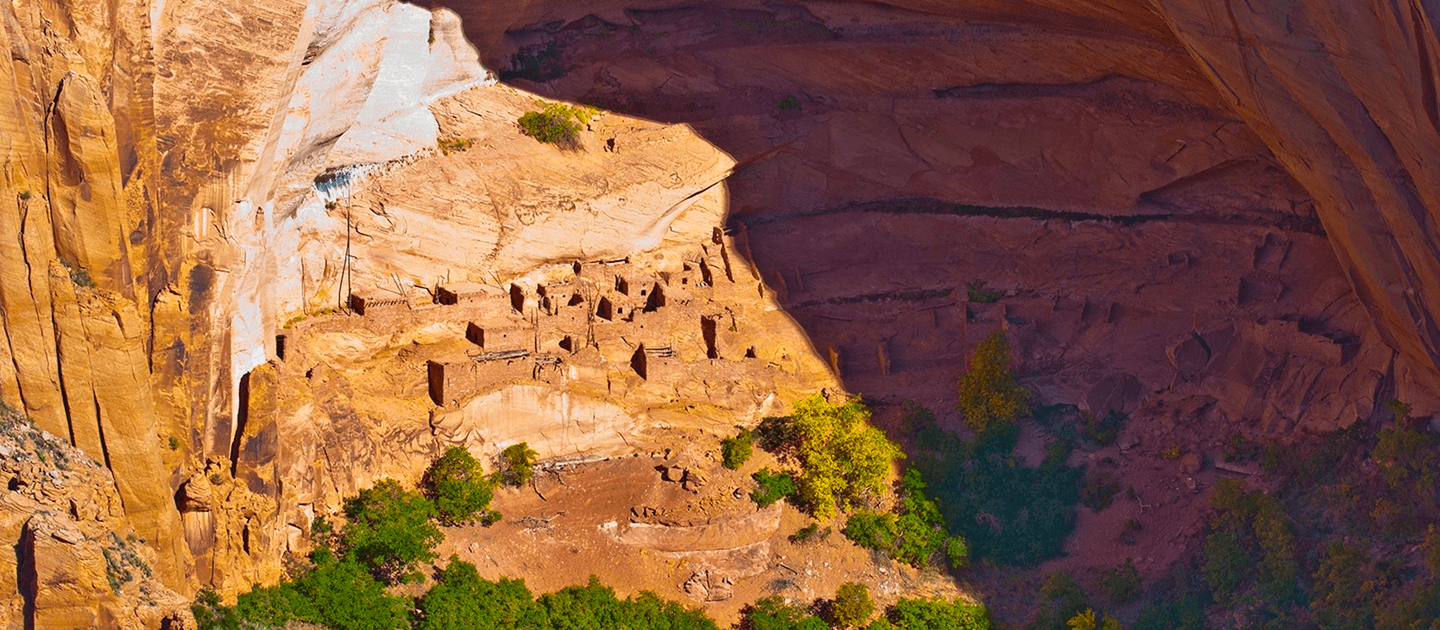
The monument protects three non-contiguous archaeological sites, and Archaeology Southwest describes each one as an Ancestral Pueblo cliff dwelling tree-ring dated to the late 13th century. That detail changes the feel of the visit immediately. You are not looking at isolated ruins in a roadside landscape, but at a protected set of places with deep time, archaeological precision, and a direct connection to the people who lived there.
Betatakin and Keet Seel are the draw for most visitors, and both are open for visitation during the summer, which Archaeology Southwest places from late May to early September. Inscription House is closed to the public because of fragility, which is exactly the kind of access rule that makes the guided-tours page worth checking before you build an itinerary. If your goal is to see all three names on a map, the monument’s rules make clear that the visit will not work that way.
Keet Seel carries its own planning lesson. Britannica notes that it was discovered in 1907 and had been closed to the public since 1968, which helps explain why modern access is so carefully managed. This is not a destination where openness is assumed; it is a place where controlled entry is part of preservation.
How the tour structure shapes the day
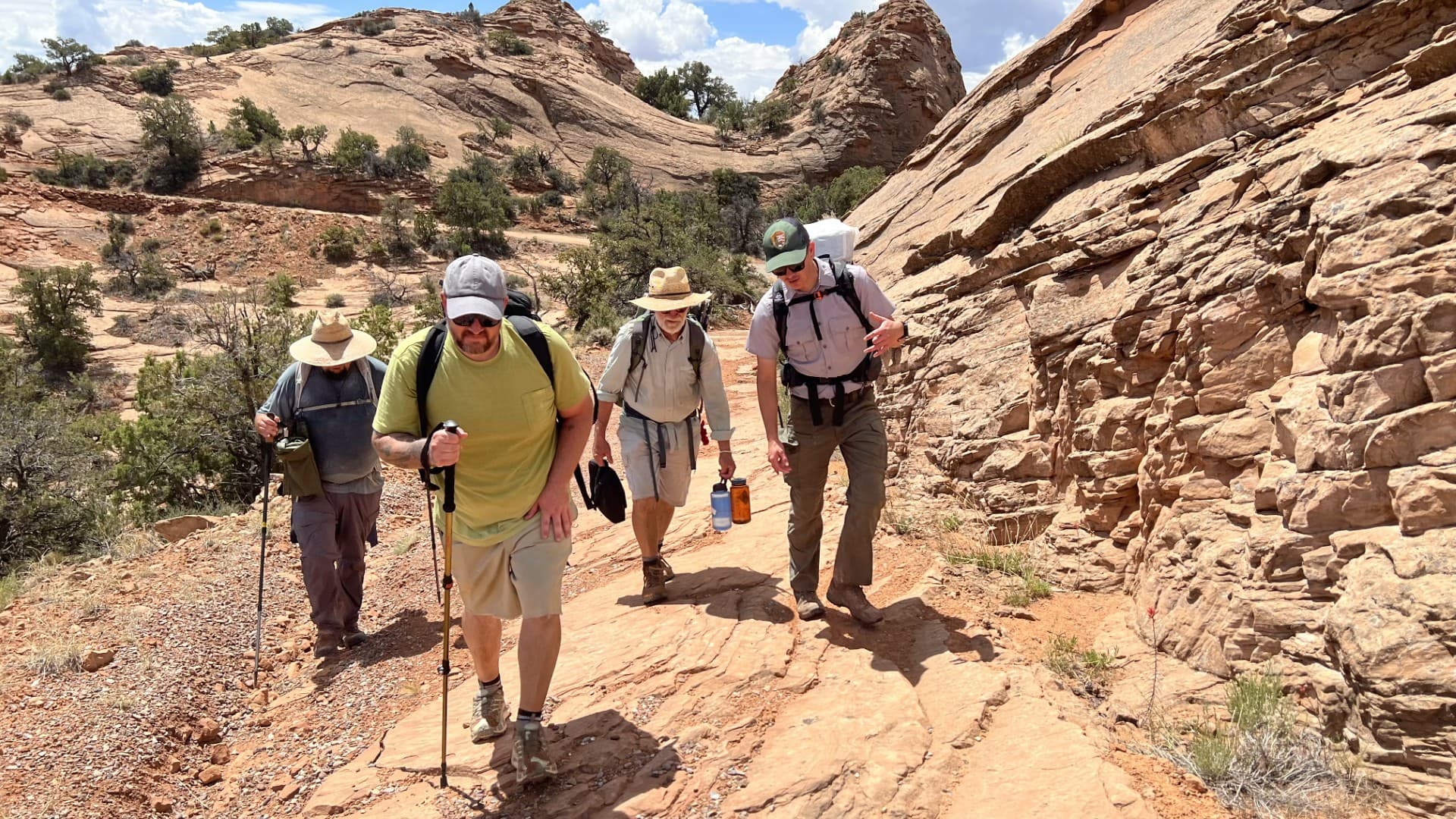
Betatakin is the most structured part of the visitor experience. Archaeology Southwest says tours are offered twice each morning and are limited to 25 hikers per tour, so the day starts with a built-in cap on how many people can go out. That kind of small-group format changes everything from timing to pacing, and it is one reason a visitor can’t treat the monument as a spontaneous stop.
Keet Seel is even more deliberate. Archaeology Southwest says tours there are available by making advance arrangements, which means the iconic backcountry experience is planned well before you reach the trailhead. If you want the monument’s most famous archaeological sites to mean something when you arrive, the structure of the tours does some of that work for you.
The monument has long managed access this way. A 2009 interpretive-program schedule marked the end of the summer season on September 12 and then moved the Visitor Center to 9:00 a.m. to 5:00 p.m. starting September 27 for fall, winter, and spring. That older schedule also shows Betatakin tours as part of seasonal interpretive programming, which is a reminder that the guided system is not a new perk. It is how the park has organized visitation for years.
Hours, seasonality, and what to check first
The current basic information calendar shows Visitor Center hours of 8:00 a.m. to 5:30 p.m. That is useful even if you are not heading out on a tour, because the visitor center is where the monument’s timing, access, and interpretation come together. If you are trying to fit the site into a broader loop, the hours alone should tell you that this is a place worth giving real daylight, not just a drive-by.
Seasonality matters just as much as the clock. Betatakin and Keet Seel are summer experiences, while the older interpretive schedule makes clear that the monument’s operations shift when summer ends. That seasonal rhythm is one of the biggest reasons the guided-tours page deserves attention before you leave home, especially if your Four Corners route already includes several destinations and little slack in the day.
A practical read of the monument looks like this:
- Plan around summer-only access for Betatakin and Keet Seel.
- Treat Keet Seel as an advance-arrangement visit, not a spontaneous one.
- Do not expect Inscription House to be part of a public itinerary.
- Check visitor center hours before building the rest of your route.
Why guidance matters in this landscape
Navajo National Monument sits in a place where archaeology, sovereignty, and tourism overlap in a way that is easy to miss if you only stop for the view. Western National Parks Association describes Betatakin, Keet Seel, and Inscription House as being managed jointly by the Navajo Nation and the National Park Service, and that joint management explains why access is careful and interpretation is so central. The monument is not simply displaying ruins; it is stewarding a living cultural landscape.
That stewardship also has practical consequences for visitors. Navajo Nation Parks and Recreation materials note that weather-related closures may be possible on Navajo Nation lands, which is another reminder that a guided trip can change quickly when conditions shift. In a region where people often build ambitious itineraries across several park units, that kind of flexibility is not optional. It is how you avoid showing up with the wrong expectations.
The guided-tours page, then, is doing more than listing options. It tells you whether you are coming for a short stop or a carefully structured visit, whether you need to plan around summer windows, and whether your idea of the monument matches the reality on the ground. At Navajo National Monument, that difference is the whole experience.
This article was produced by Prism’s automated news system from verified source data, official records, and press releases, then run through automated quality and moderation checks before publishing. The system is built and supervised by the people who set the standards it runs under. Read our full AI policy.
Did this article answer your question?