San Juan National Forest urges caution as high-country trails stay muddy
Muddy snowmelt and lingering drifts kept much of the San Juans off-limits, with some high-country openings not expected until June 1 or later.
Fresh spring warmth did not mean green light in the San Juan National Forest. Forest officials warned on April 10 that much of the high country remained muddy, snowy or otherwise fragile, and that hikers, bikers, horse users and drivers needed to stay off wet roads and trails until they dried out.
That warning had a clear recreation consequence: stay high too early, and the damage lasts. Wet, thawing ground can rut quickly under boots, tires and hooves, and the forest said it was trying to prevent both resource harm and safety problems while seasonal closures continued. The message was not about abstract land management. It was a direct reminder that the wrong route choice this weekend could mean more erosion, more closures later in the season and more trouble for anyone who has to turn around in the backcountry.
Some lower-elevation roads and trails were already opening ahead of schedule, giving visitors a better shot at finding usable ground closer to town. But routes closed to protect elk and deer were still shut until May 1, and the higher country, especially in the Columbine Ranger District, may not open until June 1 or later depending on conditions. The timing matters for anyone planning a fast switch from winter to summer use, because spring in the San Juans often looks ready long before the terrain actually is.
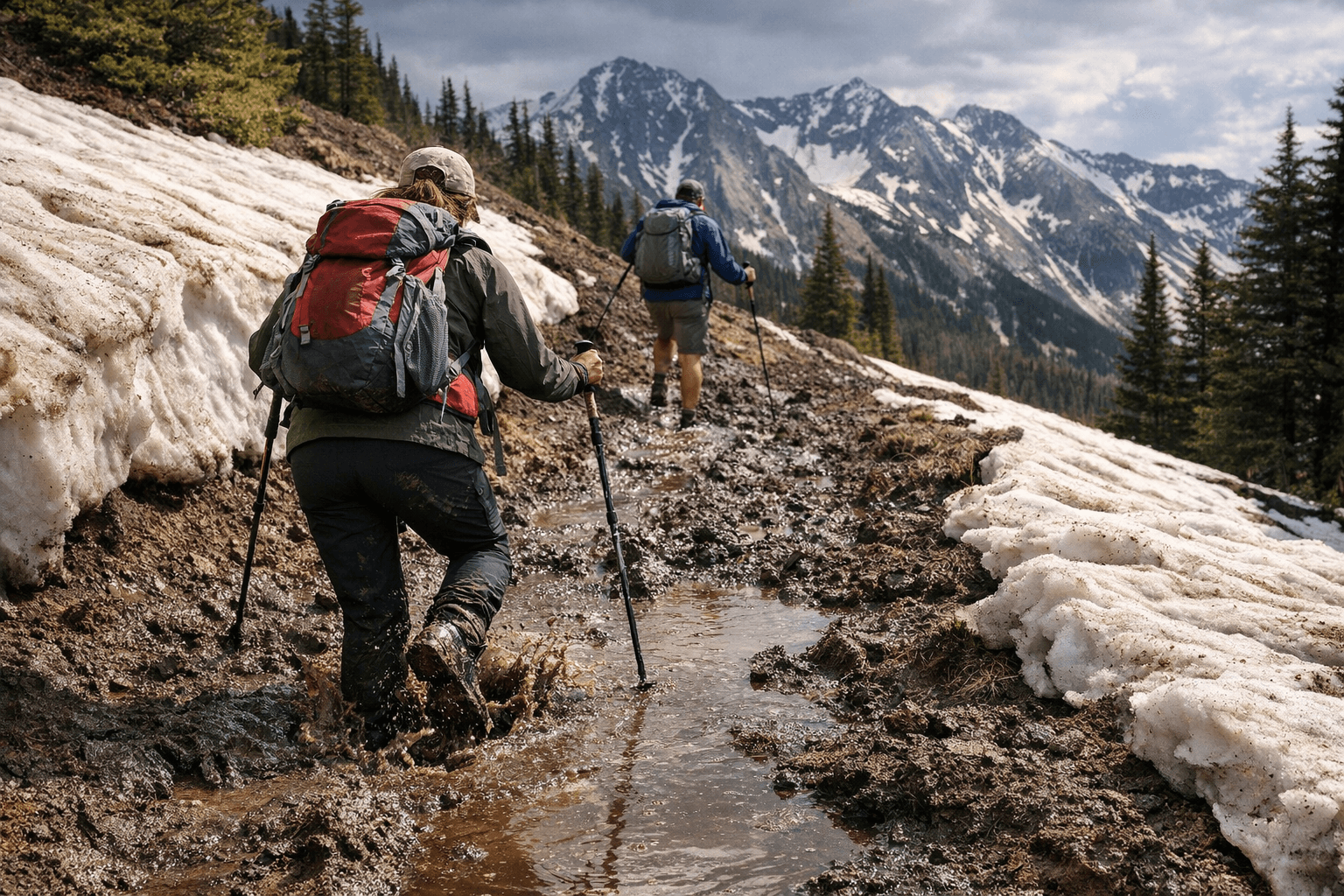
The forest also pointed to the kind of hazards that can catch people off guard even when the air feels mild in Durango or other valley communities. Snowdrifts, standing water and downed trees can still make roads impassable, and wet trails can turn into a mess long before the first warm weekend is over. For hikers, that means choosing lower and mid-elevation routes that have already dried out. For bikers and drivers, it means sticking to gravel roads and paved or hardened surfaces instead of punching into soft backcountry tread.
In practical terms, the safest spring trips in the San Juans may still be the ones that stay low for a few more weeks. The high country will come back into play, but right now it remains in the part of the season where one careless pass can leave a scar that lasts well into summer.
Know something we missed? Have a correction or additional information?
Submit a Tip