Moab Easter Jeep Safari pairs off-roading thrills with public lands stewardship
At Chicken Corners, nearly every first-timer raised a hand as Easter Jeep Safari mixed red-rock runs with trail work to keep Moab open for the next crowd.
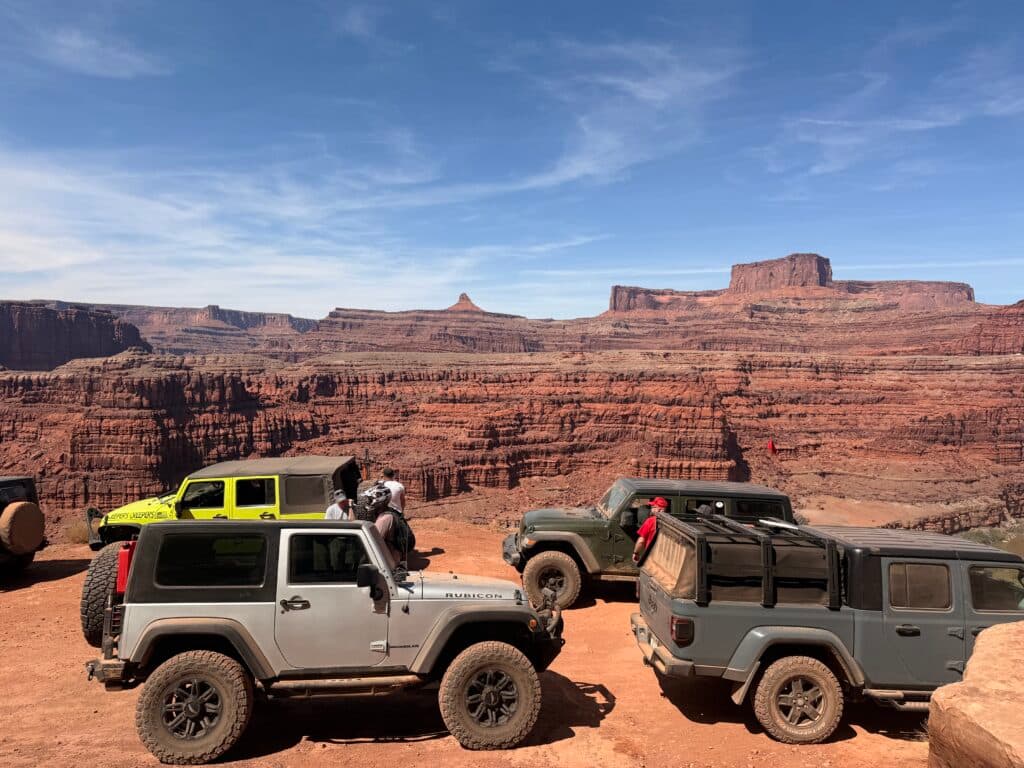
Easter Jeep Safari looked every bit like a Moab spectacle this year, but the real message was simpler: the trails only stay open if the people using them help protect them. During the 60th-anniversary run, which Jeep said ran March 28 through April 5, the event drew an estimated 20,000 visitors over nine days while organizers pushed stewardship as hard as scenery.
That lesson landed early at Chicken Corners, where a first-timers package gave newcomers a safety meeting and a crash course in how to run Moab’s red-rock routes without tearing them up. Trail leader Roger Peck asked how many in the group were first-time participants, and nearly everyone raised a hand. That was the point. Easter Jeep Safari still brings in plenty of rookies, and the event now has to teach trail culture as much as trail skills.
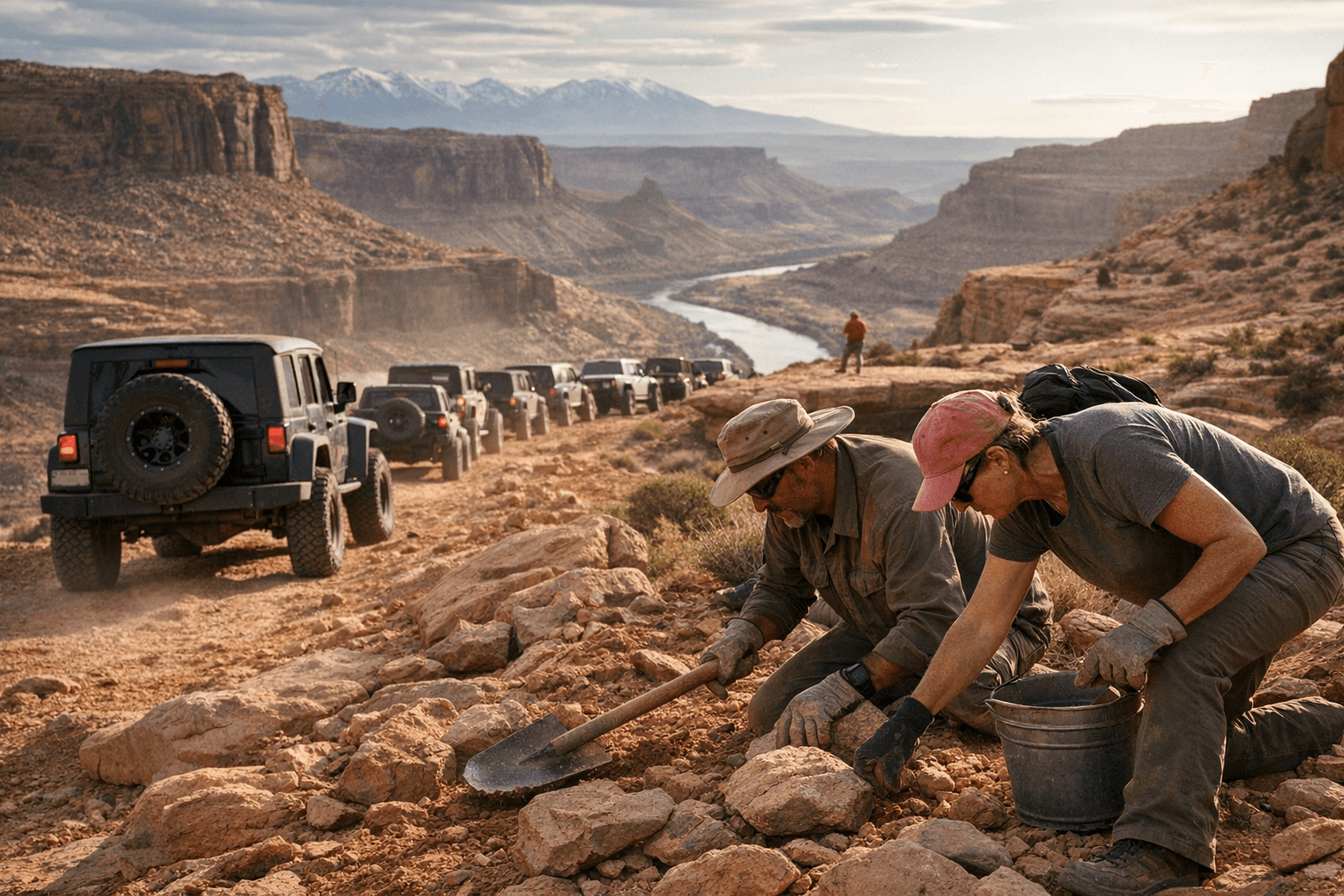
The stewardship side was not window dressing. On opening day, Red Rock 4-Wheelers joined Jeep, the Bureau of Land Management, Grand County and Sand Flats Recreation Area managers on a trail-restoration project for Fins and Things. Jeep said 2026 marked the fifth year of its trail-cleanup efforts, which have included fence building, trail maintenance and general clean-up. In a place where a few bad lines can scar soft ground fast, that kind of work is what keeps the next Safari possible.
The pressure is easy to see in Moab. The BLM’s Moab Field Office manages nearly 500 special recreation permits each year, and the agency says those permits are meant to promote responsible recreation, provide economic opportunities and minimize user conflicts. During Safari, eight popular four-wheel-drive trails were restricted to event participants while the runs were underway, a reminder that access in Moab is tightly managed because the traffic is so heavy and the ground so fragile.
That arrangement has deep roots. The Moab Museum says Easter Jeep Safari started in 1967 as a Moab Chamber of Commerce effort to promote spring visitation, beginning as a single-day outing before growing into a nine-day event attended by thousands. Red Rock 4-Wheelers later took over management after permit and insurance requirements outgrew the Chamber’s capacity. That history explains why stewardship has become part of the tradition instead of an add-on.
The event’s scale still matters. Moab Sun News said the 2026 Safari was expected to bring about 12,000 people to town and include 44 trail rides, while Discover Moab said participants could explore nearly 40 trails in and around the backcountry. However the count lands, the message is the same: Easter Jeep Safari survives because drivers, clubs and land managers keep treating public land like something worth handing down intact.
This article was produced by Prism’s automated news system from verified source data, official records, and press releases, then run through automated quality and moderation checks before publishing. The system is built and supervised by the people who set the standards it runs under. Read our full AI policy.
Did this article answer your question?