San Juan volunteers turn trail users into land stewards
San Juan volunteers are turning busy hikes into stewardship jobs, with options for every kind of trail user. After floods and heavy pressure, a few hours can help keep access open and trails in shape.
Why the timing matters now
At Ice Lake Trail #505, one of the San Juan National Forest’s wildly popular hikes, the difference between a great day out and a trail that wears down too fast can come down to a few practical habits, and a few hours of volunteer time. San Juan Mountains Association has spent decades building that bridge between recreation and stewardship, making it easy for people who already hike, bike, ride, or drive these roads to help keep the places they love in shape.
The urgency is real. The San Juan National Forest covers about 1.8 million acres in southwestern Colorado, and early October 2025 flood events damaged roads, trails, bridges, and major infrastructure across the forest. Forest Service officials said damage assessment in the Columbine and Pagosa Ranger Districts would extend into summer 2026, with multiple major roads and trail bridges washed away. In a landscape that big, every repair, every cleared route, and every bit of litter picked up helps preserve access.
A volunteer path for almost every way you use the San Juans
SJMA, founded in 1988, says volunteers are the heart of its mission, and its menu of roles reflects how many different ways people move through the region. Trail Ambassador work is the best known, and it has been part of the organization’s programming for more than 30 years. Those volunteers work with the San Juan National Forest, the Grand Mesa, Uncompahgre and Gunnison National Forests, the Rio Grande National Forest, and the Bureau of Land Management, which means the reach goes well beyond one trailhead or one town.
If you like talking to people, Trail Ambassador shifts let you do exactly that. If you prefer a quieter role, wilderness solitude monitoring can fit better, especially in places where low-impact travel matters most. If hiking is your thing, there are ways to help from the trailhead or farther into the backcountry; if you ride horses or use stock, there are volunteer paths for that too. Bike users and scenic drivers are not left out either, which is part of what makes the program feel so grounded in the actual outdoor culture of the San Juans rather than a separate conservation lane.
What the work looks like on the ground
The most useful stewardship here is also the most concrete. The Forest Service’s adopt-a-road work is about more than cleanup, since volunteers pick up litter, naturalize unnecessary fire pits, and report damage before small problems turn into bigger ones. That matters in a region where trail pressure, fire risk, and informal campsite impacts are part of the background of every busy weekend.
Trail Ambassadors do a different but equally important job. They help educate visitors about best practices and safety precautions, which reduces human impacts before they happen. At a place like Ice Lake Trailhead or Blue Lakes Trailhead, that can mean helping people stay on durable surfaces, pack out trash, and move through crowded spaces in a way that keeps the experience good for the next group.
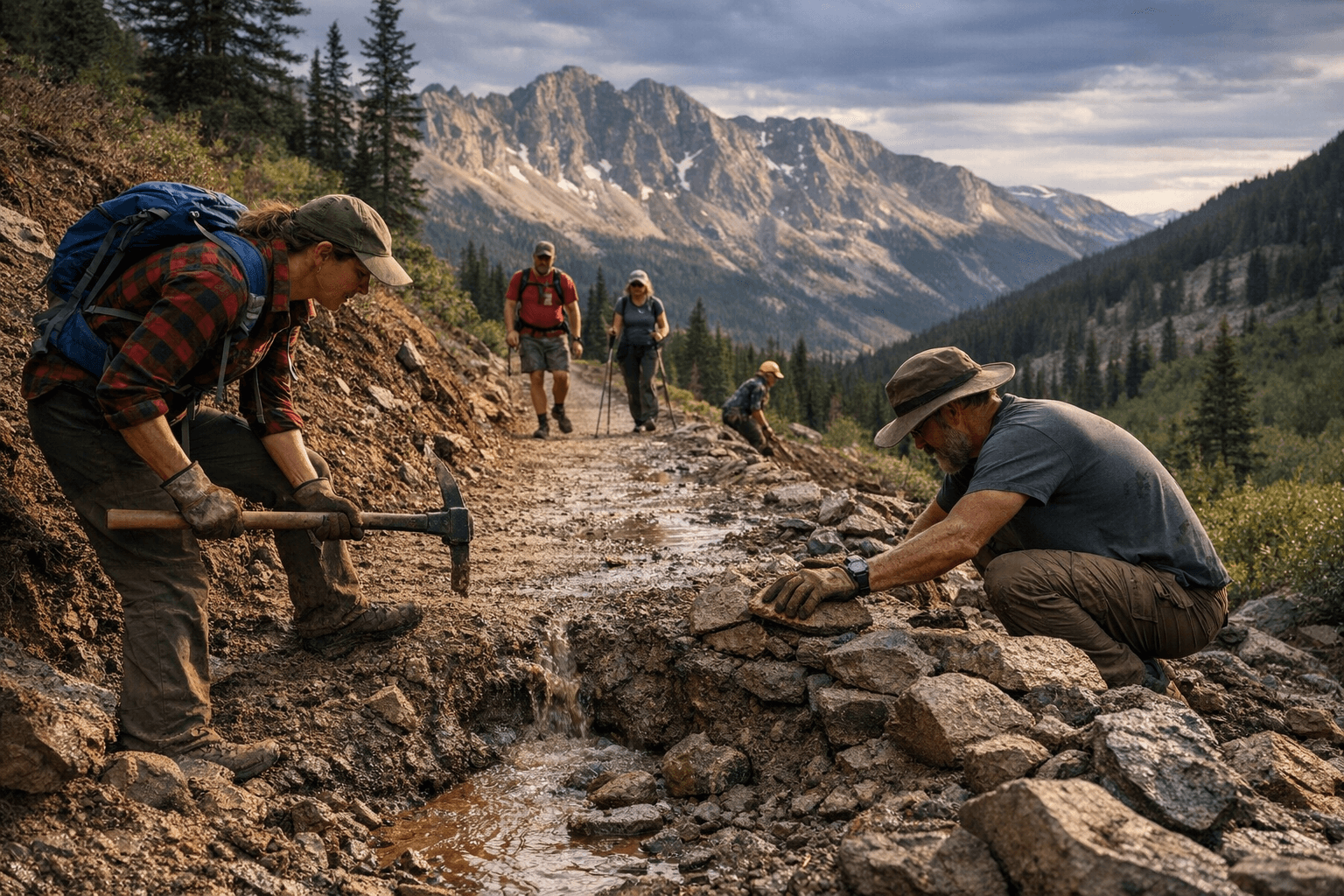
SJMA’s broader stewardship record shows how much work hides behind that simple idea. In 2020, its Wilderness Stewardship Crew naturalized 200 campsites, cleared 160 downed trees, hauled out 259 pounds of trash, designated and cut out 8 campsites, surveyed 590 campsites, and conducted 173 hours of public outreach. Those numbers make the volunteer pitch feel less abstract and more like what it is: hands-on care that changes what a trail system looks like after a hard season.
What you get from joining in
SJMA says it provides training, which is a big part of why the work is accessible to people who know the San Juans well but do not consider themselves experts. Where appropriate, volunteers receive a uniform shirt, hat, and name tag, so the role is visible and easy for visitors to recognize. That matters on crowded summer weekends, when a friendly, informed face can reset the tone of a trail corridor in seconds.
The organization’s scale also shows that this is not a token effort. A 2024 organizational profile says 216 SJMA volunteers recorded more than 4,313 hours of service, and the group says volunteers have donated tens of thousands of hours over time. In a region that stretches from Durango and La Plata County out to places like Pagosa Springs, Bayfield, Dolores, and Ouray, that kind of local labor is what helps public land feel cared for rather than merely used.
Why it matters to the people who actually recreate here
For Durango-area hikers, bikers, riders, and scenic drivers, stewardship is not a side quest. It is part of keeping the San Juans fun, safe, and open, especially when heavy use and flood damage are both in the picture at once. The logic is simple: cleaner trailheads, fewer damaged campsites, better-informed visitors, and faster reporting of problems all add up to healthier access.
SJMA’s approach fits the way people already use these mountains. You can spend one day on the trail and turn it into another kind of contribution the next, whether that means greeting visitors at a busy trailhead, walking a quiet corridor, cleaning up an adopted road, or helping in the backcountry. In the San Juans, that is not separate from the adventure. It is how the adventure stays possible.
This article was produced by Prism’s automated news system from verified source data, official records, and press releases, then run through automated quality and moderation checks before publishing. The system is built and supervised by the people who set the standards it runs under. Read our full AI policy.
Did this article answer your question?