Telluride Ski Resort plan calls for new lifts, trails, restaurant, and public comment
Telluride’s plan would replace Lift 7 and Lift 8, widen Galloping Goose, and expand High Camp, all under a 30-day comment window that opened April 11.
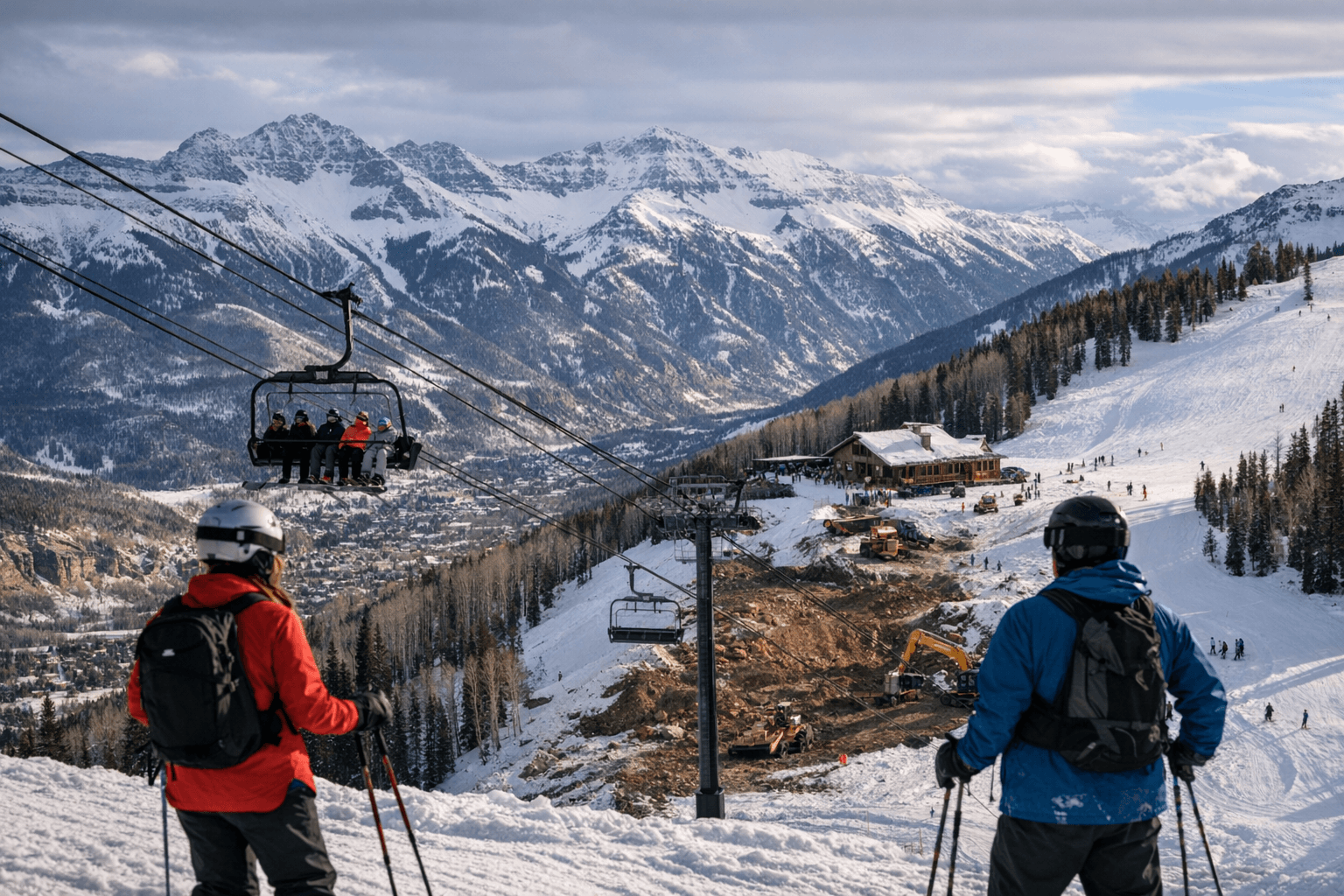
Two of Telluride’s oldest fixed-grip chairs, Lift 7 from 1975 and Lift 8 from 1972, are at the center of a plan that could redraw how the mountain moves. The Grand Mesa, Uncompahgre and Gunnison National Forests opened a 30-day public comment period on April 11 for a Draft Environmental Assessment tied to Telluride Ski Resort’s proposed upgrades, and the package goes well beyond lift mechanics. It would also widen the Galloping Goose Skiway, build a new Jaws Skiway for Lift 9, expand High Camp into a full-service restaurant, add a Green Tech mountain bike connector trail, and permanently authorize the existing Heritage Trail.
The Forest Service has the proposal listed as project #68020, and the project page was last updated March 27. The changes are being analyzed within Telluride Ski Resort’s existing operational boundary under the 2017 Master Development Plan and its 2023 and 2024 amendments, reaching across National Forest System lands inside the resort’s special use permit area and adjacent private land in Telluride and Mountain Village. That is the real story here: not just new hardware, but a shift in circulation, with skiers, hikers, and mountain bikers likely to feel the effects in how they enter, exit, and connect across the hill.
The biggest on-the-ground implications come from the access routes. Replacing Lift 7 and Lift 8 would modernize some of the resort’s most dated lift infrastructure, but the wider Galloping Goose Skiway, reported at about 2.7 acres of tree removal and grading, would physically change the flow of traffic on that side of the mountain. The proposed High Camp expansion, described in one report as roughly 2,000 square feet, would do more than add dining space. It would turn an existing warming hut into a stronger midmountain destination, with summer and winter traffic likely to collect there in larger numbers. The Green Tech connector trail and the permanent Heritage Trail authorization add another layer, making this as much a summer circulation story as a ski-area one.
Environmental and access concerns are already in the frame. San Miguel County previously directed staff to submit scoping comments asking the Forest Service to analyze impacts to lynx habitat, wetlands and fens, noxious weeds, tethered logging methods, and public access during construction. That matters in Prospect Basin, where the Telluride Institute says there are five unique wetlands called fens, a detail that helps explain why this plan could draw close scrutiny from people who know the resort’s back bowls, drains, and summer trails as well as its lifts.
For Telluride, this is the kind of proposal that can improve operations and still change the feel of the place. The comment period opened with the resort’s future infrastructure already laid out on the table, and the debate now is whether those upgrades make the mountain smoother to use or too different from the Telluride people already know.
This article was produced by Prism’s automated news system from verified source data, official records, and press releases, then run through automated quality and moderation checks before publishing. The system is built and supervised by the people who set the standards it runs under. Read our full AI policy.
Did this article answer your question?