Utah's record-low snowpack brings water shortages, earlier runoff, fire risk
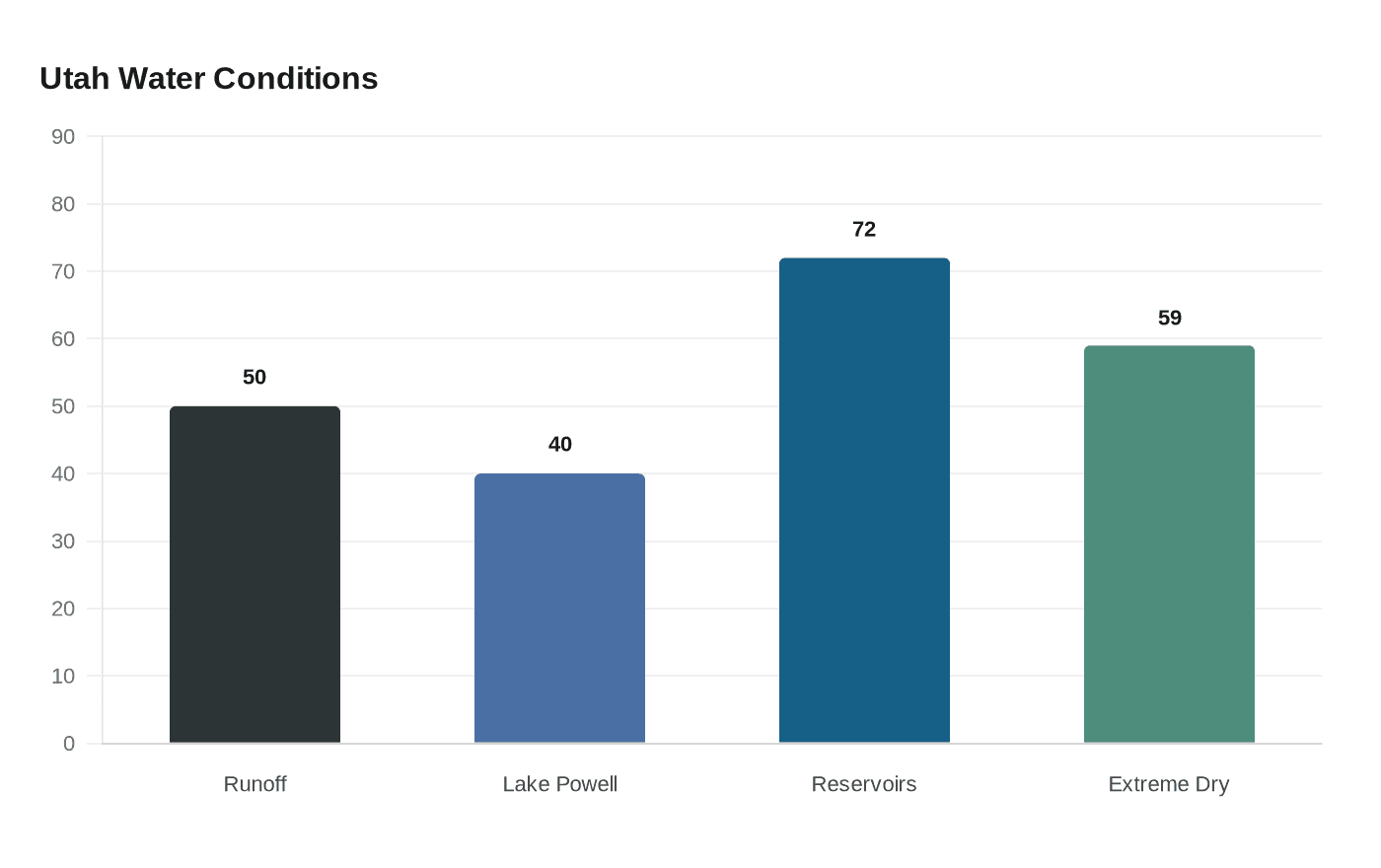
Utah’s runoff had already peaked by late April, and Lake Powell inflows were projected at just 40% of normal.

Utah’s spring runoff had already peaked by April 23, weeks ahead of the usual schedule, after the state’s snowpack topped out at just 8.4 inches of snow-water equivalent on March 9, about three weeks early. Bethany Neilson of the Utah State University Water Research Laboratory said peak runoff had already come and gone, and that groundwater and springs were also at risk. For anyone planning creek-side camps, canyon hikes or a river launch, that meant the water story had turned fast: less snowmelt left for summer, and more of the season’s supply had already blown through.
The Utah Division of Water Resources said statewide streamflow runoff was expected to reach about 50% of normal, while natural inflows to Lake Powell were forecast at about 40% of normal. The state’s reservoir system was about 72% full in late April, but officials warned that number was misleading because a handful of large, multi-year-storage reservoirs were inflating the average while smaller reservoirs lagged far behind. Utah said every part of the state was in some form of drought and 59% was in extreme drought, which is the kind of setup that changes trip logistics well beyond the ski hills.
The snow data were even starker. The Natural Resources Conservation Service said every major basin in Utah had record-low snowpack as of April 1, and some mountain snowpacks were almost completely melted out. The agency called the conditions “uncharted territory,” after March warmth and dryness drove early ripening and rapid melt. Utah’s snowpack peaked on March 9 at 8.4 inches of SWE, and later reporting put the statewide April snowpack at the lowest level since records began in 1930, with a peak of 8.3 inches, nearly 2 inches below the previous record low from the 1980s.
That matters on the ground in Moab, Monument Valley, the San Juan Mountains and even around Salt Lake City. Lower creeks can mean weaker paddling and poorer fishing windows, backcountry springs can run thin, campground spigots can be less reliable, and dry trail surfaces can flip to dust faster than usual once the last melt is gone. With less snow left to release water slowly, fire danger rises sooner, and the transition from muddy spring to hot, brittle summer can arrive in a hurry.
Gov. Spencer Cox said on April 30 that Utah was leaning on its reservoirs like savings accounts and expected to issue a drought-related emergency order fairly soon. The state was also pushing conservation through the Agricultural Water Optimization Program and SlowtheFlow.org, a sign that managers were shifting from watching the snowpack to rationing the season that followed it.
This article was produced by Prism’s automated news system from verified source data, official records, and press releases, then run through automated quality and moderation checks before publishing. The system is built and supervised by the people who set the standards it runs under. Read our full AI policy.
Did this article answer your question?