Cybersigilism Tattoos Blend Sacred Geometry, Dark Ornament in Growing 2026 Trend
Aingelblood was once threatened with firing for tattooing sigils. Now the style they named is on Grimes and Billie Eilish, with a real aging catch collectors need to know.

When Aingelblood started tattooing sigil-based blackwork at an early Los Angeles shop, the response was an ultimatum: stop or get fired. "I was literally told that I was not allowed to tattoo any kind of sigils at one of the first shops I tried to work at, that I would never be able to make a career out of something like this," the artist said. Today Aingelblood works out of Sekret Ink under the Instagram handle @cybersigilism and has effectively named a movement now migrating from specialized portfolios into general shop booking queues.
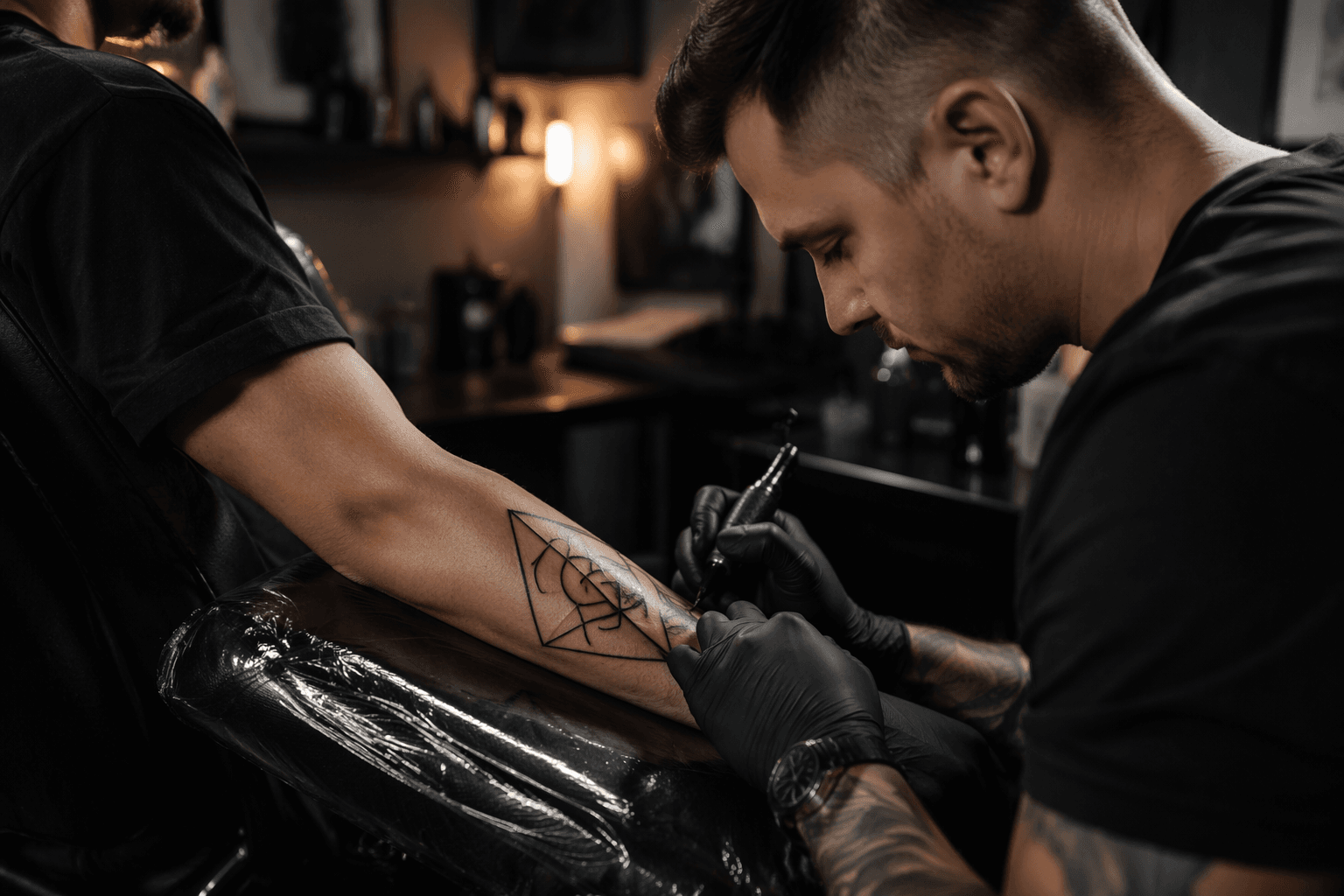
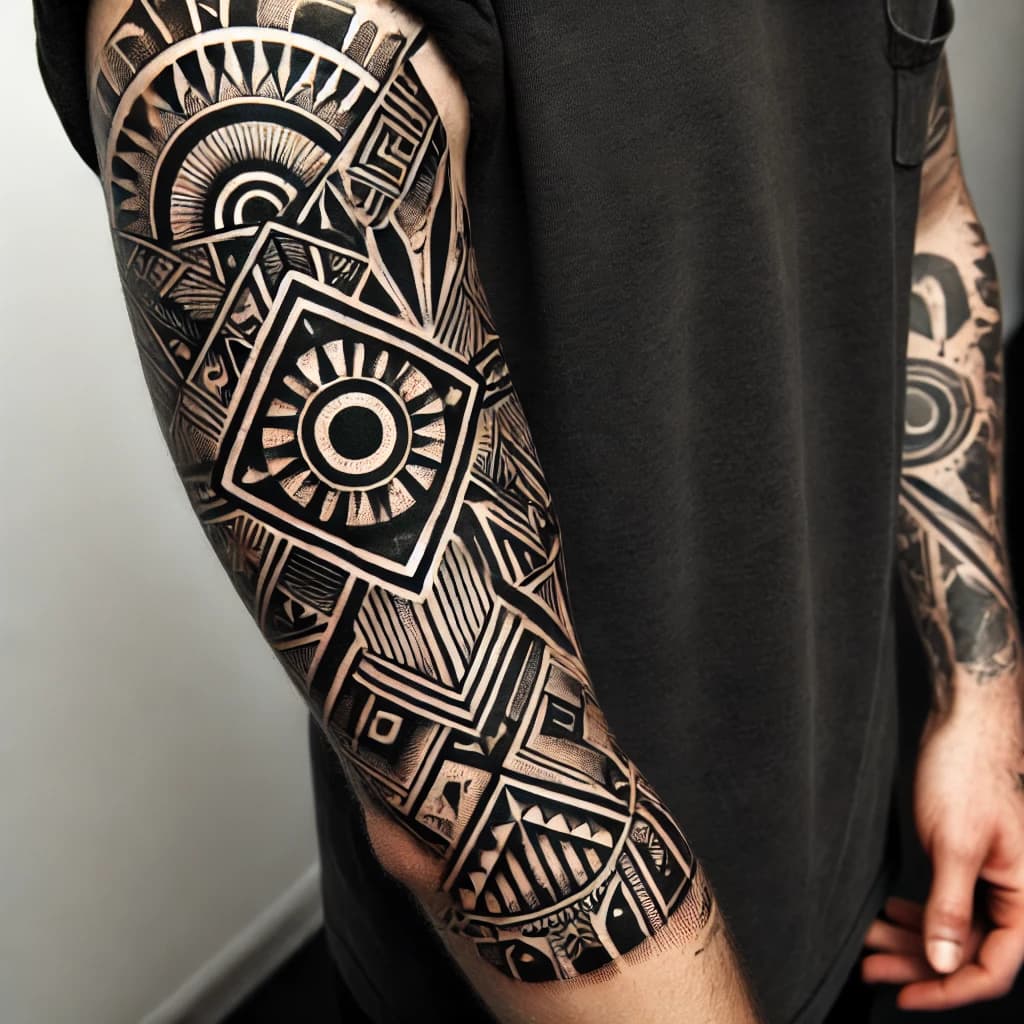
That migration from late-2010s forum culture and Berlin underground club nights into mainstream client vocabulary is the story of 2026 in geometric-adjacent tattooing. The visual grammar is specific: sharp, symmetrical blackwork; dense fills; ornamental repeats built from digital glyphs and occult sigils; compositions that read like engineering schematics for a darknet grimoire. Aingelblood described the typical reaction simply: "I've seen people say it looks like a witch's curse, and honestly I love that metaphor." Common placements are chest panels, sternums, throats, and full torso compositions, the same real estate that sacred geometry clients have long targeted.
That overlap is where the comparison becomes practical rather than aesthetic. A mandala or Flower of Life sternum panel builds structural resilience through line-weight hierarchy: bold outer lines hold the composition's readability even as fine infill softens across a decade of skin movement and UV exposure. Cybersigilism collapses that hierarchy. The entire composition typically runs at a single fine weight, with dense negative space substituting for the bold-line scaffolding a mandala uses. Every line deviation is architecturally visible in a way a bold blackwork piece would absorb. At high-movement sites like the sternum and ribs, thin lines face ink migration that converts precision into blur. Realistic touch-up intervals for fine-line cybersigilism work run three to five years.
Aingelblood's own studio has built that calculus into its booking policy, explicitly refusing single-needle work because those techniques "have a shorter lifespan than darker pieces." The stated aim is shading that stays fine and dainty while still holding its integrity over time. For any collector weighing a cybersigilism piece against a geometric alternative, that framing is the practical test: does the artist's healed portfolio show actual line retention, not just fresh stencil photography?
The mainstream push has an identifiable engine. Celebrities including Grimes and Billie Eilish have been photographed wearing the style, and TikTok's visual discovery mechanics moved it from underground club nights into open demand at multi-style shops. "By the time it reaches us, it's made it from the fringe to the general public," said McLean, a shop owner fielding cybersigilism requests at studios that specialize in no style in particular. Aingelblood's TikTok virality in 2020, before a platform account loss disrupted the momentum, seeded much of that early spread.
For artists working in geometric-adjacent lanes, the business signal is legible. Clients who come specifically for cybersigilism are research-intensive and portfolio-aware in ways walk-in clients are not. They identify artists by handle, study healed work across multiple examples, and arrive having already made a quality determination. An artist who specializes, names the style explicitly in portfolio positioning, and prices by theme and session length can convert that research-heavy client base into premium bookings. The technical bar is precisely what makes the niche viable: consistent line weight and symmetrical execution across healed pieces is the standard this client base actively hunts for, and right now demand is measurably outrunning the number of artists who can credibly deliver it.
This article was produced by Prism’s automated news system from verified source data, official records, and press releases, then run through automated quality and moderation checks before publishing. The system is built and supervised by the people who set the standards it runs under. Read our full AI policy.
Did this article answer your question?