Yantra Tattoos, Thailand’s Sacred Geometry Tradition Explained
Yantra tattoos are sacred Thai geometry, not just ornate blackwork. The real brief starts with lineage, meaning, placement, and whether the design should be copied at all.
What you need to understand before you ask for Yantra geometry
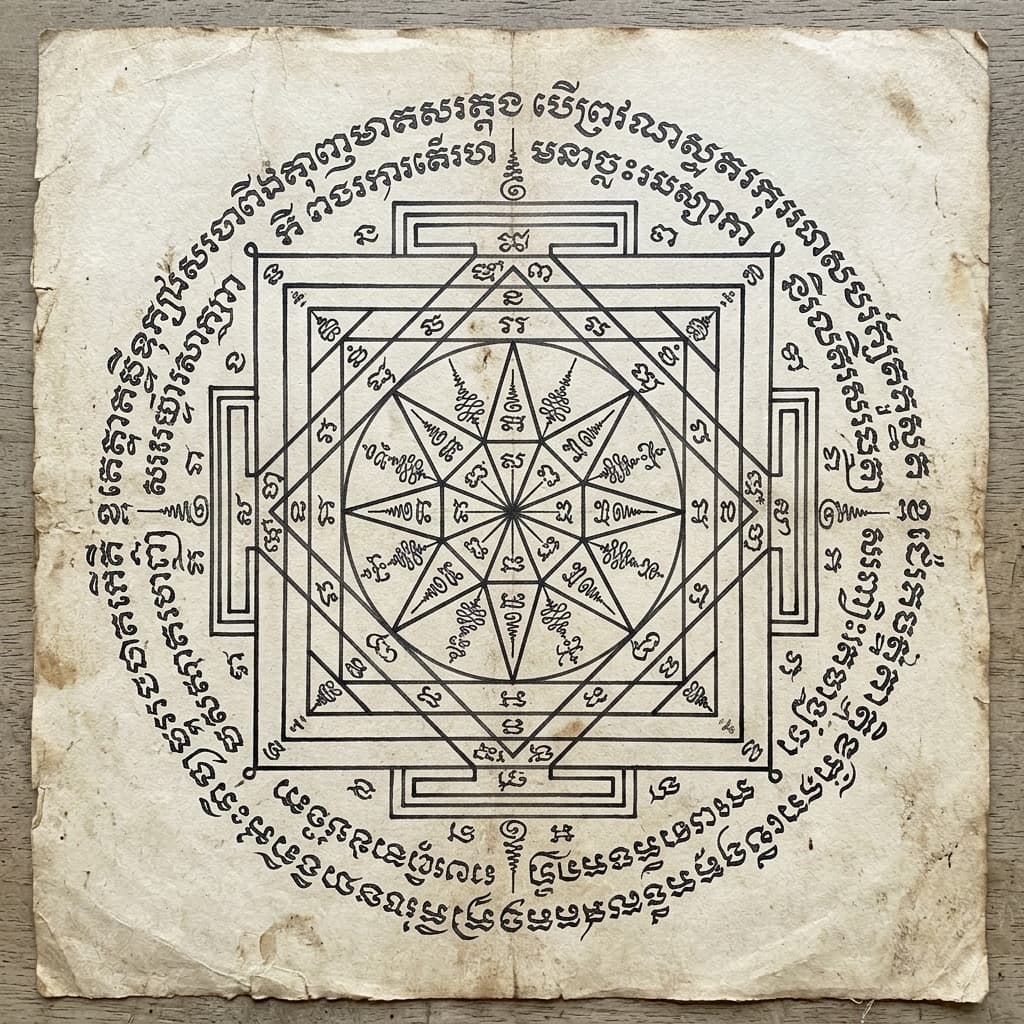
Yantra, also called Sak Yant, is not a style you lift from a mood board and turn into filler between clean lines. ThaiGraph describes it as Thailand’s sacred geometric tradition of Theravada Buddhism, built from roughly 85 canonical designs that mix Pali-Khmer script with grid-based symbolic geometry and are traditionally applied under the supervision of an ajarn, or master practitioner. If you are thinking about a Yantra-inspired piece, the first decision is not whether the symmetry looks strong. It is whether you are dealing with a living sacred system at all, and whether your request respects that system’s rules.
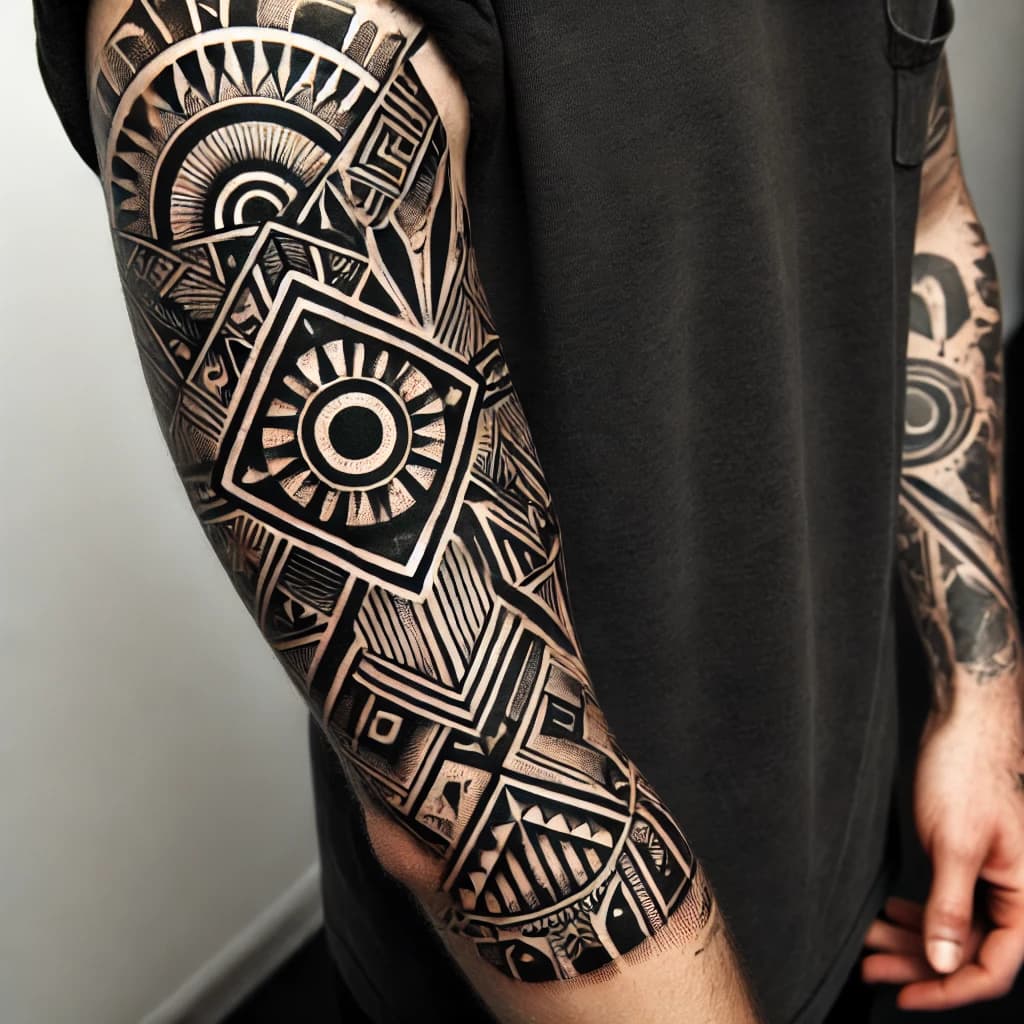
That distinction matters because Yantra is part of a wider ritual language, not just a skin-only tattoo vocabulary. The same forms appear on cloth amulets, temple boundary cloths, protective banners, and other ritual objects, which is exactly why it cannot be reduced to generic ornamental blackwork or a stand-alone mandala. The geometry carries function, lineage, and permission. In practical terms, that changes the whole brief for any artist who is used to designing purely decorative sacred-geometry work.
Sacred practice versus decorative adaptation
The hardest line to draw is also the most important one: not every Yantra-inspired tattoo is automatically appropriate. ThaiGraph is blunt that commercial appropriation is broadly considered disrespectful by Thai Buddhist authorities and by many Thai laypeople. That means a design copied casually, stripped of meaning, or treated as a trend can easily cross from admiration into misuse.
If you want a tattoo inspired by Yantra, the conversation needs to include more than placement and linework. Ask whether the symbol is something that should be copied at all, whether it belongs to a specific lineage, and whether the intended version is a respectful adaptation rather than a direct replica. The tradition changes the usual geometric-tattoo brief because the goal is not simply visual balance. It is fidelity to meaning, hierarchy, and context.
Why the script matters as much as the geometry
One of the clearest markers of Yantra’s identity is its Khmer component. ThaiGraph notes that the inscriptions usually rely on Khmer or Khmer-Pali forms rather than Thai script, which gives the tattoos their distinctive look and also signals their ritual status. That detail is easy to miss if you are only scanning for pattern structure, but it is central to the tradition’s visual authority.
This is also why a Yantra-inspired tattoo should not be treated like a freeform geometric composition with a few exotic-looking characters dropped in for atmosphere. The script and the geometry work together. If the text is wrong, casual, or invented, the design loses the very thing that makes it Yantra rather than just a decorative pattern.
Where the tradition comes from, and why that history still shapes the design
The tradition sits inside the Theravada forest lineage of Thailand, with historical links to Lanna and central Thai monasteries. ThaiGraph says continuous practice is documented from the late 13th century onward, even if the origins are likely older. That long timeline matters because it explains why Yantra still carries authority in both religious and community settings.
There is also a broader Southeast Asian history behind the visual vocabulary. The Metropolitan Museum of Art notes that the Khmer empire expanded into the area now known as Thailand, and its Thailand history page says the Thai kingdom centered on Ayudhya became a dominant mainland Southeast Asian polity after the Khmer defeat in 1431. That regional overlap helps explain why Khmer and Khmer-Pali inscriptions remain embedded in the tradition’s language of protection and power.
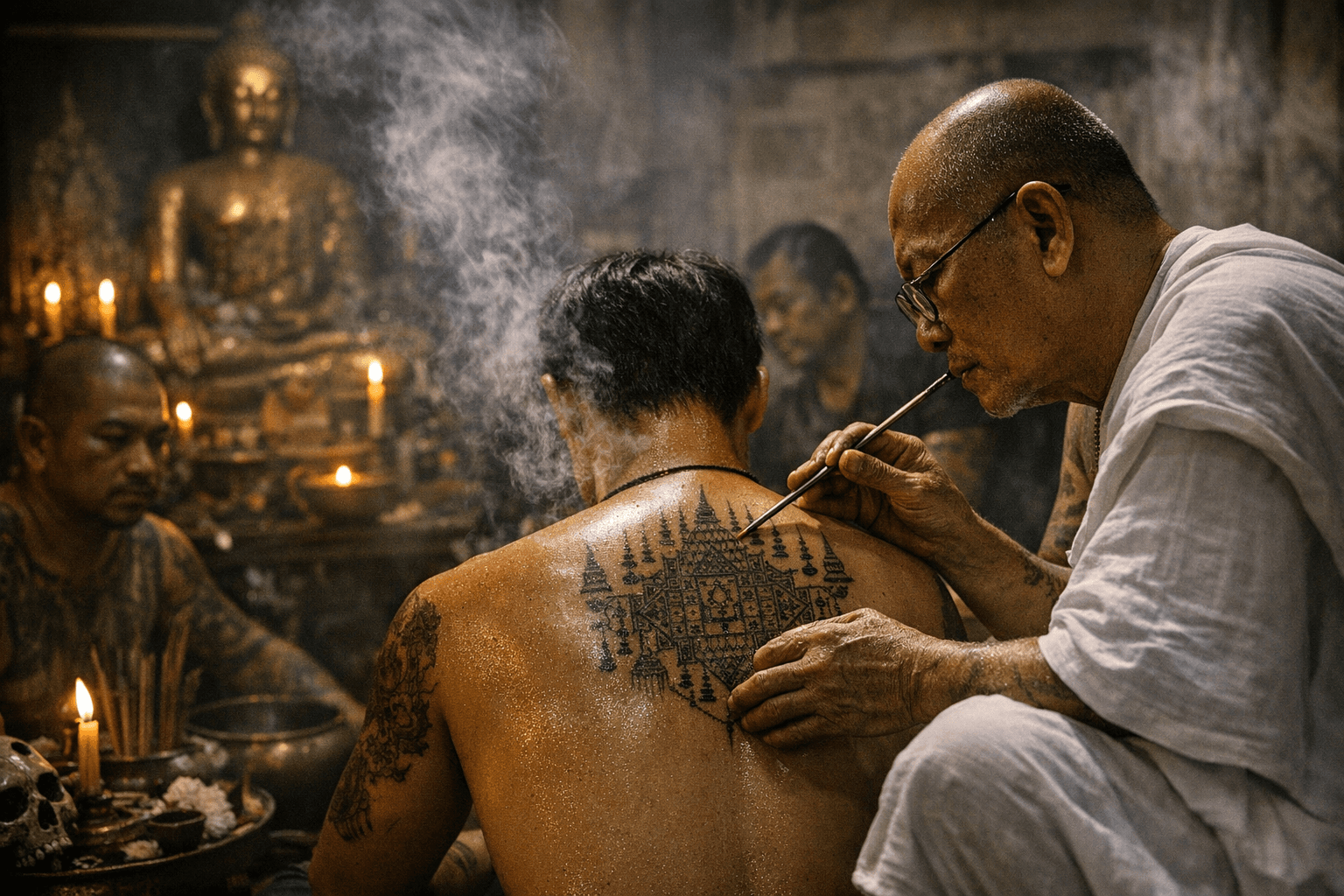
Wat Bang Phra is the clearest sign this is still a living practice
If you want proof that Sak Yant is not museum art, look at Wat Bang Phra. The temple’s annual Tattoo Festival, usually held on the first Saturday in March, is one of the best-known public expressions of the tradition. One verified source says more than 10,000 people gather there each year in Nakhon Chaisi district, Nakhon Pathom province, about 50 kilometers from Bangkok.
The festival’s structure makes the point even more strongly. The day before the main event includes a magic recharge of sacred tattoos ceremony, and on the day itself a group of Buddhist masters and monks gather to apply about 1,000 new tattoos. In other words, the tradition is active, ceremonial, and socially recognized. It is not a design trend that has drifted away from its roots.
How to approach a Yantra-inspired tattoo brief
If you are serious about this kind of work, the consultation should sound different from a normal geometric-tattoo appointment. You are not just talking about line weight, negative space, or whether the pattern wraps the limb cleanly. You are asking about lineage, meaning, placement, and permission before the artist ever starts sketching.
A respectful brief should cover:
- Whether the design is a direct Yantra form or a loosely inspired adaptation
- Which symbols, script forms, or motifs are being referenced, and whether they are appropriate to copy
- Where the tattoo will sit, since placement is part of the tradition’s meaning
- Who is making the work, and whether they understand the cultural and ritual weight of the design
- Whether the piece should include any sacred text at all, or whether that would be inappropriate outside the tradition
That last question is especially important. In the wrong hands, a text-heavy Yantra tattoo can become a decorative costume. In the right hands, the same structure can reflect respect for a tradition that has survived for centuries through practice, community, and ceremony.
The real takeaway for geometric tattoo collectors
Yantra tattoos force a more serious standard than most geometric briefs. They ask you to slow down, learn the difference between sacred form and aesthetic borrowing, and decide whether your project belongs in the realm of adaptation or should be left untouched. With roughly 85 canonical designs, script rooted in Khmer or Khmer-Pali forms, and a living ritual center at Wat Bang Phra, this is a tradition that still answers to lineage, not just taste.
For anyone drawn to the precision of sacred geometry, that is the point. The best Yantra-informed work begins with restraint, and the strongest result is the one that respects the tradition enough to know exactly where copying should stop.
This article was produced by Prism’s automated news system from verified source data, official records, and press releases, then run through automated quality and moderation checks before publishing. The system is built and supervised by the people who set the standards it runs under. Read our full AI policy.
Did this article answer your question?