Why lotus and mandala tattoos merge so naturally on skin
Lotus and mandala tattoos click because one brings spiritual rebirth and the other brings cosmic order, making placement and linework the real design decisions.
Why the pairing works before you even pick a stencil
Lotus and mandala tattoos merge so naturally because they solve the same problem two different ways. The sacred lotus, *Nelumbo nucifera*, is read as spiritual enlightenment in Hinduism and Buddhism, and it was also used in ancient Egypt to represent rebirth. The plant’s habit of flourishing above muddy water gives the symbol its punch: it looks like emergence, not decoration for decoration’s sake. A mandala brings the other half of the equation. In Hindu and Buddhist Tantrism, it is a symbolic diagram used in sacred rites and meditation, and Britannica describes it as a representation of the universe, which is exactly why it feels so complete on skin.
That shared logic matters more than people think. The lotus is radial, the mandala is radial, and both depend on order that reads from the center outward. Britannica notes that the word mandala means “circle” in Sanskrit, and many Buddhist mandalas use concentric circles around a central square. Put those structures together and you get a tattoo that feels spiritually loaded but still architecturally sound. It is not a random mash-up of pretty things. It is a design language that already speaks the same grammar.
How to choose the right version for your body
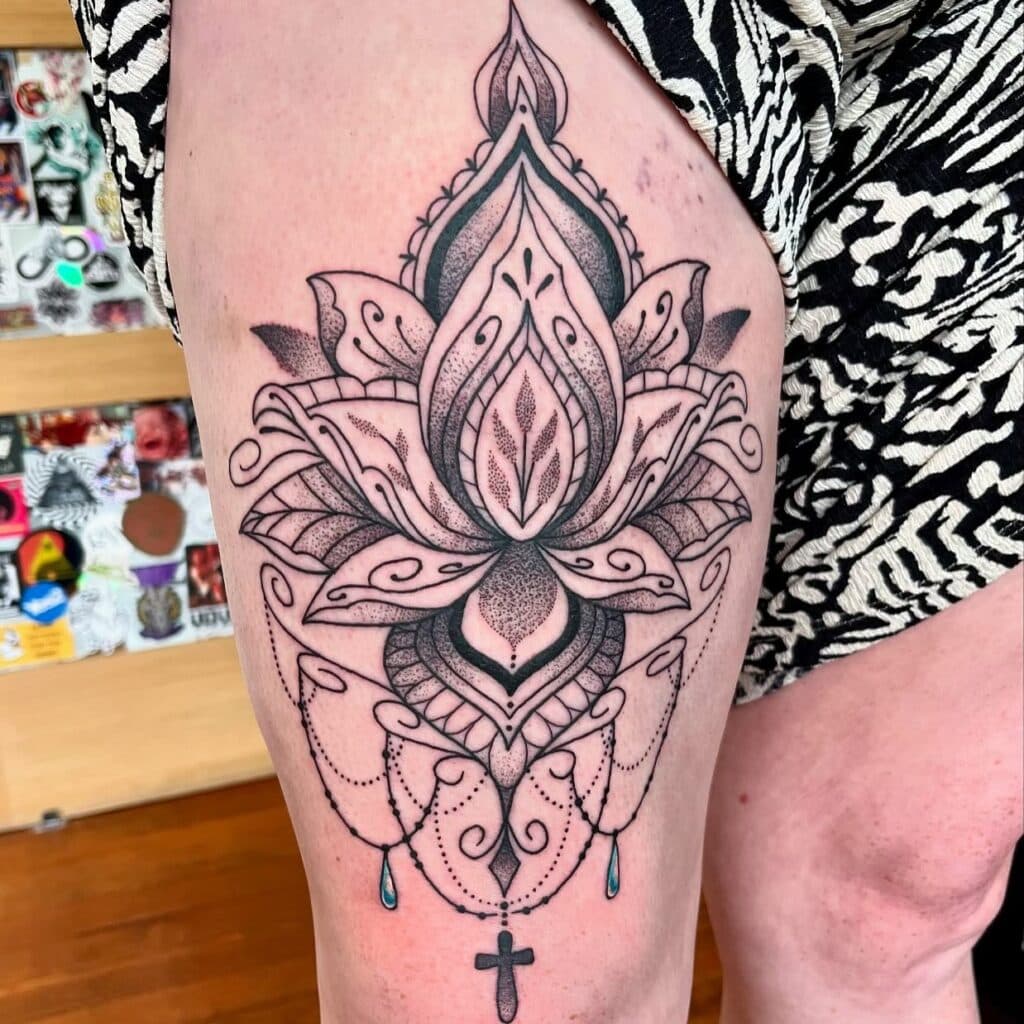
The smartest lotus-mandala tattoos are chosen by placement first, not by hype. Tattoo Build’s placement-driven approach is the right way to think about it, because the same motif can read very differently on a thigh, a sternum, a spine, or the back of the neck. If you want room for a fully opened lotus with layered rings, a thigh piece gives you the square footage to let the design breathe. That is the best lane for a more ornamental interpretation, especially if you want the mandala to expand without feeling cramped.
A spine piece is a different animal. The body’s vertical line gives the tattoo a natural axis, so the mandala does not have to fight the anatomy. Instead, it can emphasize alignment, almost like a visual reminder to stay centered. A sternum version feels more intimate and more deliberate, because the placement forces the design to sit close to the body’s centerline. A back-of-neck tattoo works like a talisman: it can appear or disappear depending on clothing, which makes the meaning feel private even when the shape is bold.
Full-back lotus mandalas are where ambition meets reality. They are a real commitment, usually requiring multiple sessions and an experienced geometric artist who can keep the structure coherent across a larger canvas. That is the kind of piece that looks effortless only after serious planning. If you want the tattoo to age well, the layout has to survive both distance and close inspection.
Minimalist, ornamental, or large-format: pick the lane, then commit
The cleanest way to choose between styles is to decide what you want the tattoo to say when the first glance is over. Minimalist lotus mandalas work best when you want the symbolism without heavy visual weight. Think fine line, open space, and a quieter mandala frame that lets the lotus remain the star. This is usually the safest option if you want something that still reads clearly years later without turning into a dark patch.
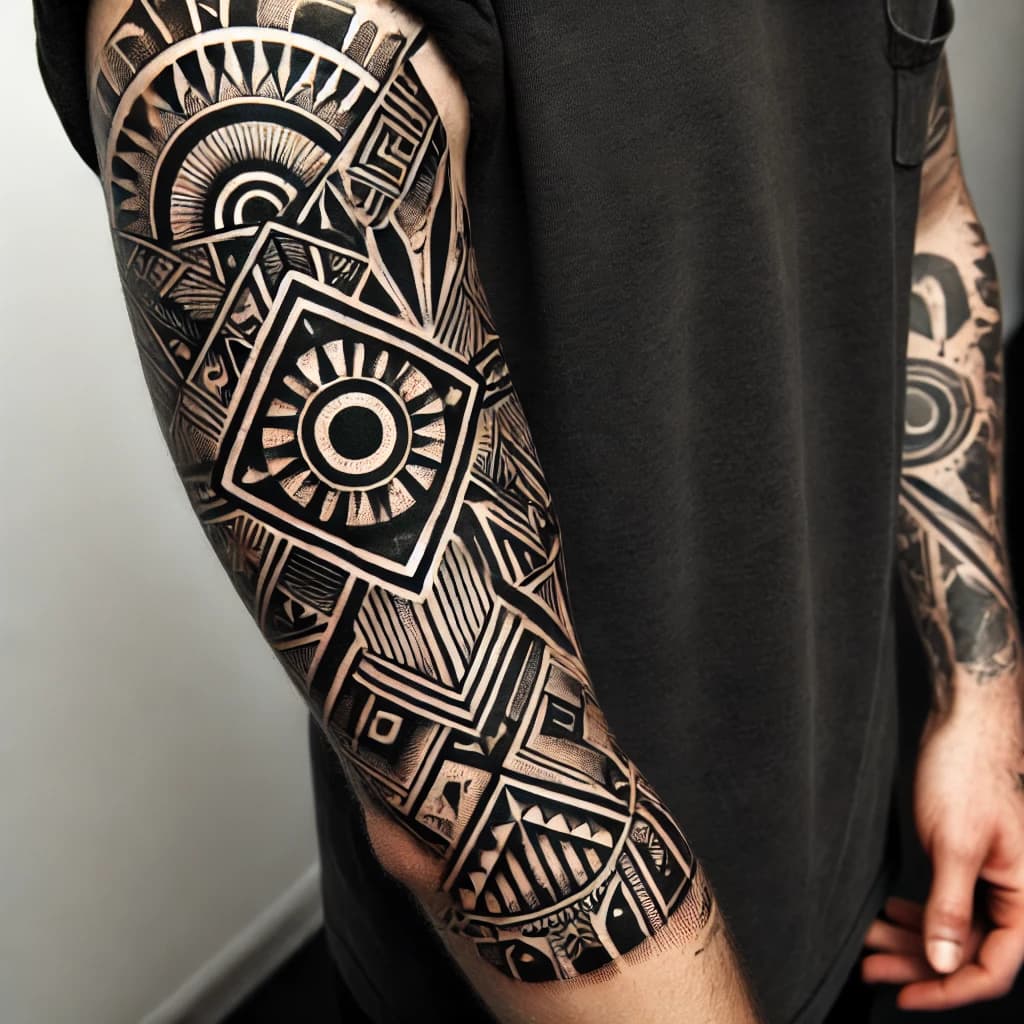
Ornamental versions lean harder into layered detail. These are the pieces with denser petals, more intricate concentric rings, and stronger symmetry cues. They can look beautiful on a thigh, sternum, or back piece, but they need disciplined linework because ornamentation magnifies every wobble. Large-format designs are the best fit when you want the mandala to feel like a sacred diagram rather than a floral accent. On big skin real estate, the piece can actually behave like a composition instead of a sticker.
There is no prize for stuffing every idea into one tattoo. The better question is whether you want the lotus to soften the geometry or the mandala to formalize the flower. The strongest designs let one lead and the other support.
Why precision is non-negotiable
Geometric tattoos live or die on precision, and lotus mandalas are especially unforgiving because they combine symmetry with curved organic shapes. AuthorityTattoo and Inked both stress the same practical truth: small errors are especially noticeable in geometric work. If a ring slips, if a petal is off-center, or if the symmetry drifts even a little, your eye goes straight to it every time you look in the mirror.
That is why placement and artist selection matter so much here. A good geometric artist understands how to build clean radial balance, keep linework sharp, and preserve the structure when the tattoo wraps around real anatomy. Lotus petals are forgiving in one sense because they are naturally organic, but the mandala behind them is not. Once the concentric circles and central square lose their discipline, the whole tattoo feels tired.
The takeaway is simple: if you are choosing lotus-mandala work, do not shop like you are picking flash from a wall. You are commissioning a structure. The body can distort anything, so the artist has to plan for how the design will move, flex, and age.
Color, blackwork, and the balance between discipline and softness
Black and grey fine line is the cleanest route if you want the geometric side to stay crisp. It preserves the architecture, keeps the concentric forms legible, and usually ages better than trendy treatment-heavy approaches. That said, a lotus-mandala tattoo does not have to be all severity. Watercolor or selective color accents can soften the botanical side and create a useful contrast between the hard geometry of the mandala and the softer petals of the lotus.
That contrast is where the design really comes alive. A restrained black mandala with a lightly tinted lotus can feel more natural without losing structure. On the other hand, going too heavy with color can blur the distinction between the two halves of the composition and weaken the very reason the pairing works. The best versions keep the discipline of the mandala visible while letting the flower retain some warmth.
Why the category keeps spreading
Inked Magazine says mandala tattoos have “exploded in popularity over the last ten years,” and that tracks with what collectors are asking for now: pieces that look meaningful, not just decorative. People want tattoos that can cover more of the body without feeling chaotic, and mandalas do that job extremely well because they organize space instead of merely filling it. Lotus imagery adds a more human and emotionally legible layer, which is why the combo has moved from niche to mainstream so quickly.
Still, popularity should not flatten the meaning. Ornamental tattoo guidance is right to remind people that mehndi-inspired designs were not traditionally permanent tattoos, and that cultural origin matters when you borrow sacred or decorative references. That caution applies here too. If you are pulling from Buddhist, Hindu, or sacred-geometry visual language, it pays to understand what the forms mean before you lock them into skin. The best lotus-mandala tattoos are not just pretty. They are deliberate, readable, and built with respect for the structure that makes them work.
When the placement is right, the linework is clean, and the symbolism is understood, the lotus and the mandala stop competing. One offers emergence, the other offers wholeness, and together they give the skin a design that feels ordered without ever feeling cold.
This article was produced by Prism’s automated news system from verified source data, official records, and press releases, then run through automated quality and moderation checks before publishing. The system is built and supervised by the people who set the standards it runs under. Read our full AI policy.
Did this article answer your question?