GTA 6 cover art hints at injury system and deeper gameplay
Lucia’s scars and Jason’s bandage are driving injury-system talk, but Rockstar has only confirmed a story tease, not a mechanic, as pre-orders open June 25.
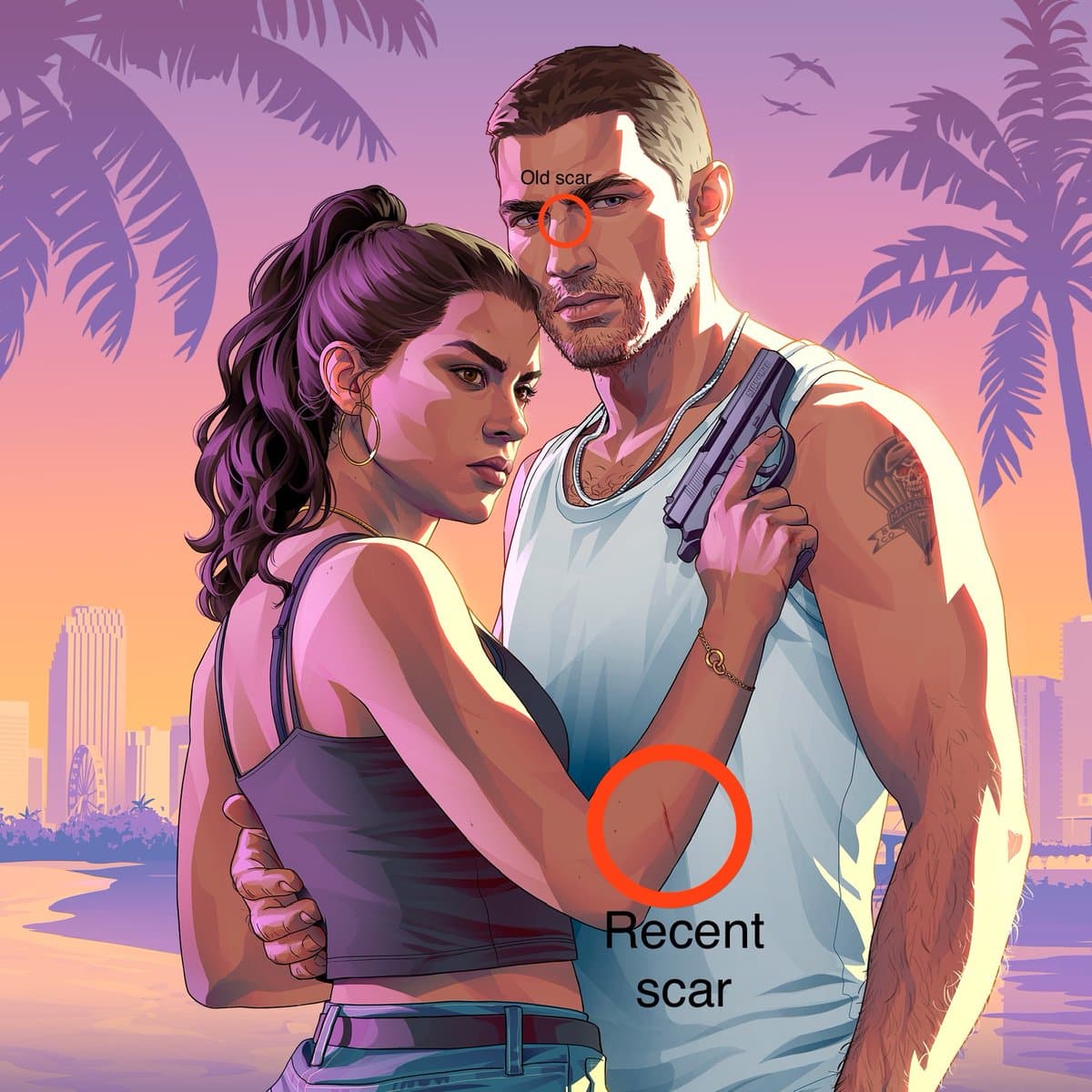
Rockstar’s new GTA 6 cover art has pushed the injury debate to the front, but the safest read is still the simplest one: the image shows possible story flavor, not a confirmed gameplay system. Lucia Caminos’ visible scars and Jason Duval’s bandage give fans plenty to zoom in on, yet Rockstar has not said GTA 6 will include a deeper injury mechanic.
What the cover art actually shows
The artwork is packed with readable details beyond Jason and Lucia. IGN’s breakdown pointed to Boobie Ike, Raul Bautista, a helicopter with a mounted minigun, a speedboat, a sports car, and an alligator, all of which reinforce that the cover is doing double duty as both key art and world-building. That matters because Rockstar has long used GTA cover art to sell more than a logo and a face; it often telegraphs vehicles, characters, and setting cues before players ever get hands-on.
That pattern is important here. The cover does not just decorate the box, it frames the tone of Vice City and the wider state of Leonida, while also pulling attention toward the kinds of trouble the player will be living in. The scars and bandage fit into that same visual language, but they do not, by themselves, prove a system that tracks injuries in play.
Why the injury theory caught fire
The speculation is easy to understand. A scar is not a random visual flourish when it appears on a lead character like Lucia, and a bandage on Jason naturally raises the question of whether combat, escapes, or other incidents can leave more persistent marks on the protagonists. In a community that loves reading every frame for clues, those details look less like decoration and more like evidence.
Still, the leap from art direction to mechanics is a big one. Rockstar often uses wear, bruising, grime, and damage to signal a harsher world, a character’s history, or the aftermath of violence without promising a full systemic feature behind it. Right now, the cover art supports interpretation, not confirmation, and that distinction matters if you are trying to separate real gameplay signals from fan projection.
Trailer 2 gives the clues more context
Trailer 2 is why this conversation has so much traction. Rockstar said the trailer introduced the game’s story setup, and that setup gives the cover art a much clearer narrative frame. Jason and Lucia are pulled into a criminal conspiracy across the state of Leonida after “an easy score goes wrong,” and Rockstar says they have to rely on each other to survive.
That survival angle is what makes people look twice at the bandage and scars. If the story is built around pressure, escalation, and the two leads depending on one another, then visual signs of rough treatment feel more like setup than coincidence. Even so, the stronger reading is that Rockstar is using the art to sell the danger and instability of their situation, not to confirm a brand-new injury layer.
The same goes for any talk about deeper gameplay systems. A visual hint can suggest harsher combat, more persistent consequences, or even a more dynamic damage state, but it can also just be there because it looks right for the story Rockstar wants to tell. Until the studio spells it out, the injury-system angle stays in the category of informed speculation.
Rockstar’s precedent points to suggestion, not overstatement
This is where Rockstar’s history helps keep expectations grounded. GTA cover art has always been a marketing device, but it has also been a shorthand for the game’s cast, vehicles, and setting. That precedent is exactly why fans keep parsing every detail: the company has trained the audience to treat artwork as a clue board.
At the same time, Rockstar has also been careful about what it confirms versus what it merely implies. A helicopter with a minigun or an alligator in the frame tells you something about the world you are entering. A scar on a face tells you something about tone, past violence, or visual continuity. It does not automatically tell you how health, damage, or injury will work once the game is in your hands.
That is the key line to keep in mind with this reveal. The cover art is clearly more than packaging, but it is still packaging first. It sells a mood, a cast, and a city, while leaving room for players to imagine the systems underneath.
The bigger business beat: pre-orders and price talk
The other major takeaway from the reveal is timing. Rockstar published the official GTA 6 cover art on June 18, 2026, and said pre-orders for Grand Theft Auto VI begin on June 25, 2026, on digital storefronts and at select retailers. That makes the week ahead a crucial one for anyone watching the rollout closely.
IGN says June 25 is likely the first time the market gets a real signal on GTA 6’s price point, with speculation ranging from $70 to $100. Take-Two Interactive CEO Strauss Zelnick has said the company wants the price to feel “fair” to consumers, which leaves plenty of room for debate and very little room for certainty until the storefronts update.
That matters because the cover art is doing more than teasing mechanics. It is part of the bigger launch machine, one that ties story, branding, and pricing together as Rockstar moves toward the current official release date of November 19, 2026. For players, the art may be fueling injury-system theories today, but the clearest near-term answer to watch is what Rockstar reveals when pre-orders go live.
For now, the scars on Lucia and the bandage on Jason belong in the same category as the helicopter, the speedboat, and the alligator: strong clues about mood, danger, and scale. They sharpen the sense that GTA 6 is aiming for a harsher, more layered world, but the actual injury system, if one exists, is still waiting for Rockstar to say so outright.
This article was produced by Prism’s automated news system from verified source data, official records, and press releases, then run through automated quality and moderation checks before publishing. The system is built and supervised by the people who set the standards it runs under. Read our full AI policy.
Did this article answer your question?