Blind guitarist receives first guitar with tactile fret markers
Anthony Ferraro got a first-of-its-kind guitar with tactile fret markers, letting him find his place on the neck without looking. The build was framed as a permanent accessibility step.

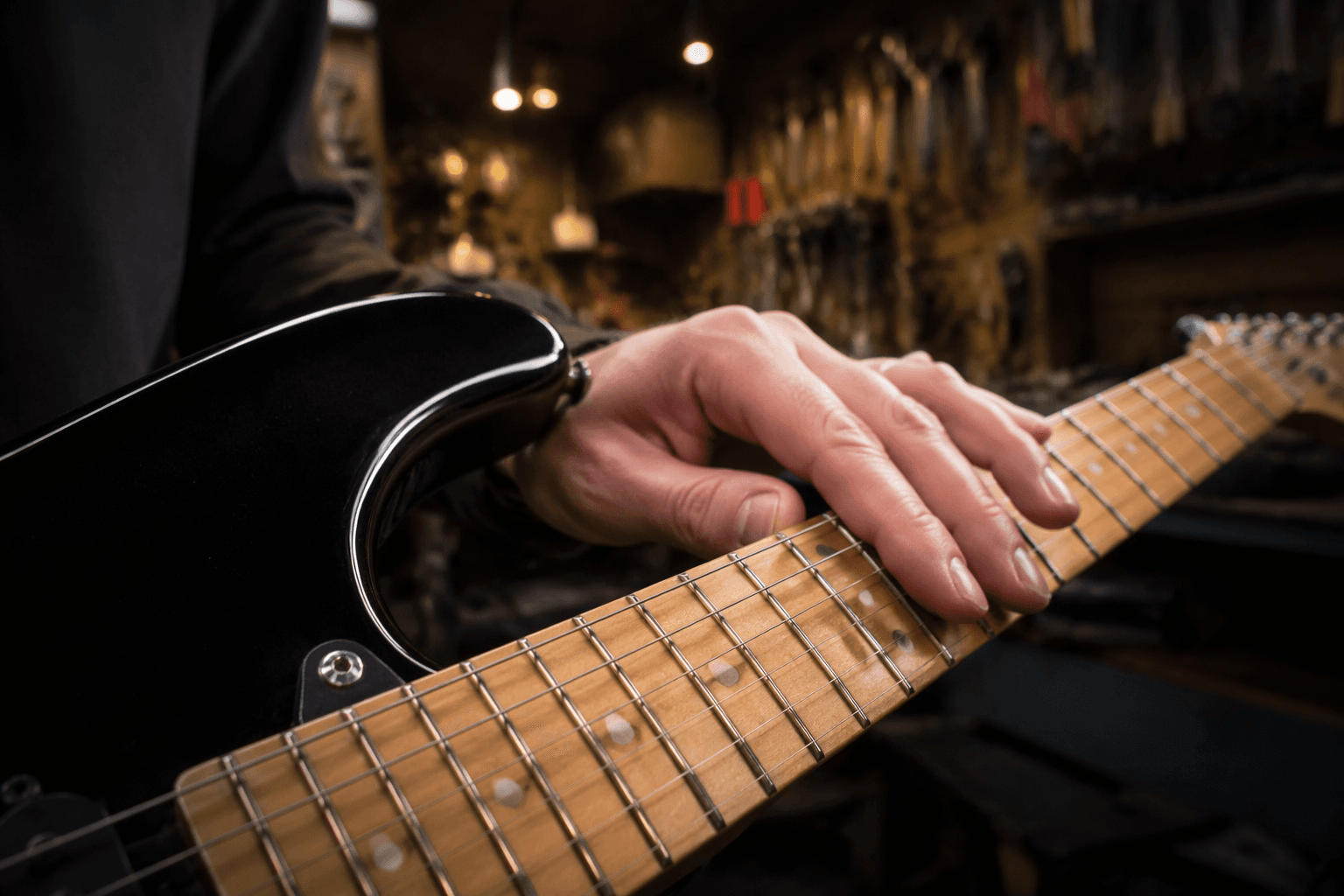
Anthony Ferraro received a guitar with tactile markers on the neck, a design Guitar World described as the world’s first accessible guitar. For a blind guitarist, the key change was simple and immediate: the fretboard could now be read by touch, not just by ear.
The instrument was built with a tactile “navigation neck,” giving Ferraro a way to tell where he was on the fretboard without looking down. That matters in practice because a blind player has to locate positions, return to them cleanly, and keep orientation while moving across the neck. Ferraro did not realize fret markers were a thing until he was given the guitar, which shows how rare this kind of accessibility hardware has been in mainstream guitar design.
Tristan was identified in an ASF Vision post as the builder behind the project, with the post saying he made the world’s first accessible guitar by adding tactile markers to the neck for frets so Ferraro could tell where he is. That detail cuts through the marketing language: this was not a cosmetic tweak or a signature finish, but a physical navigation aid built directly into the instrument.
The project also appears to have been treated as more than a one-off gesture. A Guitar World social post said that when Anthony Ferraro highlighted the difficulty blind and partially sighted guitarists face, the Duchess MKII V40 Combo was made for him, launching a permanent accessibility initiative. Taken together, the guitar and the amplifier point to a builder thinking about accessibility as part of the product line, not an extra request bolted on after the fact.
For blind and partially sighted players, tactile fret markers solve a basic problem that sighted guitarists almost never think about: knowing exactly where your hand is on the neck at speed. Ferraro’s instrument does not change what a guitar is, but it changes who can use one with confidence. If more builders follow that lead, accessibility starts to look less like a special commission and more like standard gear design.
This article was produced by Prism’s automated news system from verified source data, official records, and press releases, then run through automated quality and moderation checks before publishing. The system is built and supervised by the people who set the standards it runs under. Read our full AI policy.
Did this article answer your question?