Why MIDI matters for guitarists in modern live rigs
MIDI turns a crowded pedalboard into one controller with fewer mistakes, from channel changes and scene swaps to synced tap tempo and whole-rig recalls.
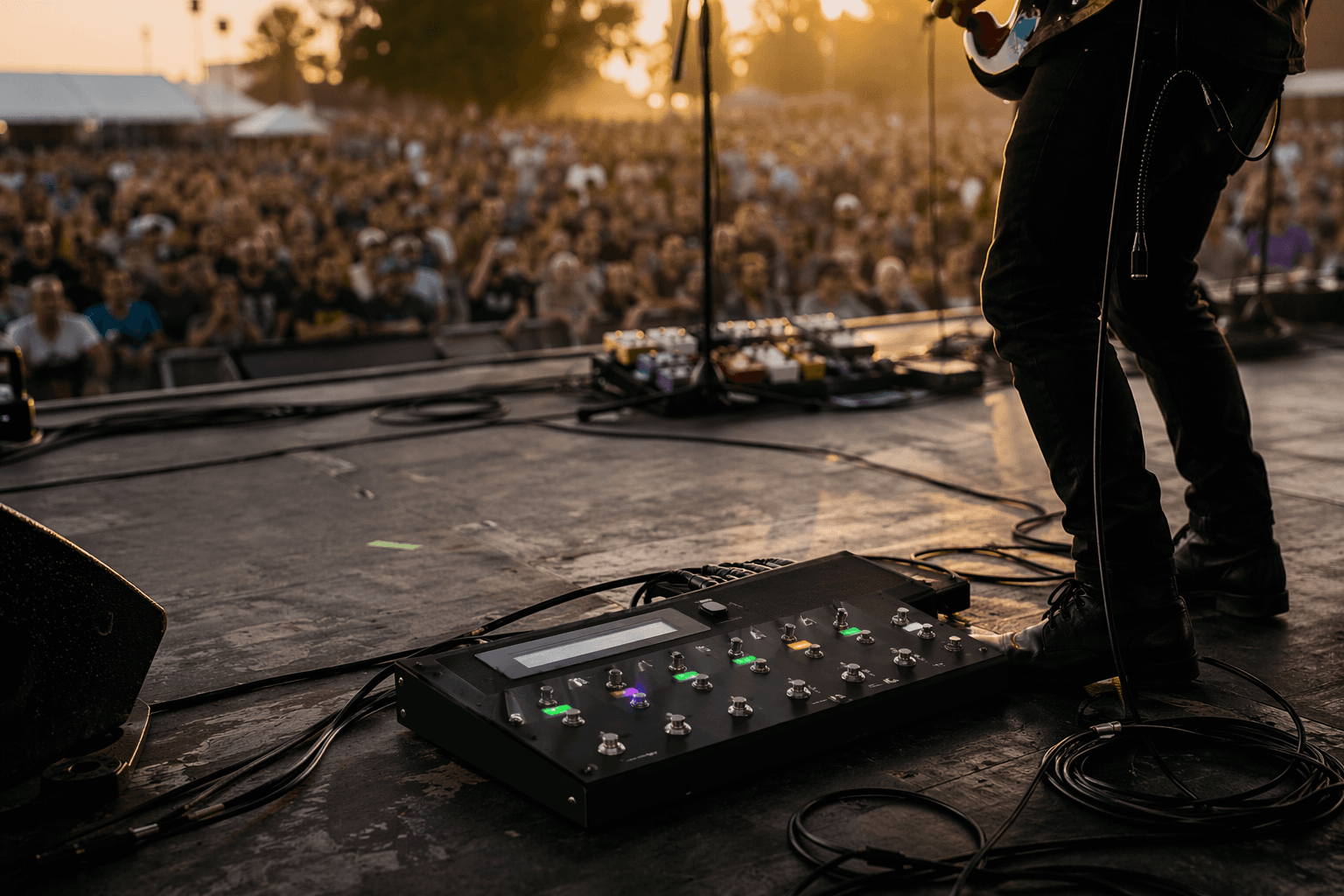
One chorus can need a cleaner amp channel, a different delay time, and three pedals in the right state before the next bar lands. MIDI is the system that lets that happen without a frantic tap dance across a crowded board.
What MIDI actually is
MIDI stands for Musical Instrument Digital Interface, and at its core it is a communication protocol. MIDI 1.0 was first published in 1983, with a core data format and a serial transport that used 5-pin DIN connectors. The first public demonstration happened at the 1983 NAMM show.
The original problem has only grown. MIDI was created in the early 1980s to help electronic instruments speak the same language, and that is exactly what a modern guitar rig still needs. A pedalboard full of analog stomps, a modeler, a controller, maybe a synth or drum machine on the side, all become much easier to manage when one device can tell the others what to do.
MIDI 2.0 did not replace that foundation. It extends MIDI 1.0, and the core MIDI 2.0 specifications were adopted by The MIDI Association and AMEI in January 2020. MIDI-CI adds a way for devices to negotiate extended capabilities while staying backward compatible. Newer gear can do more without forcing you to abandon the old stuff that already works.
Preset changes without the pedalboard panic
The first live-rig win is simple: one press can call up a whole sound. In Line 6's Command Center system, MIDI CCs can change presets in external effects pedals, guitar amps, synths, drum machines, or other multieffects. MIDI notes can trigger sounds in synths, keyboards, samplers, or drum modules, and external amp switching can change an amp channel or turn reverb on and off.
A single song section can move from clean verse to driven chorus without you stepping on five switches and hoping none of them missed the beat. If your rig includes a MIDI-enabled pedal or processor, a preset recall can become the command center for the whole snapshot of your sound.
Roland and BOSS build that idea into the ES-8, whose presets can send a Program Change to a configured MIDI-enabled pedal when the preset is recalled. In Positive Grid's MIDI Control feature, external MIDI controllers can manage amps, effects, global functions, and preset switching.
Synced delays and changes that stay together
Once presets are under control, the next pain point is timing. Delay pedals, modulation, and rhythmic effects can drift from the song if you are setting them by hand under pressure. MIDI helps here because it lets one controller handle tap tempo and coordinate changes across the rig, so repeats and scene shifts stay tied to the same musical moment.
Each FM3 preset has eight nameable scenes designed to eliminate tap dancing while allowing quick sound changes. Fractal also supports third-party MIDI controllers that can switch presets, scenes, and channels, turn effects on and off, display preset and scene titles, and control tap tempo.
In practical terms, that means you can keep a delay active for the intro, trim it for the verse, and bring it back with the chorus without treating your feet like a backup control system. The rig follows the song structure instead of forcing you to perform it mechanically.
Controlling multiple pedals at once
The bigger MIDI trick is not just changing one thing. It is changing several things at once, in a deliberate order, from one controller. A single preset can be built to switch an amp channel, engage a delay, bypass a boost, and recall a different pedal state all together.
This is most useful when you are running setlists with radically different sounds. A heavier tune might need a different amp channel, a longer delay, and a synth trigger on top. A cleaner track might only need a little reverb and a subtle modulation pass. MIDI lets those moves happen as coordinated events instead of as separate footwork, which cuts down the mistakes that happen when you are already thinking about the next change.
It also opens the door to hybrid rigs that guitar players use more and more often. If you are mixing pedals, modelers, software, and even drum or synth elements, MIDI keeps the whole setup from becoming a pile of unrelated boxes. One controller can speak to all of them.
This article was produced by Prism’s automated news system from verified source data, official records, and press releases, then run through automated quality and moderation checks before publishing. The system is built and supervised by the people who set the standards it runs under. Read our full AI policy.
Did this article answer your question?