Acquisition Boom Masks Costly Brewery Maintenance Problems in Craft Beer Shakeout
The bargain in a brewery acquisition is usually fake. The real bill shows up later in bad maintenance, mismatched parts, and equipment that only breaks after closing.
The shakeout is exposing the expensive part of buying a brewery
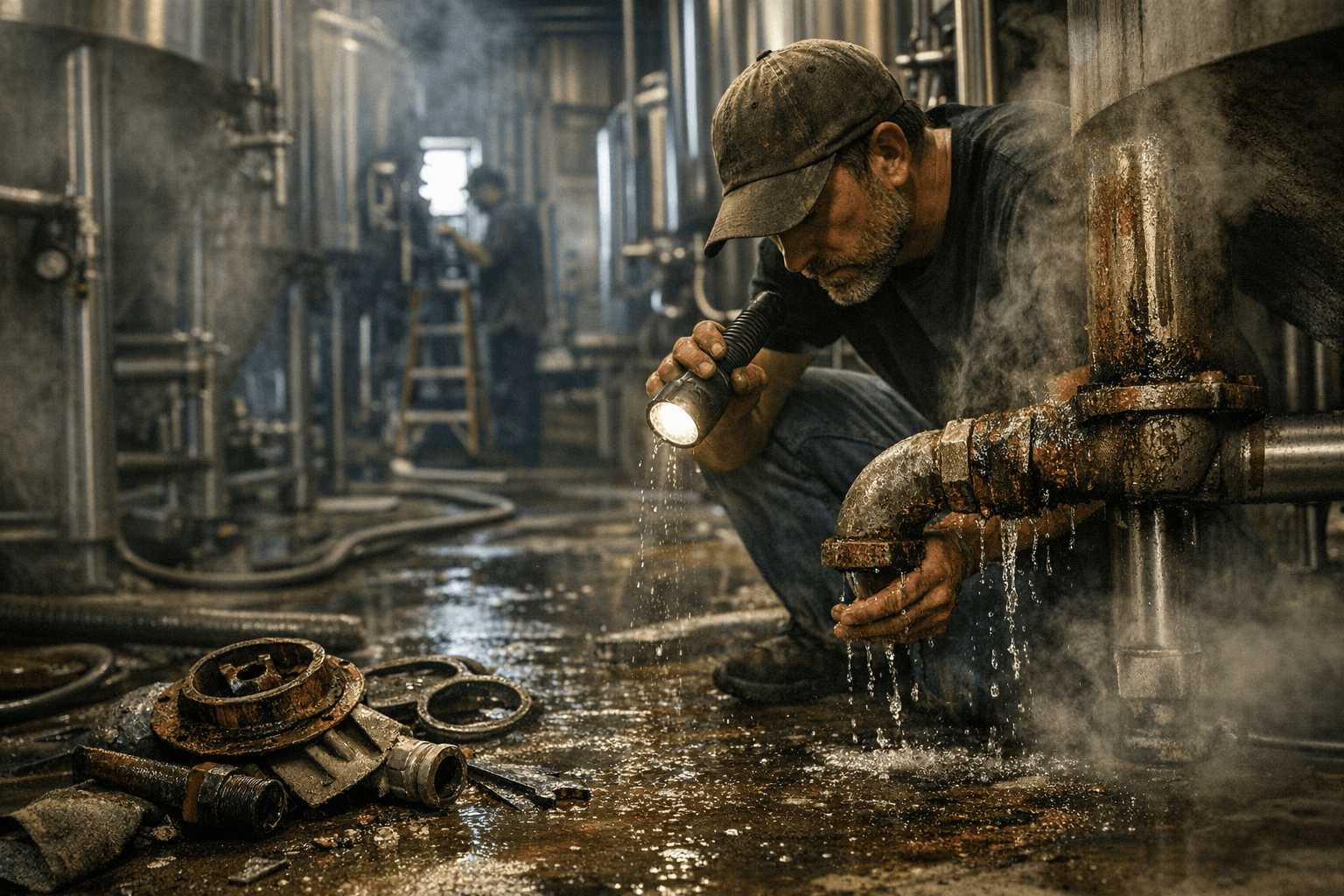
A deal can look clean on paper and still hide a brutal repair bill in the cellar, on the packaging line, or in a glycol system that nobody has touched properly in years. That is the trap running through this craft beer shakeout: buyers keep chasing brand strength, distribution, and production capacity, while the real cash drain lives in maintenance that was deferred, improvised, or never standardized in the first place.
The timing matters. The Brewers Association said 2024 was the first year since 2005 that U.S. craft brewery closings outpaced openings, with 399 closings and 335 openings. It also said there were 9,736 small and independent breweries operating in the U.S. in 2024, while its broader production report later counted 9,796 operating craft breweries in a different frame. Even with that contraction, craft beer still supported nearly 460,000 jobs and contributed $77.1 billion to the U.S. economy in 2024. By midyear 2025, craft volume was estimated down 5 percent, which tells you the pressure on independent brewers was not easing.
Why maintenance becomes the hidden deal killer
The Brewers Association has been blunt about the part many operators would rather ignore: equipment maintenance is important, often forgotten, and tied directly to avoiding unnecessary loss or costly shutdowns. Its seminar material has gone further, describing brewery maintenance as poorly managed and reactionary. That is exactly why acquisition due diligence can go sideways. Buyers often spend their attention on the things that are easy to pitch, like brand equity and distribution reach, and treat the mechanical side like a line item instead of a risk.
That is how a so-called bargain turns into a cash drain after closing. Craft Beer & Brewing reported the common failure pattern: duplicated spare parts that cannot be consolidated, fragmented vendor contracts, and compatibility problems that do not surface until the buyer is already on the hook. One example from that coverage was $13,000 in spare parts inventory that could not be merged because the equipment differed. That is not a rounding error. On a tight balance sheet, it is the kind of waste that keeps repeating every time a pump, probe, motor, or control board fails.
What smart buyers need to inspect before they sign
The best technical due diligence is not glamorous, but it is cheaper than a surprise shutdown. First Key Consulting’s brewery deal work points to the right shape of the review: on-site assessment, interviews, questionnaires, equipment and facility evaluation, quality-system review, bottleneck analysis, and equipment valuation. In practice, that means buyers need to stop asking only, “How much beer can this place make?” and start asking, “How much of this system is actually standardized, documented, and supportable?”
The questions worth putting on the table are the ones that expose maintenance debt:
- What preventive maintenance schedule exists, and who actually follows it?
- Which parts are common across sites, and which are one-off, oddball components?
- Are vendor contracts transferable, duplicated, or fragmented across acquired locations?
- Which pieces of equipment are already running at the edge of their service life?
- Is the facility documented well enough that a new engineer or brewer can keep it stable without tribal knowledge?
- Where are the bottlenecks, and are they caused by design, neglect, or both?
If the answers are vague, that is not a paperwork issue. It is a warning that the buyer is purchasing future downtime.
Standardization is what separates growth from a repair nightmare
The strongest theme running through all of this is standardization. Acquirers that try to stitch together a patchwork of different breweries without a common asset strategy end up paying for every mismatch twice, once at closing and again in repairs, parts, and labor. Asset management tools matter here because they give owners a single view of what exists, what it costs to maintain, what parts are needed, and what should be replaced before it fails.
That is also why maintenance can no longer be treated as a reaction to emergencies. If the company is running on a “fix it when it breaks” mindset, the buyer inherits the culture along with the tanks. A real post-close plan should line up the same pumps, sensors, fittings, and control logic where possible, then build a maintenance calendar that does not depend on memory or heroics. The point is not to make every brewhouse identical. The point is to eliminate the expensive weirdness that turns routine service into detective work.
Consolidation is not the problem. Bad consolidation is
Craft-on-craft consolidation is not new, and the industry finance story around it has shifted toward efficiency and operational improvement rather than pure brand-led growth. That matters because the current wave of deals is less about building a giant logo and more about surviving a weak market. The Oregon Beverage Collective, formed in early 2026 by Crux Fermentation Project, Silver Moon Brewing, Cascade Lakes, GoodLife, and Tumalo Cider, shows one version of that response: pooling resources instead of trying to win alone in a softer market.
That kind of structure can work, but only if the operational backbone is treated as seriously as the brand story. Shared purchasing, shared maintenance standards, and shared parts inventories can create real savings. Without that discipline, consolidation simply concentrates the same problems under a bigger umbrella. A brewery owner tempted by acquisition should read the lesson this way: the winning deal is not the one with the nicest taproom, the strongest distribution map, or the most impressive annual capacity number. It is the one whose equipment can actually be maintained, standardized, and kept online without surprise spending after the ink dries.
The craft beer shakeout is not just thinning the field. It is sorting out operators who understand that maintenance is not overhead to be ignored, it is the difference between a resilient system and a very expensive rebuild.
This article was produced by Prism’s automated news system from verified source data, official records, and press releases, then run through automated quality and moderation checks before publishing. The system is built and supervised by the people who set the standards it runs under. Read our full AI policy.
Did this article answer your question?