American Craft Beer Matures as Hazy IPA Hype Finally Fades
The hazy IPA gold rush that defined a generation of craft beer is over, and the industry's post-peak reset is producing something more durable: focused breweries, cleaner styles, and community-rooted taprooms.
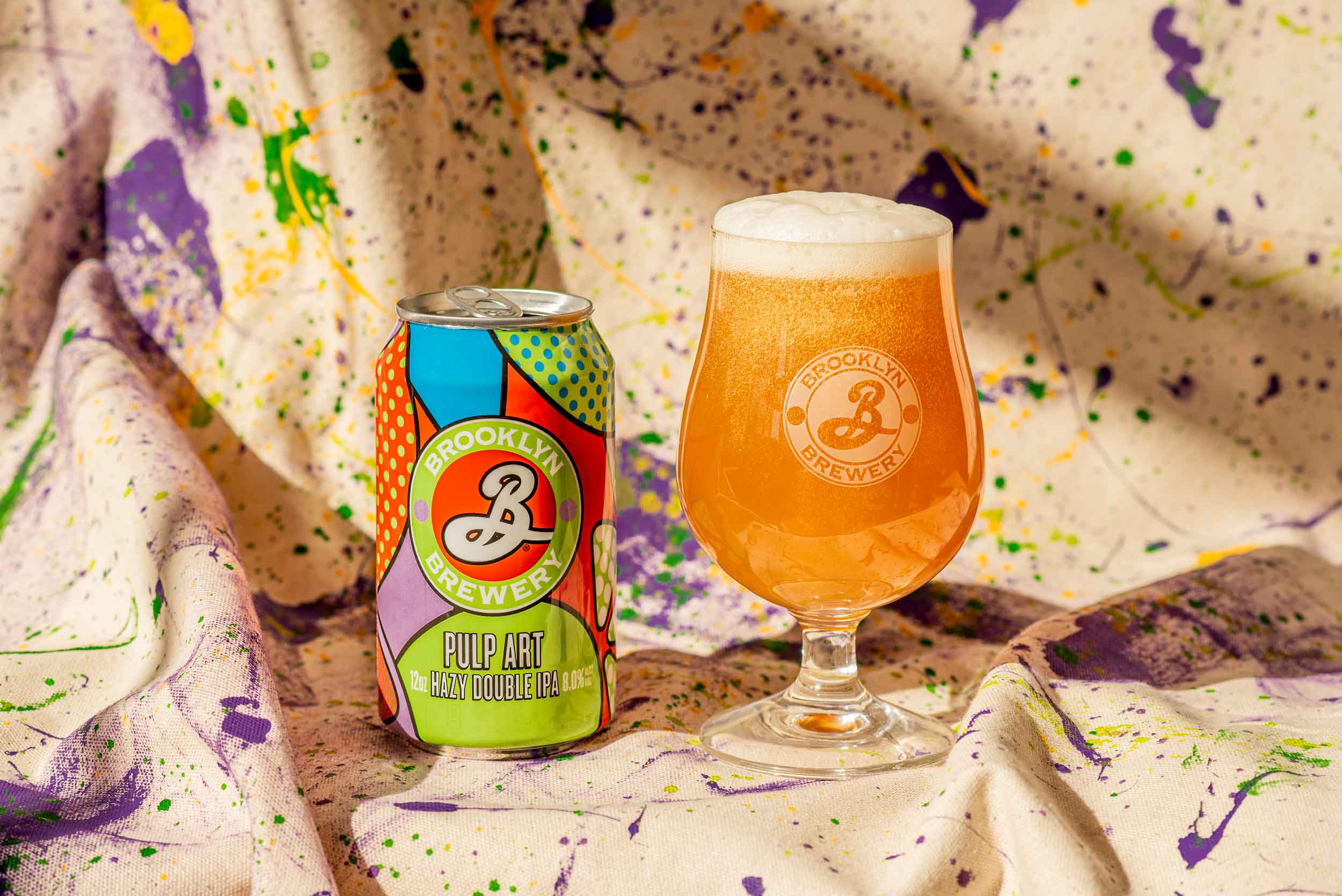
Three hours. That's how long drinkers once queued outside Other Half Brewing's Brooklyn taphouse on release days, chasing the next hazy IPA drop with the fervor usually reserved for sneaker drops. Founded in 2014, Other Half became the defining emblem of craft beer's cultural apex, subject to frothy media coverage and, by 2017, dubbed "the official beer of finance bros." Today, that same brewery has quietly added a lager called Snaps to its year-round flagship lineup: crisp, citrus-forward, and as far from a triple-dry-hopped haze bomb as you can get while still wearing the Other Half name.
That pivot tells you everything about where American craft beer stands right now.
The Gold Rush Is Over
Craft beer's cultural peak landed somewhere in the late 2010s, carried on the twin pillars of the hazy IPA and the pastry stout. The category had enjoyed decades of nearly uninterrupted double-digit growth since its naissance in the early 1980s, and for a long stretch, it seemed like the growth would never stop. It did. The Brewers Association tracked 268 new brewery openings in 2025 against 434 closings, making it the second consecutive year in which closures outpaced new entrants. Those closures still represent just 4.4% of operating breweries, which is worth keeping in perspective, but the direction of travel is unmistakable. The overall beer market is now projected to show volume growth of just -0.2% in 2026.
The economics had been signaling stress for years. By 2018, sales dollars per craft SKU had already fallen to $329, down from $377 in 2014, while mainstream beers generated $15,799 per SKU. Every additional experimental release carried hidden costs: separate inventory management, production scheduling, quality control, marketing, and distributor education. The novelty economy that once rewarded constant new releases stopped paying.
"I tend to be optimistic about where beer is heading," says Sam Richardson, one of Other Half's co-founders. "This is far from the first time craft beer has had a dip. And I think it's starting to look up, or even inch slightly forward." That measured calm is the mood of the more considered operators navigating this reset, and it's a tone worth adopting.
Palate Fatigue and the Return to Balance
The Hazy IPA isn't dead. Anyone claiming otherwise is overstating the case. But its total dominance is finished. The extreme end of the market, the Triple IPAs, Milkshake IPAs, and cloyingly sweet Fruited Sours, is visibly shrinking, and the culprit is the most democratic force in beer: palate fatigue. The 2026 IPA category is increasingly defined by balance and a return to clarity. After years of beers loaded with every fruit imaginable, drinkers are gravitating toward styles that are crisp, clean, and easier to drink.
The West Coast IPA has been the primary beneficiary of this fatigue. The clear, bitter, piney, citrus-forward style that hazies effectively buried is finding new relevance. Drinkers who spent years chasing tropical opacity are rediscovering that resinous bitterness and a dry finish are virtues, not defects. Session Hazy IPAs in the 4-5.5% ABV range are also gaining ground as a middle path, offering juicy character without the sweetness overload that defined the height of the haze era.
The Lager Moment
The style shift that no one fully anticipated at the peak of the haze craze has arrived in full: lagers are taking over taplines. Scott Krebsbach of Vault 202 Brewery and Taproom in Appleton, Wisconsin, put it plainly: "I feel like we are already in the next trend, and maybe have been for a while: Light, easy-drinking, European-style lagers that are mid-to-low ABV and affordable." He added that while there's still a time and place for a triple-dry-hopped hazy or a 15% barrel-aged stout, those styles won't be driving sales.
The range within the lager revival is broad: premium Mexican-style lagers continue to gain mainstream traction, traditional German Pilsners are finding craft audiences, and Czech dark lagers and Vienna-style lagers are appearing on tap lists that once ran exclusively hoppy. Alternate Ending Brewery was named Brewery of the Year in 2026 on the strength of its traditional lager program, a designation that would have seemed inconceivable to many in 2017. Even Other Half, the house that haze built, is betting that a lager can anchor its flagship lineup.
The Low-ABV and Non-Alcoholic Shift
Sub-5% ABV beers are becoming the functional default for taproom pours and retail shelves, driven by a broader cultural shift toward moderation among Millennials and Gen Z without abandoning the social ritual of beer entirely. On-premise sales of non-alcoholic beer have seen explosive growth, with some reports noting a 33.7% jump year-over-year. In 2026, having a high-quality NA option, especially a NA IPA or craft lager, is as essential as having a light beer on the menu.
The market numbers reflect the seriousness of this trend. The non-alcoholic and low-alcohol beer category is projected to grow at a compound annual rate of roughly 7.8%, from $24 billion in 2025 to over $50 billion by 2035. Breweries at the cutting edge of this shift include Andiamo, highlighted by Punch Drink as one of the most consequential craft operations of 2026 specifically for its low-ABV, mid-strength beers, with its Rosato Rosé IPA cited as the can to know. Even Other Half has entered the space with its All In Hazy Non-Alcoholic IPA, available year-round in taprooms and retail.
Focus Over Flash: How Surviving Breweries Are Operating
The clearest behavioral signal of craft beer's maturation is the deliberate simplification happening at breweries that are building for longevity. Topa Topa Brewing in California generates up to two-thirds of its sales from a single flagship IPA, Chief Peak. Magnify Brewing in New Jersey is prioritizing its flagship hazy IPA, Maine Event, in accessible 12-packs at $25. These aren't breweries that ran out of ideas. They're breweries that figured out the economics of identity.
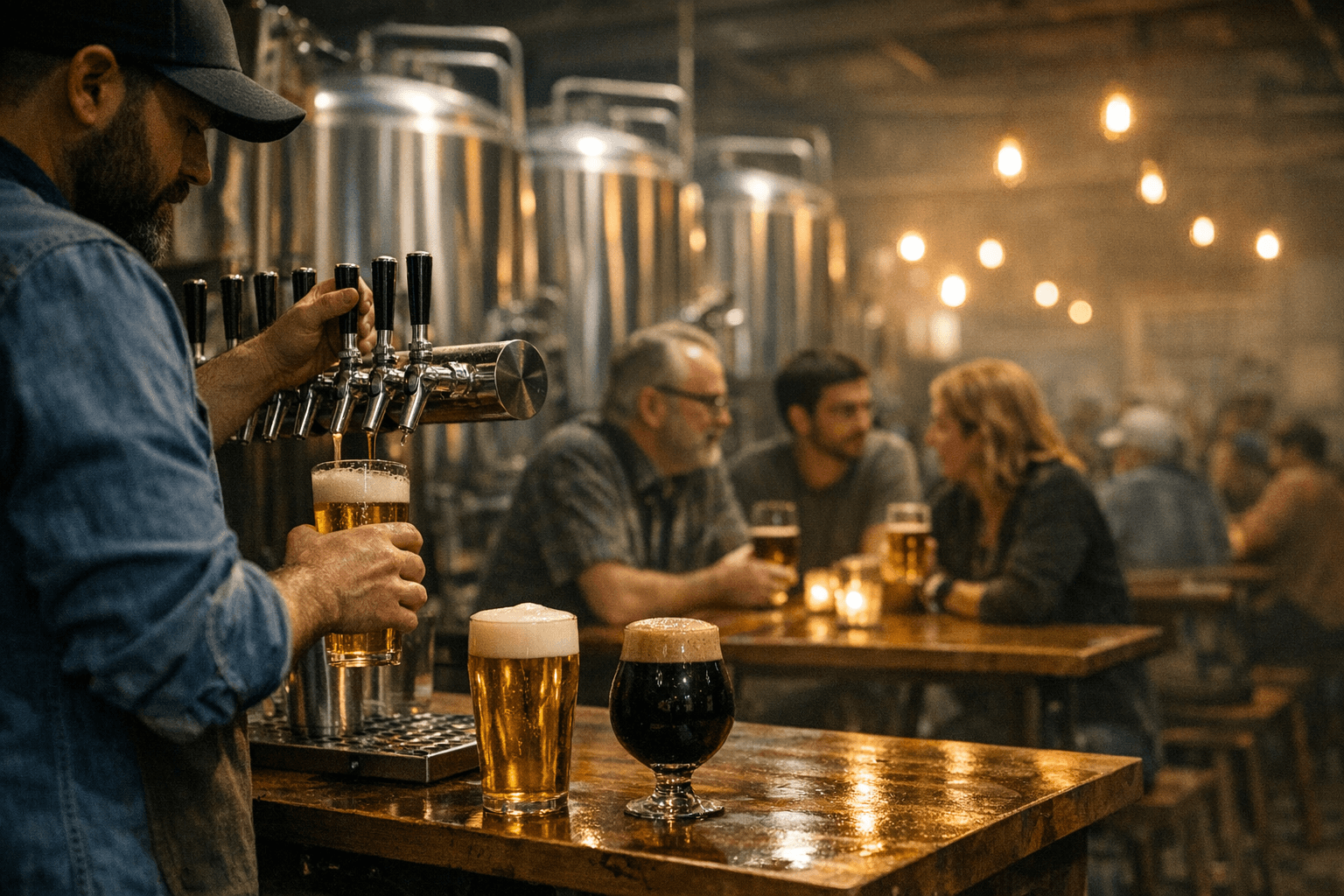
The taproom itself has been reimagined as a community hub rather than a distribution launchpad. Breweries are focusing less on making their way onto the shelves of national grocery chains and more on hospitality and being a hub in their own communities, keeping volumes smaller but using that agility to make more interesting beers or to develop tightly curated lineups.
That community-first thinking is reshaping business structures too. In March 2026, Chicago's Half Acre Beer Co. and Maplewood Brewery and Distillery announced a merger to form a unified beverage company, explicitly citing a "rapidly changing" beverage market. The combined entity is keeping both brands active while exploring diversification into THC beverages and restaurant operations. As one of Maplewood's owners observed of the industry's current reality: "A lot of what's going on now is we exist in a world that looks a lot more traditional."
What Maturation Actually Means
It's worth naming what this period actually is: not a collapse, not a bubble popping, but a natural correction after a run of growth that few industries ever experience. The breweries that rationalized their tap lists, leaned into craft lager, and built genuine local loyalty are the ones opening their doors every morning. The Brewers Association, in reviewing 2025, framed it not as a crisis but as a reset year that forced the industry to adapt. Survival, profitability, and local relevance now matter more than scale or footprint expansion.
The hazy IPA era gave craft beer a decade of cultural electricity. The styles it spawned, the taprooms it filled, the community it built, remain genuinely valuable. What the industry is shedding is not craft beer's identity but the frantic novelty cycle that convinced too many breweries that growth had no ceiling and every release needed to be an event. What comes next looks less like a gold rush and more like a craft: smaller, steadier, and built on a foundation that actually holds.
This article was produced by Prism’s automated news system from verified source data, official records, and press releases, then run through automated quality and moderation checks before publishing. The system is built and supervised by the people who set the standards it runs under. Read our full AI policy.
Know something we missed? Have a correction or additional information?
Submit a Tip