Bias Brewing grows from Kalispell taproom into regional Montana producer
Bias Brewing’s Kalispell taproom has grown into a regional Montana beer maker, tying local ingredients, wholesale reach, and community work into every pour.
Kalispell is the recipe
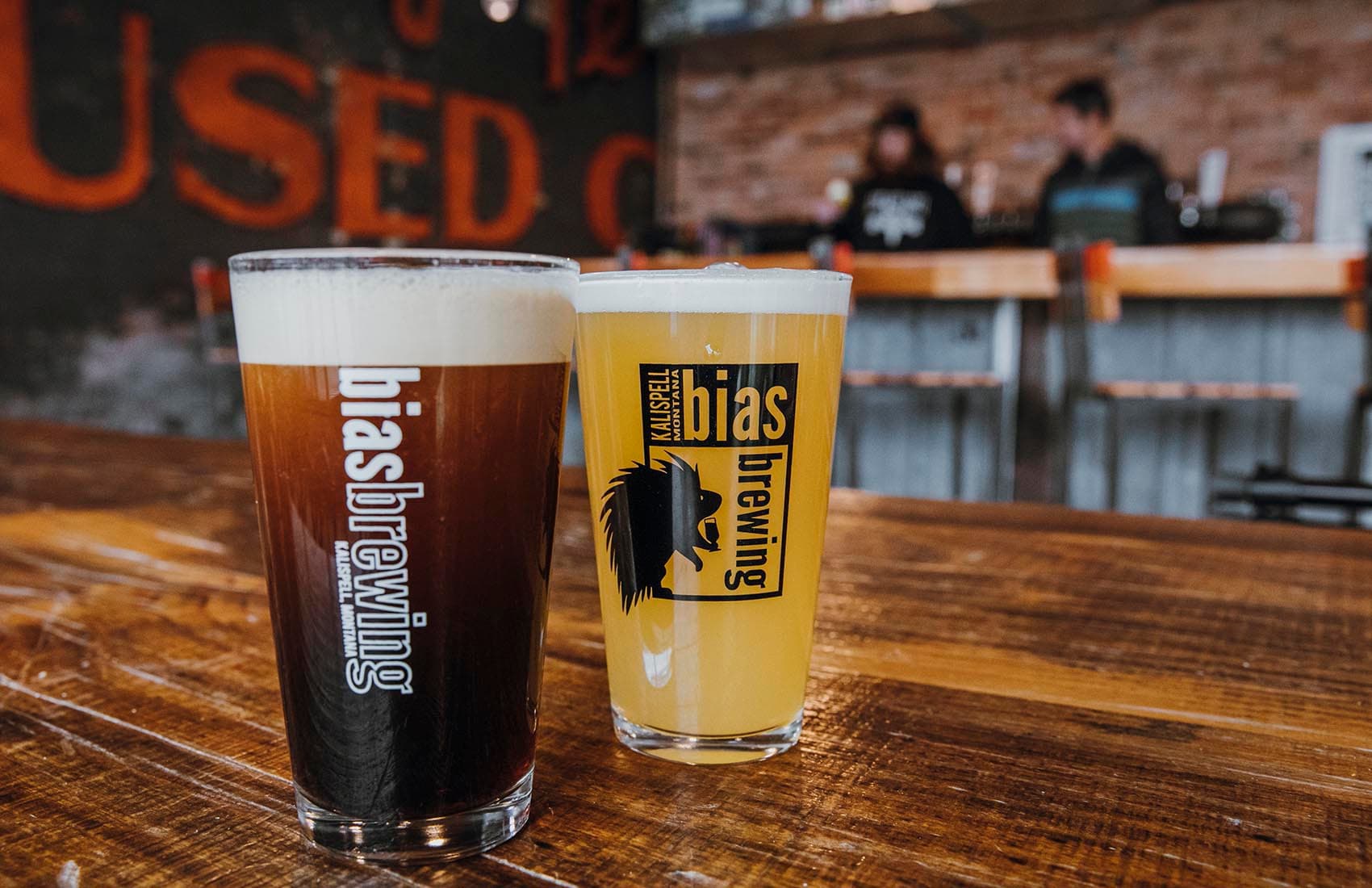
Bias Brewing’s story starts with a simple but powerful idea: beer can taste like where it comes from. In downtown Kalispell, co-owners Gabe Mariman and Adam Robertson launched the brewery in 2018 with community at the heart of the business, and they built it as more than a place to order a pint. It is a brewery, taproom, and restaurant, but it also functions like a small regional manufacturing hub, moving Montana-made beverages out to bars and restaurants across five counties.
That place-based identity is what makes Bias worth watching. The brewery says it makes Northwest-inspired ales, sours, seltzers, kombucha, and barrel-aged beers, all while using local agricultural products. The result is a business model that connects the tap handle to the field, the grain truck, the packaging line, and the neighborhood table.
From Main Street gap to regional foothold
Bias’s address at 412 S. Main St. tells part of the story, but the building history matters just as much. The brewery moved into the former Kalispell Brewing Co. space in 2022, after Kalispell Brewing Co. closed on Aug. 3 of that year. That older brewery had opened on Main Street in 2014 in the former Hendricksen Motors building, so Bias stepped into a site that already carried brewing history for downtown.
The move was not just a change of address. Daily Inter Lake reported that Bias had doubled brewing production in 2020, which helps explain why the company outgrew its earlier footprint on First Avenue East. Mariman and Robertson purchased the Main Street location in early August 2022 and spent the next two months renovating before reopening there the following month. That sequence shows a brewery making room for scale while keeping its roots in the same downtown core.
What goes into the glass
Bias’s strength is not a single flagship beer or a one-off collaboration. Its portfolio is broad because its ingredient and production model is broad. The brewery’s own materials emphasize regionally loved beers, seltzers, sours, and kombucha made with local agricultural products, while the Chamber of Commerce description adds NW-inspired ales and barrel-aged beers to the mix.
That range matters because it lets Bias tell a fuller Montana ingredient story. The clearest statewide example is Peaks to Prairie, the collaboration beer project that uses Montana-grown hops and malt. That project links breweries with growers and maltsters, and it gives a useful blueprint for how a Montana brewery can build flavor around the state’s own farm economy. If you want the short version of the taste connection, this is it: Montana-grown hops bring regional aroma and bitterness, while Montana malt gives the beer its grain backbone and a direct link to the barley and malt supply chain.
The Montana Brewers Association helps make that network visible. Founded in 2008, it represents 53 breweries statewide and uses projects like Peaks to Prairie to support scholarship funding for students at Montana State University’s Barley, Malt and Brewing Lab. That lab, more precisely the MSU Barley, Malt & Brewing Quality Lab, serves Montana growers, maltsters, and brewers through research, education, and outreach. For a brewery like Bias, that means the ingredient story is not marketing fluff. It sits inside a larger production ecosystem that reaches from farm to lab to fermenter.
Why the taproom feels bigger than a taproom
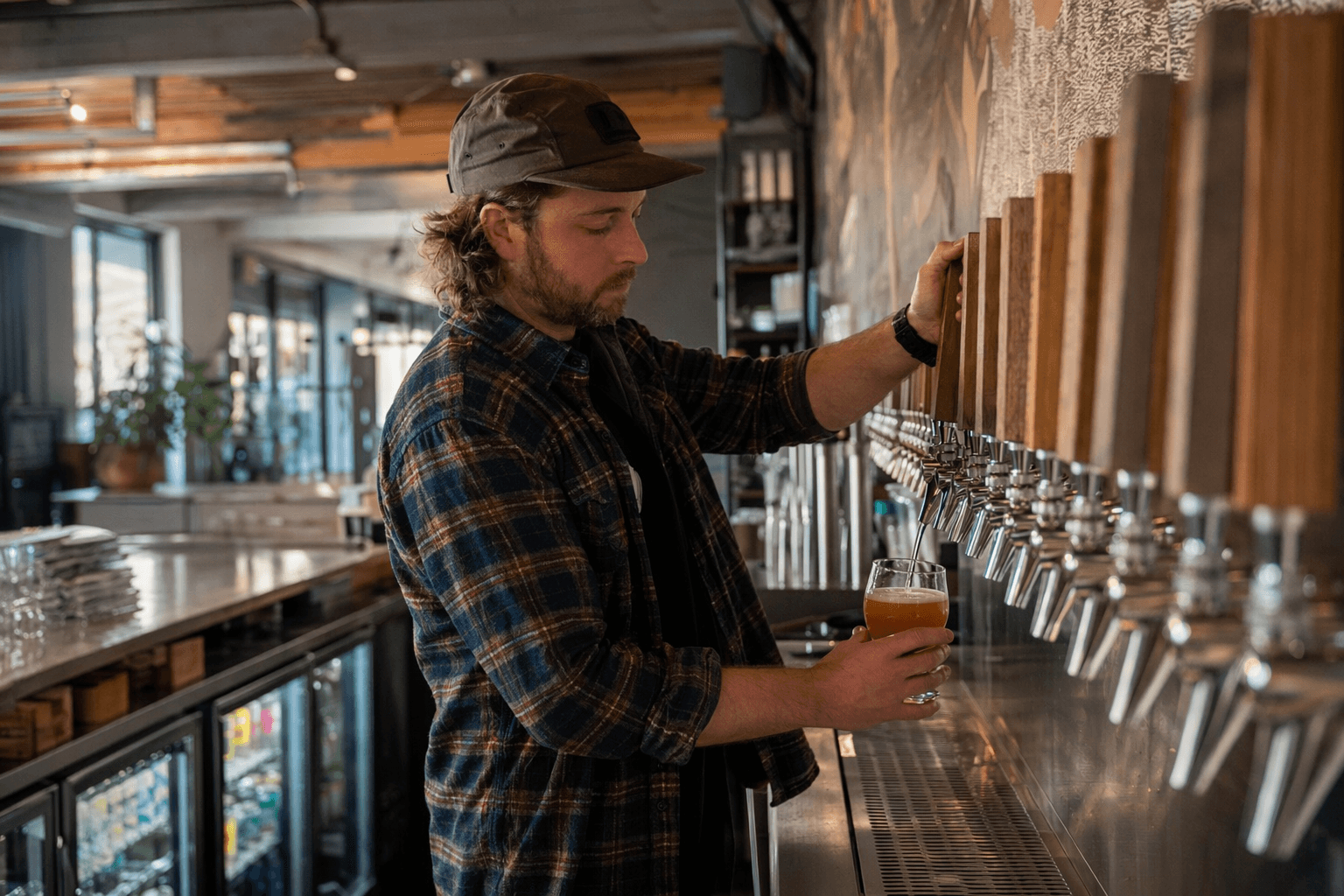
Bias has leaned into the idea that a brewery can be a community venue without losing its production identity. Its website lists the Kalispell address, separate contacts for wholesale keg orders and loft rentals, and taproom hours that run Monday through Saturday from 11 a.m. to 10 p.m. That combination says a lot: this is a place where people can eat, drink, book events, and still be looking at a working beverage business with regional distribution.
The company’s footprint reflects that same duality. Bias self-distributes to bars and restaurants in Flathead, Lake, Lincoln, Missoula, and Glacier counties, reaching more than 200 customers. A 2024 Manufacturing Day listing said the company had about 30 employees, including brewers, packaging and distribution staff, and restaurant workers. Those numbers matter because they show the brewery as a local employer and a regional supplier, not just a taproom with a logo.
Bias has also paired its beer work with civic work. Coverage notes that the company has partnered with local nonprofits, volunteered more than 8,000 hours, and raised more than $300,000 since opening. That level of involvement helps explain why the brewery’s downtown identity resonates: the beer, the room, and the community program are all part of the same operating idea.
What local sourcing means in practical terms
For drinkers, the usable takeaway is straightforward. If a brewery says it is built around Montana agriculture, the signs should show up in three places: the ingredients, the recipe choices, and the way the beer moves into the market. Bias checks all three boxes.
You can see that in the beer list. Northwest-inspired ales, sours, seltzers, kombucha, and barrel-aged beers give the brewery room to highlight different grains, fruit, acidity, and oak-driven character. You can see it in the network too. Montana-grown hops and malt keep the supply chain close to home, while the MSU lab and the Montana Brewers Association reinforce the state’s agricultural and technical brewing infrastructure. And you can see it in the footprint, with self-distribution across five counties and a Main Street taproom that works as a restaurant, event space, and wholesale anchor.
That is why Bias feels like more than a downtown success story. It is a working example of how a Montana brewery can turn local agriculture into a finished product people can taste, buy, and carry into their own corner of the state. In Kalispell, the beer does not just come from a place. It belongs to one.
This article was produced by Prism’s automated news system from verified source data, official records, and press releases, then run through automated quality and moderation checks before publishing. The system is built and supervised by the people who set the standards it runs under. Read our full AI policy.
Did this article answer your question?