Craft Beer’s Rise From Homebrew Legalization Faces New Market Pressure
Craft beer’s biggest legacy is what it changed in the glass, and now that millennial-built market is losing volume while nostalgia lagers push back.
How homebrewers turned a legal change into a beer movement
The online fight over craft beer versus cheap lager misses the bigger inheritance. The modern beer aisle, with its fresh taproom pours, hop bombs, seasonal releases, and local brewery culture, traces back to one federal decision in 1978 that gave homebrewers legal room to experiment and turn curiosity into a movement.
Congress passed H.R. 1337 into law on October 14, 1978, under Public Law 95-458, and Charlie Papazian and Charlie Matzen quickly helped turn that change into an organizing force by founding the American Homebrewers Association in Boulder, Colorado. The first issue of Zymurgy magazine did more than announce a new club. It publicized the legalization of homebrewing and called for entries in the first AHA National Homebrew Competition, which gave serious amateurs a public stage and a reason to keep pushing beer beyond the handful of mass-market choices most Americans knew.
What craft changed in the glass
That legal opening matters because it changed expectations, not just recipes. Once homebrewing became normal, beer stopped being only a shelf-stable commodity and started becoming something drinkers expected to taste fresh, distinct, and local. The craft era taught a generation to notice when a beer was bright and lively instead of flat or stale, and to seek out flavor intensity, especially the hop-forward character that became one of the movement’s signature calling cards.
It also widened the vocabulary of what beer could be. A market that once leaned hard on a few familiar lager profiles made room for local taprooms, limited releases, and stylistic range that let drinkers move from crisp lagers to pale ales, IPAs, dark beers, and seasonal specials without leaving the category. That shift was cultural as much as sensory: the neighborhood brewery became a place to meet the brewer, try something small and fresh, and treat beer like a local business decision rather than a distant national brand.
A category that built jobs, then hit a wall
The numbers still show how large that transformation became. In 2024, the Brewers Association counted 9,736 small and independent breweries in the United States, with 335 openings and 399 closings. Craft beer supported nearly 460,000 jobs and generated $77.1 billion in economic impact, proof that what started with homebrew legalization had become a major economic engine.
But the same year also showed how much strain the category is under. Overall U.S. beer production and imports fell 1% in 2024, craft brewer volume sales dropped 4%, and craft’s share of beer volume slipped to 13.3%. Even so, craft retail dollar sales rose 3% to $28.8 billion and represented 24.7% of the $117 billion U.S. beer market, which shows that the category still has pricing power even as it loses some of the volume momentum that once made it feel unstoppable.
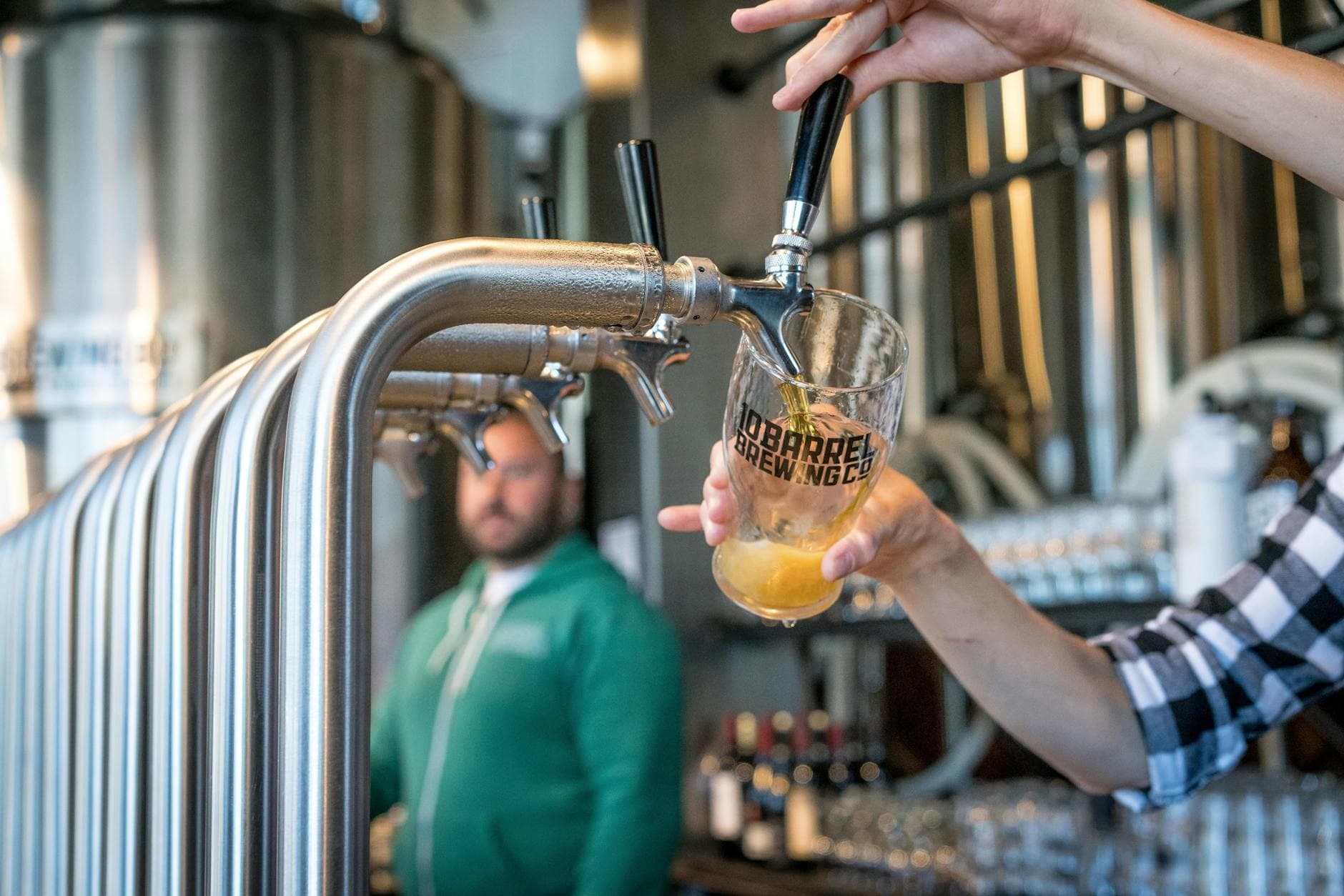
Brewers Association vice president of strategy and membership Bart Watson called the moment a “painful period of rationalization.” His point is blunt: demand growth slowed, retailers and distributors simplified their assortments, and some of the shelf space that once belonged to independent beer has been replaced by options outside the category. In response, breweries are leaning harder on distribution, taproom innovation, partnerships, and broader beverage portfolios, which is a different kind of fight from the expansion era, one focused on survival, not just growth.
Why millennials are still central to the story
The generation that came of drinking age during craft’s rise is still central to the category’s identity. A National Bureau of Economic Research working paper by Bart J. Bronnenberg, Jean-Pierre H. Dubé, and Joonhwi Joo found a generational share gap in the U.S. beer market, with millennials buying more craft beer than earlier generations. That helps explain why the millennial versus zoomer beer debate lands with such force online: it is not just meme theater, it reflects a real divide in taste, identity, and drinking habits.
For millennials, craft beer was never just an indulgence. It was the default answer to a market that had once felt narrow, and it taught drinkers to expect freshness, bitterness, variety, and a sense that beer could be local in the same way coffee or bread can be local. Younger drinkers who grew up after that boom may see those options as normal rather than won, which is exactly why the gains can disappear into the background.
Nostalgia lagers are fighting back
That is where Coors Banquet comes in. Molson Coors said the brand’s sales rose 28% in 2023 compared with 2022, and the company has called it the fastest-growing beer brand in the country. Marketing manager Alyssa Bush says the brand benefits from its legacy status and from nostalgia-driven visibility in celebrity photos and in shows like Stranger Things, Cobra Kai, and Yellowstone.
That comeback does not erase craft beer’s influence. It shows how fragmented the market has become, with drinkers splitting between nostalgia lagers, value brands, independent beer, and even non-alcohol options. Craft beer still changed what American beer tastes like and where it gets sold, but the next phase is about defending that legacy in a market that no longer rewards novelty automatically.
What homebrewing legalization unleashed in 1978 is still visible in every tap list that offers something fresh, local, and stylistically distinct. The pressure now is real, but so is the fact that millions of drinkers inherited a beer culture they never would have had without the homebrewers who pushed the door open first.
This article was produced by Prism’s automated news system from verified source data, official records, and press releases, then run through automated quality and moderation checks before publishing. The system is built and supervised by the people who set the standards it runs under. Read our full AI policy.
Did this article answer your question?