DC Beer Show Explores Third Hill Brewing's Techniques, Community, and Homebrewer Pathways
Third Hill Brewing's Jason Sliter and Matt Cronin unpack decoction mashing, smoked yeast reuse, and how Silver Spring's newest brewery became a launchpad for DC-area homebrewers.
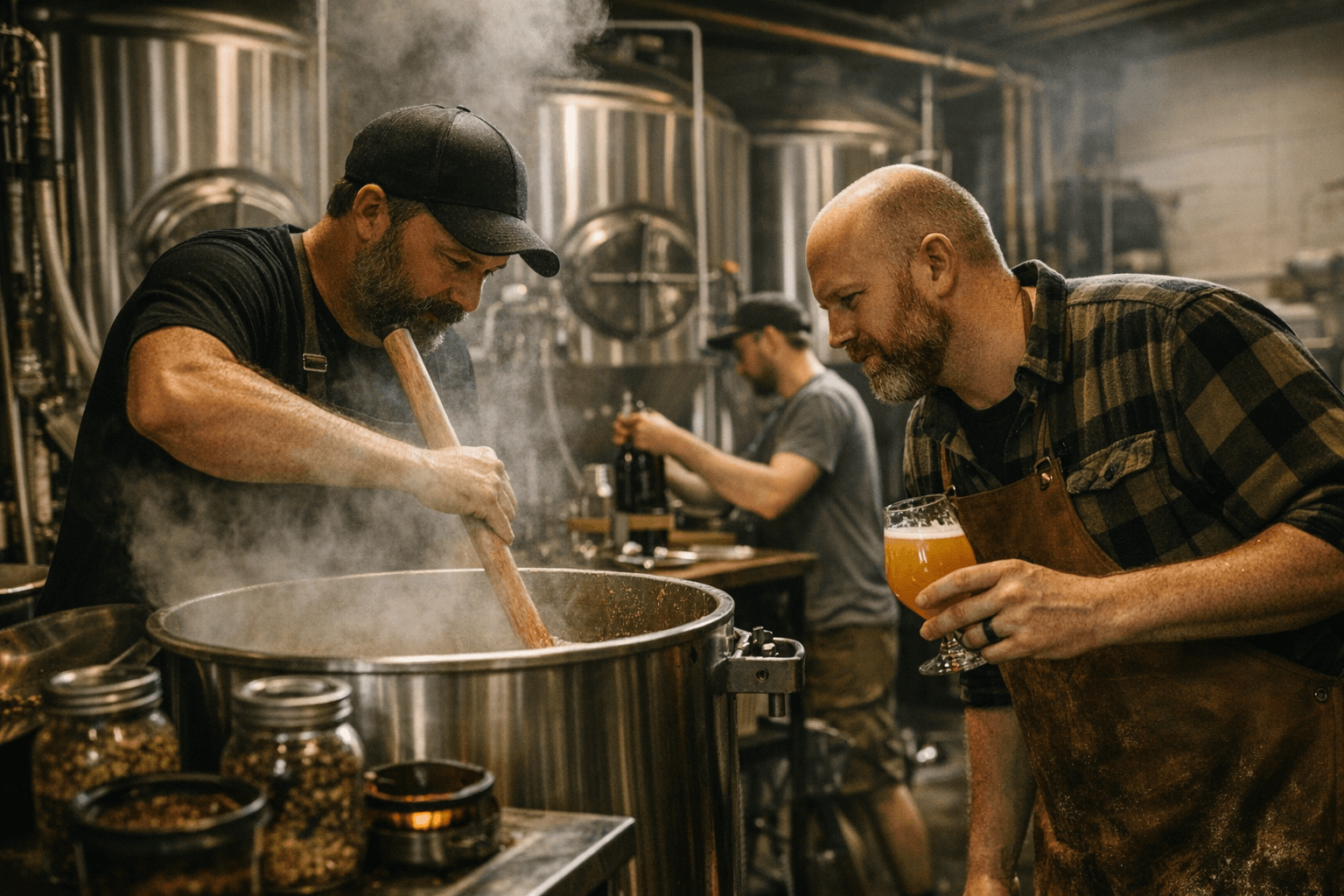
If you're a homebrewer staring down the gap between your kettle and a professional brewhouse, the DC Beer Show's conversation with Third Hill Brewing Company is the kind of episode worth pulling up before your next brew day. Third Hill Brewing operates out of 8216 Georgia Avenue in downtown Silver Spring, and the brewery's owner Jason Sliter and head brewer Matt Cronin sat down with the show to break down the technical decisions, collaborative relationships, and community programs behind one of the DC area's most community-driven taprooms.
From Homebrew Batches to Brewery Owner
Jason Sliter's path to ownership traces back to 2015, when he was sharing homebrew with friends and family and witnessed the joy of bringing people together through beer. That origin story is more than a feel-good founding myth; it's the philosophical scaffolding for everything Third Hill does, from the beers it releases to the pathways it creates for the next generation of brewers. The space formerly occupied by Astro Lab Brewing became Third Hill Brewing in June 2023. Third Hill has been described as a "hermit crab brewery" that took over the space, and sometimes even the equipment, of a closed brewery, inheriting the infrastructure while building something entirely its own in terms of culture and technique.
Matt Cronin came along as part of that transition. Fans of Astro Lab will find a nod to that era in Third Hill's lineup, as beers named "Thank You Matt" and "Thank You Emma" were inspired by Astro Lab owners Emma Whelan and Matt Cronin, who went on to become Third Hill's head brewer.
The Technical Conversation: Decoction, Smoke, and Biotransformation
The DC Beer Show episode, released March 19, 2026 and available on iHeart, Apple Podcasts, Spotify, PocketCasts, and Transistor, digs into the brewing methodology that makes Third Hill's lineup technically interesting rather than just stylistically diverse. The episode specifically highlights two techniques that don't often get airtime together: decoction mashing and smoked yeast reuse.
Decoction mashing is the old-world German and Czech lager process where a portion of the mash is pulled, boiled separately, and returned to raise the temperature step by step. It's labor-intensive, time-consuming, and largely abandoned by most modern commercial breweries chasing efficiency. The fact that Third Hill is actively using it signals a deliberate commitment to technique over convenience. Silver Branch itself has used decoction mashing on its Czech-style amber lager, producing a beer described as crisp and complex, featuring a blend of spicy and floral hops with a rich and toasty malt character, which gives useful context for the shared technical language between these two neighboring Silver Spring breweries.
The smoked yeast reuse process is where the episode gets particularly interesting for homebrewers. Third Hill's beer There Might Be Sirens is described as a Helles with a twist, and the twist comes not from smoked malt but from the fermentation itself: a German helles yeast process borrowed from Silver Branch that imparts subtle smoked character. Repitching and adapting house yeast strains across collaborative batches is advanced territory, and having the head brewer walk through that process in an accessible format is exactly the kind of content that bridges the gap between homebrew-scale experimentation and professional application.
The episode also covers a decocted Rauch beer produced as a direct collaboration with Silver Branch, layering both techniques: the labor-intensive boiling process of decoction and the smoky malt backbone of the Rauchbier tradition. Rounding out the technical discussion is a hazy IPA built around complex biotransformation techniques, where specific hop compounds interact with active yeast during fermentation to produce fruity, aromatic compounds well beyond what dry hopping alone can achieve.
There Might Be Sirens: A Helles Built on Collaboration
Of all the beers discussed in the episode, There Might Be Sirens gets the most detailed treatment. The name alone earns curiosity, but the process behind it illustrates how inter-brewery relationships can translate directly into flavor. Rather than reaching for smoked malt to get smokiness into a pale lager, Third Hill borrowed Silver Branch's German helles yeast process, letting fermentation do the work. The result is a Helles that sits within a clean, malt-forward style while carrying a layer of complexity that most examples of the style never attempt. Silver Branch operates taprooms across Silver Spring, Rockville, and Warrenton, and is known for award-winning craft beer rooted in European brewing traditions, making them a logical partner for any brewery looking to deepen its German-style lager game.
Third Hill as a Homebrewer Hub
The technical content is only half of what the DC Beer Show episode covers. The other half is squarely about community infrastructure: what Third Hill has built for homebrewers who want to take their brewing somewhere beyond the garage. The episode calls out the brewery's third annual homebrew competition as an upcoming event, marking a program that has now run long enough to develop its own track record. Beyond competitions, Third Hill offers hands-on brewing experiences that let homebrewers work on commercial-scale equipment with professional guidance.
Third Hill is located in the Arts and Brewery District in downtown Silver Spring, which means it sits in a neighborhood already oriented around creative production and local identity. That context matters for a brewery that positions itself as a hub rather than just a taproom. The episode's framing of Third Hill as a place where "local homebrewers get their shot at the big leagues" isn't just marketing language; it reflects a structured approach to community programming that includes recurring events and direct brewing access.
The episode also includes a shout-out to Matt Cronin's upcoming farewell party, a moment that speaks to how tightly knit this particular brewing community is. Head brewer transitions at small breweries can feel like seismic events, and the fact that the show is marking it publicly signals the kind of transparency and connection that distinguishes community-focused operations from standard taproom businesses.
Where to Find the Episode and Support the Show
The DC Beer Show episode featuring Jason Sliter and Matt Cronin is available on all major podcast platforms. For DC-area beer news and coverage beyond this episode, follow DCBeer.com and @dcbeer on social media. The show is also supported by a roster of monthly Patreon contributors at Patreon.com/DCBeer, including supporters Josh, Ellen Daniels, Juan Deliz, Mike Lastort, James Wisnieski, Brian Minch, Chris Frome, Jon Gilgoff, Tory Roberts, Steven M Quartell, Chris DeLoose, Lauren Cary, Amy Crone, Scott Pavlica, Greg Antrim, Jeffrey Garrison, Joshua Learn, Alexis Smith, Dan Goldbeck, Anthony Budny, Greg Parnas, Frank Chang, Mikahl Tolton, Kim Klyberg, Chris Girardot, Jeffrey Katz, Andrew MacWilliams, Jamie Jackson, Mike Rucki, Jason Tucker, Nick Gardner, Amber Farris, Sarah Ray, Peter Jones, Quinten Patterson, C Sandoval, Gilbert Glickstein, Ethan Sapperstein, Sean Whipkey, Randy Mills, Ryan Llalan Fowler, Michael Losi, Adam Heisenberg, Brian Jeff Lucas, Micaela Carrazco, Lauren Sean, and many others.
The episode transcript is available on the show's episode page, which is worth pulling up if you want to follow along with the more technical portions of the decoction and smoked yeast discussion. For a brewery that started with a homebrewer sharing pints with neighbors, Third Hill's presence on a platform like the DC Beer Show is exactly the kind of full-circle moment that makes the DC-area craft beer scene worth paying close attention to.
This article was produced by Prism’s automated news system from verified source data, official records, and press releases, then run through automated quality and moderation checks before publishing. The system is built and supervised by the people who set the standards it runs under. Read our full AI policy.
Did this article answer your question?