Denver’s Tivoli Brewing surges as U.S. craft beer production falls
Craft output fell 5.1%, but Tivoli bucked the slide by pushing Outlaw Light into a national growth lane and moving production to La Junta.
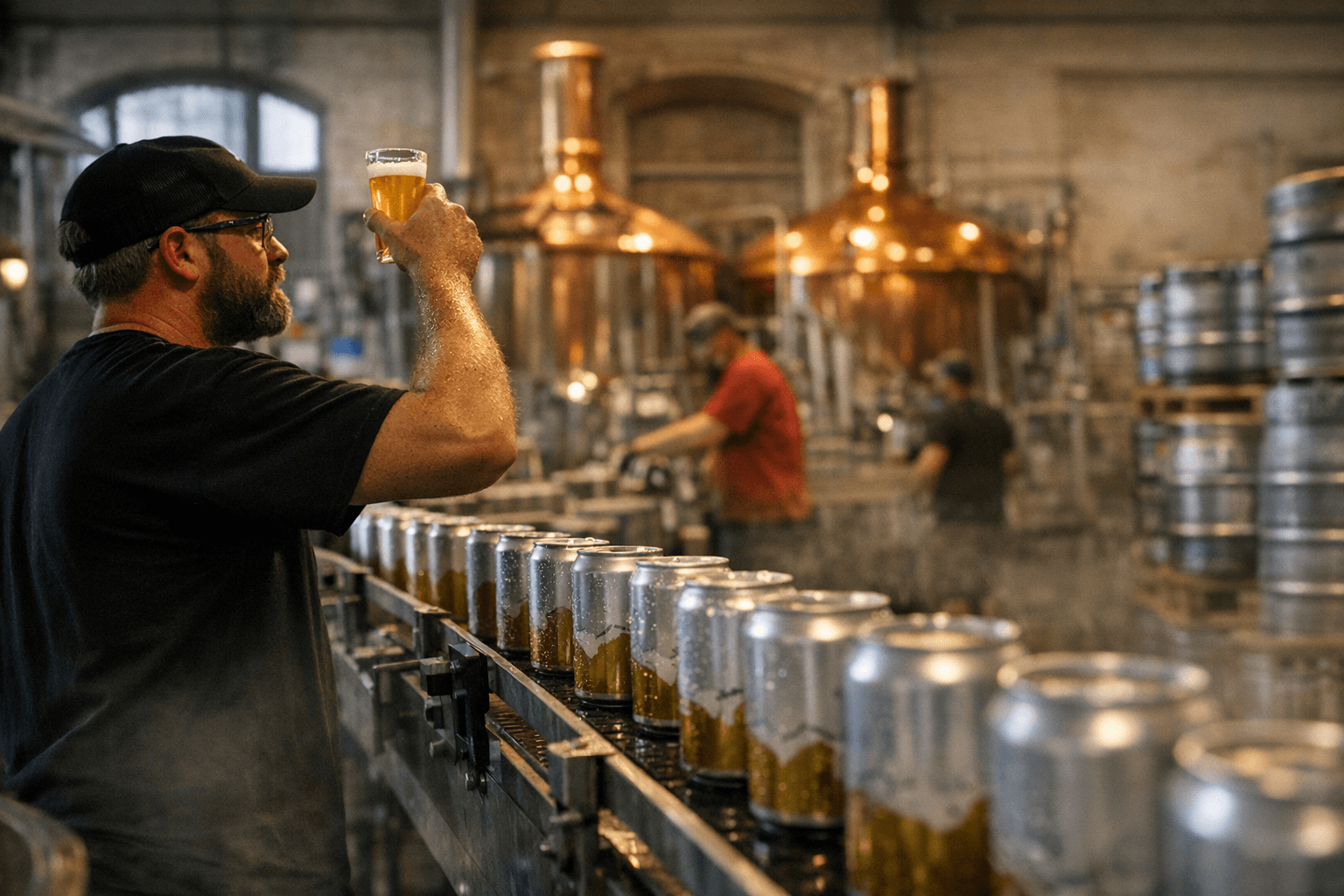
Tivoli Brewing was one of the few bright spots in a brutal year for craft beer. While U.S. craft production fell 5.1% in 2025 to 21.856 million barrels, Tivoli’s Outlaw line showed up among the Brewers Association’s notable gainers, an outlier in a market where 60% of breweries posted declines and closures again outpaced openings.
That makes Tivoli worth studying, because its growth did not come from trying to be everything to everybody. The big driver was Outlaw Light, also sold as Outlaw Mile Hi, a beer that Westword reported in late 2023 accounted for roughly 85% of Tivoli’s production. CEO Ari Opsahl moved brewing from Denver’s Auraria campus to Gold Buckle Beer in La Junta in December 2023, a capacity and logistics decision that gave the brand room to scale and a cheaper way to chase macro light-beer drinkers head-on. By 2025, trade reporting said Outlaw had spread into many states and was aiming for a 200,000-barrel annual run rate.
That strategy matters because the Brewers Association’s own numbers point to a business that is getting tighter, not looser. Craft beer’s share of total beer volume edged up from 13.2% to 13.3% in 2025, but the industry still shrank overall, and the number of operating craft breweries fell to 9,578. Brewers Association staff economist Matt Gacioch described the market as being in a period of correction, with progress now coming more from sharper operations and better business practices than from broad production growth. Tivoli looks like a case study in that shift: one core beer, one clear lane, and enough production discipline to keep scaling while the category contracts.
The brand’s history gives the move extra weight. History Colorado traces Tivoli’s roots to Moritz Sigi brewing Buck Beer for gold miners in 1864, with the Tivoli name adopted around 1900 before the brewery closed in 1969. The revived Tivoli Beer returned after a 43-year absence in 2012, following a $3.5 million renovation of the old building, $975,000 in state historic-preservation tax credits, and the creation of 30 full-time jobs. That revival eventually ran into another reality of modern craft beer: the Auraria taproom closed for good in April 2025.
For other breweries, the lesson is not nostalgia. It is focus. Tivoli’s surge came from leaning hard into a beer built for scale, moving production to where the volume could work, and treating the taproom as secondary to the package and distribution business. In a year when most craft breweries were retreating, that was the uncommon play that paid off.
This article was produced by Prism’s automated news system from verified source data, official records, and press releases, then run through automated quality and moderation checks before publishing. The system is built and supervised by the people who set the standards it runs under. Read our full AI policy.
Did this article answer your question?