Garrett Oliver explains how to brew with fonio in beer recipes
Garrett Oliver’s fonio notes make the grain feel less like a curiosity and more like a workable brewhouse ingredient, with a real process and a real extraction number.
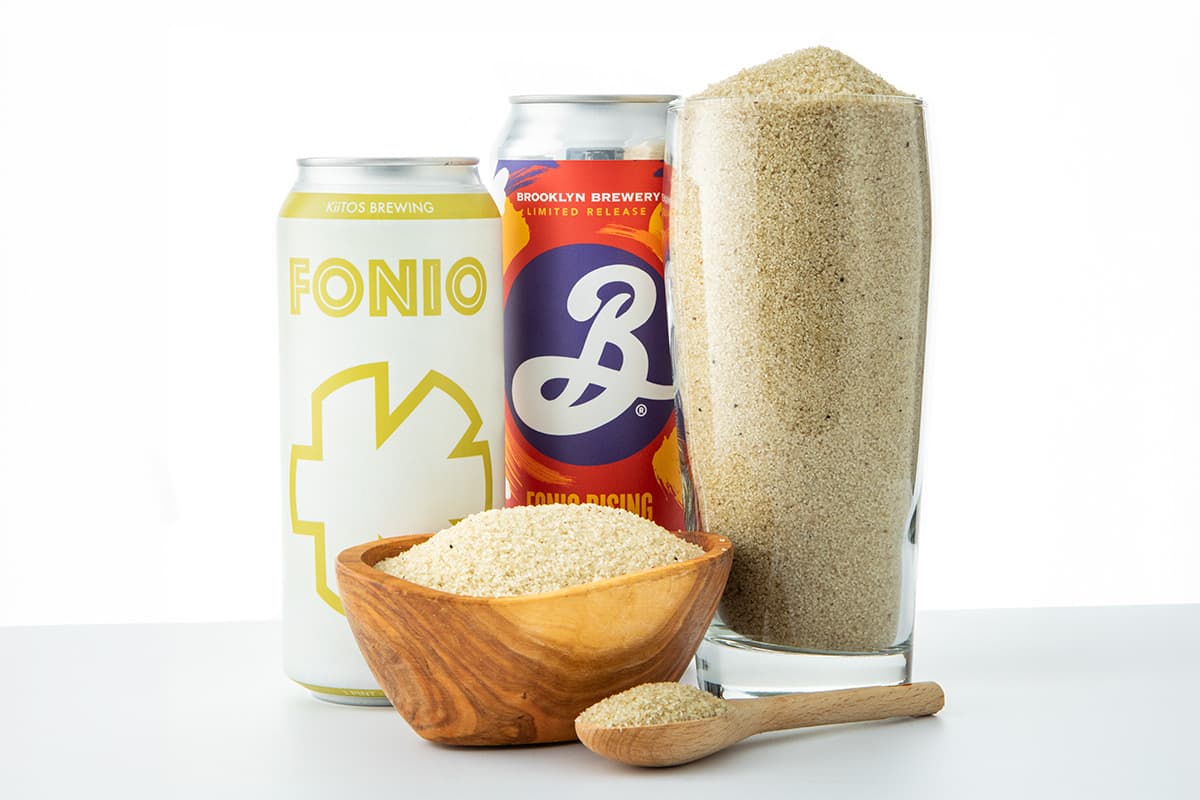
Garrett Oliver explains how to brew with fonio in beer recipes
Fonio is moving out of the novelty lane
Garrett Oliver’s most useful fonio lesson is not about hype, but about the number that brewers actually have to build around. In collaboration brews, he has seen average extraction around 71 percent, close enough to the roughly 76 percent most malt brewers expect to matter, but different enough to demand attention in recipe design. That gap tells you almost everything about where fonio sits right now: promising, usable, and still not a drop-in swap for grain you already know by feel.
The Brooklyn brewmaster’s May 27 Q&A frames fonio as a brewing ingredient with a concrete workflow, not a speculative one. That matters because the grain has become one of the more interesting ingredients in modern beer conversation precisely when brewers are looking for something distinctive that still behaves in the mash tun.
What Oliver is actually using
The fonio Oliver is working with, sourced from Yolélé West Africa, arrives de-hulled, pre-steamed, and ready to use without milling. That is a major practical advantage, especially for homebrewers and small breweries that do not want to fight a tiny grain through the same mechanical steps they would use for malted barley or adjuncts that need processing.
Instead of treating fonio like a raw, stubborn grain, Oliver describes it more like an ingredient that has already been partially prepared for brewery use. In other words, the physical labor is reduced before it ever hits your system. For brewers who care about consistency and throughput, that prep step is part of the appeal: less handling at the mill, fewer opportunities to lose material, and one less variable to complicate the day.
How it fits into the mash
Oliver says brewers are essentially rehydrating the fonio and then moving into saccharification, usually by adding it during the last saccharification rest of the mash. That is the clearest process takeaway in the whole discussion, because it gives fonio a place in a familiar brewing sequence instead of forcing you to invent one from scratch.
The timing matters. Adding it late in the saccharification rest suggests brewers are trying to make use of its prepared state while still letting enzymes do their work. For advanced homebrewers, that means fonio can be slotted into a mash schedule with intention rather than improvisation. For small breweries, it means the grain is not just a story ingredient for lab-scale experiments; it can be folded into a production day with a realistic path to conversion.

The caveat that keeps it honest
Oliver is optimistic about fonio, but not careless about its limits. He says collaboration brews have generally gone smoothly, yet he has seen at least one case that looked like incomplete pre-gelatinization, and that lowered extract. That is the kind of detail that separates a useful ingredient from a marketing talking point.
If the grain has not been prepared consistently, brewers can feel it where it hurts most: in yield. That is why fonio still asks for a measured approach. It is not enough to assume that a grain marketed as modern, sustainable, or culturally significant will behave the same way every time it lands in the brewhouse. Oliver’s note is a reminder that process control still wins, especially when the ingredient itself is unusual.
What the extraction numbers mean for recipe design
The reported 71 percent average extraction gives brewers a practical benchmark. Compared with roughly 76 percent for most malts, the difference is modest, but it is large enough to affect grist planning, target gravity, and the amount of fermentable extract you expect to pull from the batch. If you are building a recipe around fonio, that five-point spread should make you think about efficiency before you think about romance.
That is exactly why Oliver’s advice lands as tool-making rather than trend-chasing. A grain can be exciting and still need careful accounting. In a homebrew recipe, that may mean adjusting your base malt assumptions or building in a little headroom on gravity. In a brewery setting, it means the grain needs to be treated like a real production ingredient with measurable performance, not just a substitute that sounds better on the label.
What brewers can take from Oliver’s approach
- Buy fonio that has already been de-hulled and pre-steamed when possible, because that simplifies handling before the mash ever starts.
- Treat the grain as something to rehydrate and saccharify, not as a raw adjunct you can toss in without a plan.
- Use the last saccharification rest as the most logical entry point if you want to mirror Oliver’s process.
- Expect extraction to land around 71 percent on average, and do not assume malt-like yield.
- Watch for signs that pre-gelatinization was incomplete, because that can drag extract down even when the brew day otherwise looks fine.
These are not abstract notes. They are the difference between a grain that behaves predictably and one that throws off your whole batch sheet.
Why fonio is getting attention now
Oliver’s FAQ also hints at the larger reason brewers keep circling fonio. The grain checks several boxes at once: it is distinctive, it carries cultural weight, and it seems capable of adding flavor without making the brewhouse impossible to manage. That combination is rare. Too often, “new ingredient” in beer means either a technical headache or a gimmick that never survives the jump from conversation to cellar.
Fonio looks more interesting than that. It is not replacing malt, and it does not pretend to. Instead, it offers brewers a way to experiment with ingredients that feel fresh while still staying inside a process framework they already understand. That is why Oliver’s lesson resonates beyond one Q&A: it gives advanced homebrewers and small breweries a way to judge fonio on the terms that matter most, from mash timing to extract to prep.
Fonio is still an ingredient brewers are learning to trust, but Oliver’s instructions make the path visible. Once a grain has a workable prep method, a sensible mash slot, and an honest extraction number, it stops being a talking point and starts looking like a tool.
This article was produced by Prism’s automated news system from verified source data, official records, and press releases, then run through automated quality and moderation checks before publishing. The system is built and supervised by the people who set the standards it runs under. Read our full AI policy.
Did this article answer your question?