BeerSmith shares tips for brewing fuller-bodied homebrew beer
Thin homebrew usually comes from a few fixable choices. BeerSmith’s answer is simple: build more body into the grist, mash hotter, and stop yeast from stripping the finish.
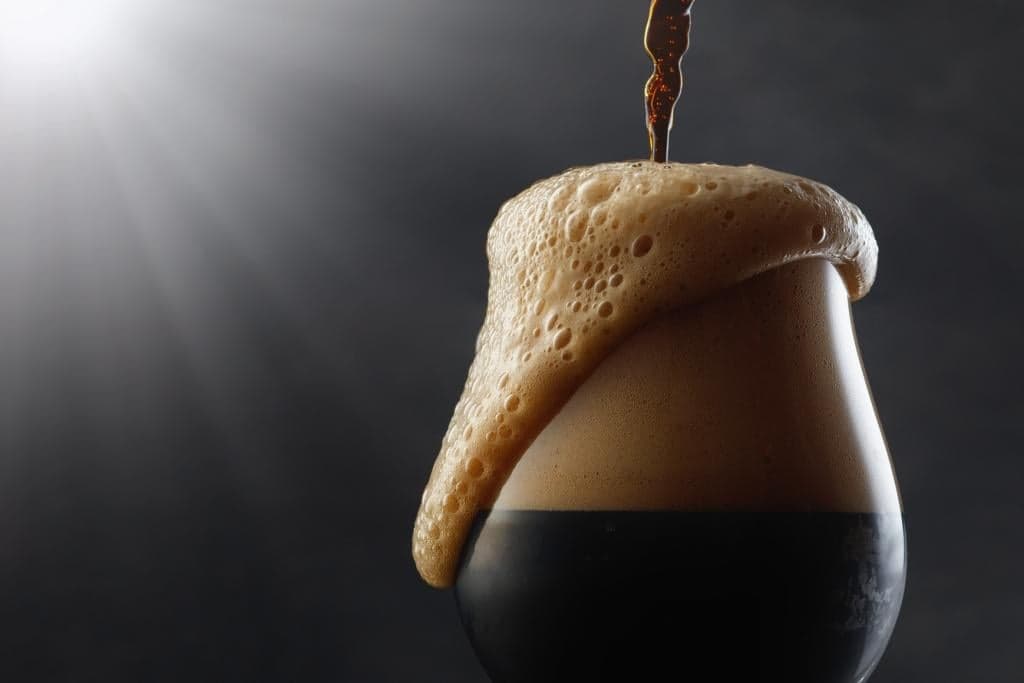
A lean grist, a cool mash, an aggressive yeast, and a dry water profile can all thin a beer out at once. Brad Smith at BeerSmith breaks the fix into a few brew-day moves: put more protein and dextrins into the recipe, mash warmer at about 158°F, keep mash pH in the 5.3 to 5.7 range, and pick a yeast that leaves a little more behind.
Start with the grist if the beer feels hollow
If a beer lands light on the palate, the first place to look is the recipe itself. Malt choice, final gravity, hops, tannins, and protein shape body, and the easiest move is to choose malts and adjuncts that naturally push the beer toward more fullness.
Wheat, oats, and flaked barley are the obvious body builders here because they bring more protein and a rounder texture than a bare-bones pale malt bill. Caramel and crystal malts can also help, along with body-focused malts like Carafoam and Carapils. Some roasted malts can contribute too, but the trick is not to turn a stout into a sharp, burnt beer just to chase weight in the glass.
The tradeoff is real. Every time you add more fullness, you risk pulling the beer away from snap and drinkability, especially in lighter styles.
Mash hotter when you want more than a dry finish
Raise the mash temperature. A mash around 158°F, or 70°C, gives you a fuller result than a cooler, more fermentable mash, and that change shows up fast in the finished beer.
Mash pH matters just as much as the temperature. Keeping mash pH between 5.3 and 5.7 helps you stay in the zone where the beer can keep some roundness without turning sloppy or harsh. If you are already mashing hot and the beer still drinks thin, check whether your pH is wandering outside that range before you keep changing malt bills.
A hotter mash can absolutely make the beer feel richer, but if you push it blindly, you can trade crispness for a cloying finish. For malty styles, that may be exactly what you want. For something meant to drink bright and lean, that cloying finish is a problem.
Pick yeast that leaves more behind
Yeast choice is the other big lever because attenuation changes how much sugar remains in the finished beer. Lower-attenuation yeast leaves more residual body, which is exactly what you want if the beer keeps finishing like a watered-down version of the recipe you designed.
White Labs WLP002 English Ale Yeast is listed at a minimum attenuation of 63 percent, while WLP005 British Ale is listed at 68 percent. That may not sound like much on paper, but in the glass it is the difference between a beer that keeps some mid-palate weight and one that finishes a little more stripped.
WLP002 also comes with a useful set of traits for body-focused brewing. White Labs calls it a classic ESB strain from one of England’s largest independent breweries, with very high flocculation and suggested uses that include porter, stout, bitter, and IPA.
Do not ignore water if the finish still comes out dry
Sulfate-to-chloride balance fits cleanly into this conversation. Chloride enhances malty aspects and mouthfeel, while sulfate pushes bitterness and a drier finish. If you are chasing a fuller body, a water profile that leans too hard on sulfate can make even a decent grist feel thinned out.
The BJCP’s official style guidelines, used in competition judging and education, treat body and mouthfeel as part of how a beer gets evaluated. A well-built stout can carry more heft than a crisp pale ale, but if you brew a style that is supposed to feel rounded and it still lands dry, the water profile may be fighting you.
Brewing research published in European Food Research and Technology has shown that dextrins and beta-glucans influence palate fullness and mouthfeel. Beta-glucans can also raise viscosity, which is great when you want a silkier pour and a fuller palate, but they can bring haze, gels, and filtration problems along with that extra body.
The next brew day fix is a stack, not a single trick
The cleanest way to build fuller-bodied beer is to use several small levers together instead of trying to rescue a thin recipe with one dramatic change. Add some wheat, oats, flaked barley, or a touch of Carapils or Carafoam. Mash warmer at 158°F, keep pH in the 5.3 to 5.7 range, and choose a yeast like WLP002 when you want more residual body than a more attenuative strain such as WLP005.
This article was produced by Prism’s automated news system from verified source data, official records, and press releases, then run through automated quality and moderation checks before publishing. The system is built and supervised by the people who set the standards it runs under. Read our full AI policy.
Did this article answer your question?