Gold-winning breweries share techniques for crafting crisp Bavarian helles lager
A gold helles in a 150-plus-entry field came down to precision: fresh malt, tight pH, clean fermentation, and lively carbonation.
The medal haul points to one truth
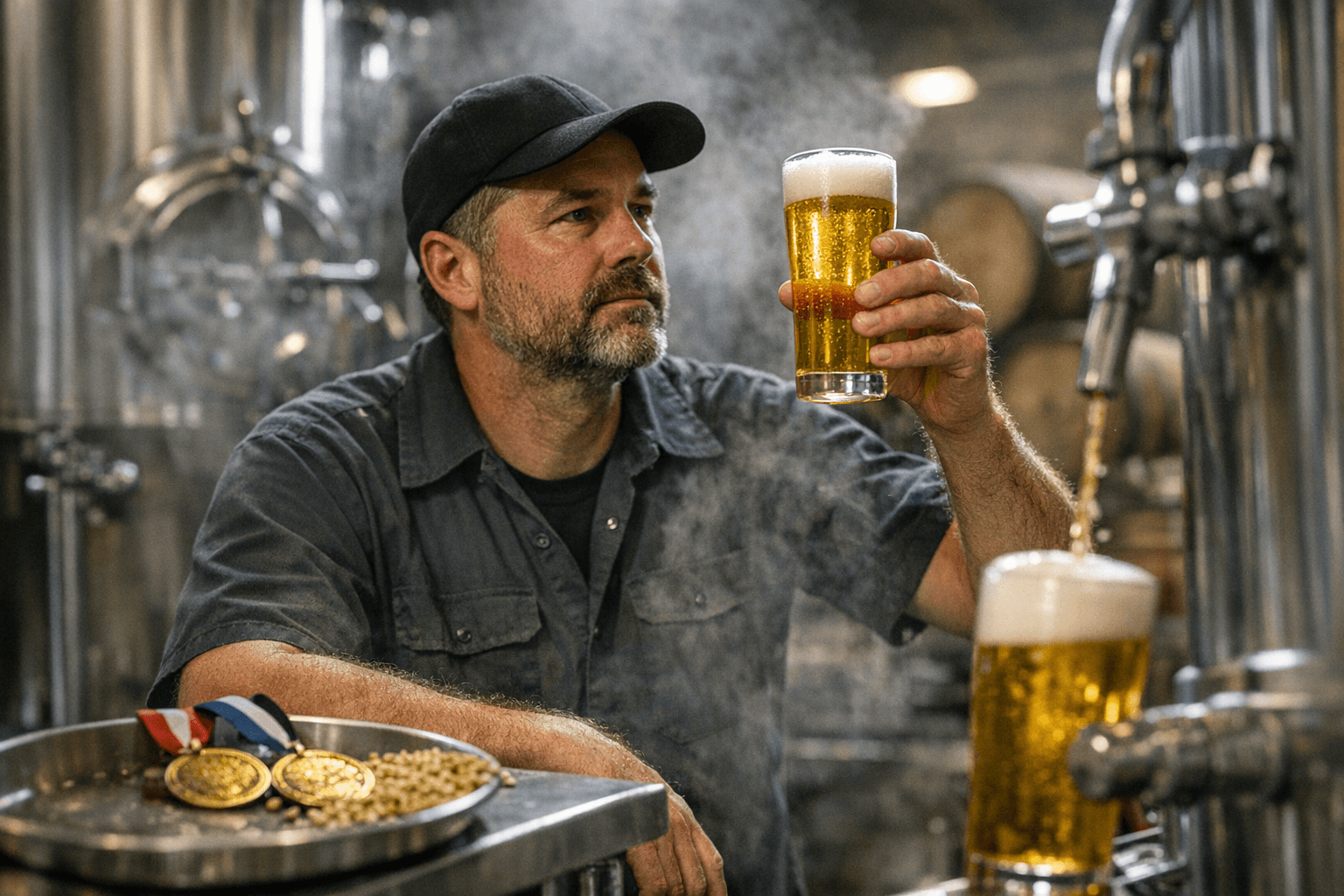
Wander Back Lager won gold in Munich-Style Helles at the 2026 World Beer Cup, and it did so in a category with more than 150 entries. Roughly 18 hours after the win, cofounder and head brewer Brian Hink was already talking about the same things that keep showing up in every serious helles discussion: fresh locally sourced malt, mash-out decoction, and careful attention to pH.
That is the big surprise in this style. Danny Kueser of Cinder Block puts it bluntly: “This style of beer is driven more by techniques … than by the recipe.” The gold-medal brewers quoted in Craft Beer & Brewing all circle back to the same idea, that helles is a beer of restraint, where light maltiness, restrained sweetness, and gentle hop bitterness only work when the process is clean and deliberate.
Malt is where restraint begins
All five breweries in the piece insist on German malt for their helles, and the American winners are remarkably consistent about how far they push the grist. The four U.S. breweries use Weyermann Pilsner for at least 80 percent of the grain bill, usually closer to 90 percent, with small additions of Munich, Carafoam, Carapils, Carahell, or acidulated malt. At Schönram in Bavaria, brewmaster Eric Toft sources malt locally from four smaller Bavarian maltings, which keeps the beer tied to place as much as style.
If you want one homebrew decision point here, make it freshness. Brian Hink says Wander Back Lager uses 100 percent locally grown, floor-malted pils malt from Rabbit Hill Malt, often kilned just days before brewing, because that freshness drives the bright malt flavor in the beer. Ashleigh Carter has called helles “the purest expression of malt,” and Bierstadt’s own recipe shows the same discipline with 88 percent Pilsner, 8 percent Vienna, and 4 percent acidulated malt.
Water and pH keep pale malt honest
For a beer this pale, water treatment is not background noise. Brewing science coverage from Doemens notes that water treatment is particularly important for pale bottom-fermented styles like Helles because it affects color and tannin quality, and Altstadt’s own helles course explicitly breaks down the brewery’s water profile along with grist, mash steps, fermentation, lagering, carbonation, and finishing. Hink’s pH note belongs in the same toolbox: he tracks pH through the sparge to avoid over-extracted tannins.
For your 5-gallon batch, that means treating water as a flavor-control tool, not an afterthought. Cinder Block says it makes water adjustments based on the recommendations in Modern Lager, which is a good reminder that helles rewards a soft, deliberate hand rather than loud mineral loading. If the beer tastes sharp, harsh, or thin, the fix may be in your water and mash pH before you start chasing yeast or hops.
Decoction is a tool, not a badge
Helles still attracts decoction romantics, but the medal winners are more pragmatic than dogmatic. Craft Beer & Brewing notes that some brewers insist decoction is required for authenticity, yet Cinder Block’s gold medal helles was intentionally built to achieve high quality without a traditional decoction mash. At the other end of the spectrum, Schönram uses decoction mash for higher efficiency and attenuation, and Toft also fine-tunes mash steps depending on barley specs.
That is the useful homebrew takeaway: choose decoction if your setup, time, and comfort level make it a repeatable move, but do not assume you need it to win the style. Altstadt’s technical course makes clear that mash steps matter, and Bierstadt’s lager work likewise treats decoction as one lever among several, not a magical finish. The beer is decided by whether the process is repeatable and calm.
Ferment cold, then wait for cleanup
Altstadt’s helles teaching focuses on sanitation, pitching, and fermentation control, which is exactly where a lot of homebrewed lagers go sideways. Josh Weikert’s helles guide gives the practical version: start fermentation cool, around 50°F, then ramp for a diacetyl rest about halfway through primary. He also recommends a forced VDK test before cold crashing and packaging, because diacetyl is one of the few flaws that can flatten this style instantly.
Sulfur deserves the same patience. Craft Beer & Brewing’s sulfur explainer says lager fermentations can smell rough for a day or two, that lager yeasts produce more sulfur compounds than ale yeasts, and that if the finished beer has more sulfur than you want, the first fix is simply giving it more time. That is not a defect so much as part of the lagers-own-the-clock reality of the style.
Carbonation is the last crispness lever
If helles tastes soft and rounded, carbonation is often the difference between elegant and sleepy. Weikert recommends about 2.25 volumes of CO2, erring high rather than low, because under-carbonation makes the beer taste flabby and dull. Bierstadt’s lager teaching treats carbon dioxide as an overlooked ingredient, which is exactly how it should be thought about in a style that depends on lift and foam as much as malt.
For a home keg, this is the easiest fix on the page. If your helles already has good malt flavor and a clean finish but still drinks heavy, the answer may simply be more carbonation, not more hops or more malt. The style should feel bright, not plump.
Your 5-gallon decision points
- Water profile: keep mash pH under control and treat water as a way to protect pale malt character, not hide it.
- Fermentation control: pitch clean lager yeast cool, then use a diacetyl rest and a VDK check before packaging.
- Sulfur cleanup: do not rush the beer out of the fermenter or keg, because sulfur needs time to blow off and mellow.
- Carbonation: target about 2.25 volumes of CO2 so the beer stays crisp instead of tasting flat.
- Freshness: buy the freshest German pils malt you can get, because helles magnifies staleness as clearly as it magnifies precision.
That is the medal-winner’s helles playbook in plain language: use spare ingredients, then obsess over the handful of process choices that let malt, water, yeast, and carbonation disappear into balance. In this style, the quietest beer usually asks for the most disciplined brewer.
This article was produced by Prism’s automated news system from verified source data, official records, and press releases, then run through automated quality and moderation checks before publishing. The system is built and supervised by the people who set the standards it runs under. Read our full AI policy.
Did this article answer your question?