Grand Rapids College's Student Brewery Reopens, Now Offering Takeout Beer Sales
GRCC's Fountain Hill Brewery, the only licensed campus brewery in the U.S., reopened after a 15-month hiatus and now sells takeout crowlers on select Thursdays.
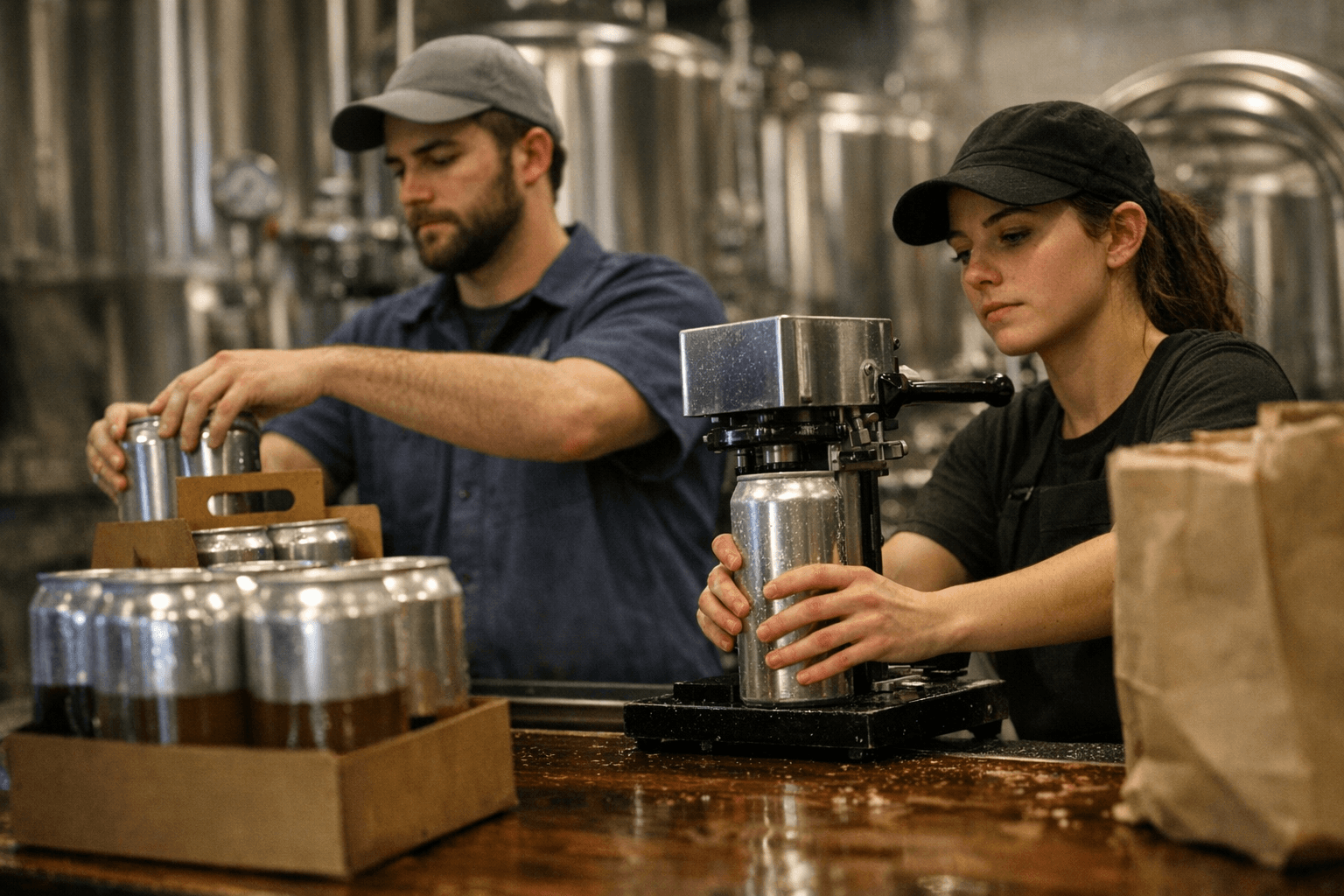
Fifteen months after closing its doors, Fountain Hill Brewery at Grand Rapids Community College has done more than reopen: it has quietly crossed into retail. Students in GRCC's Craft Brewing Certificate program now send beer out the door in cans and crowlers during Thursday evening taproom sessions, a step that reframes the whole pedagogical exercise from hospitality to full commercial operations.
The brewery sits inside the Wisner-Bottrall Applied Technology Center at 151 Fountain Street NE in downtown Grand Rapids, and it holds a distinction no other campus facility in the country can claim: it is the only federally and state-licensed brew pub owned and operated at a college or university. It runs on a 3-barrel system and draws its entire workforce from students enrolled in CRB 205, the Taproom Management course within the brewing certificate curriculum, taught by Secchia Institute Assistant Professor Allison Hoekstra. The taproom runs select Thursdays from 5:30 to 8:30 p.m., pairing student-brewed beers with food prepared by GRCC's culinary program students.
The addition of takeout is where the curriculum gets genuinely harder. Pouring a pint across a bar and sealing a crowler for off-premise consumption are operationally different in ways that catch aspiring brewers off guard. Three lessons from the Fountain Hill model stand out.
First, packaging compliance: once beer leaves a licensed premise in a sealed container, it enters a different regulatory lane. Students filling and sealing crowlers must contend with TTB labeling requirements and Michigan's rules for off-premise retail sales, the same paperwork maze any commercial packaging brewery navigates, compressed into a three-hour Thursday window.
Second, quality control tightens considerably the moment beer is meant to travel. Dissolved oxygen pickup during the crowler fill, proper sealing technique, and ensuring the beer exits at serving temperature all become student responsibilities that a draft pour alone never demands. A mis-sealed crowler consumed warm and flat two days later delivers real-world feedback of a particularly instructive kind.
Third, the customer service dimension shifts entirely. Students working the taproom now handle retail transactions: explaining freshness windows, advising on refrigeration, fielding questions about ABV labeling. These are categorically different skills from refilling a pint glass. Hoekstra has structured the program so that students conceive the recipe, brew it, keg it, serve it, and absorb direct guest reaction. Takeout extends that feedback loop beyond the building.
The program's reopening after 15 months also signals renewed investment in a curriculum GRCC has treated as a legitimate commercial operation since the brewery's founding. Tips collected at the taproom go directly toward student scholarship funds. For anyone weighing formal brewing education against self-taught experience, Fountain Hill makes the case concisely: it puts students behind a licensed bar, hands them crowler equipment, and expects them to handle the compliance alongside the craft.
This article was produced by Prism’s automated news system from verified source data, official records, and press releases, then run through automated quality and moderation checks before publishing. The system is built and supervised by the people who set the standards it runs under. Read our full AI policy.
Did this article answer your question?