Hitachino Nest Daisy Ale Wins Silver at Japan Great Beer Awards
Kiuchi Brewery's G-Dragon collab clears the celebrity skeptic test: Daisy Ale, brewed with Asteraceae floral tea and honey, took silver at the expert-judged 2026 Japan Great Beer Awards.
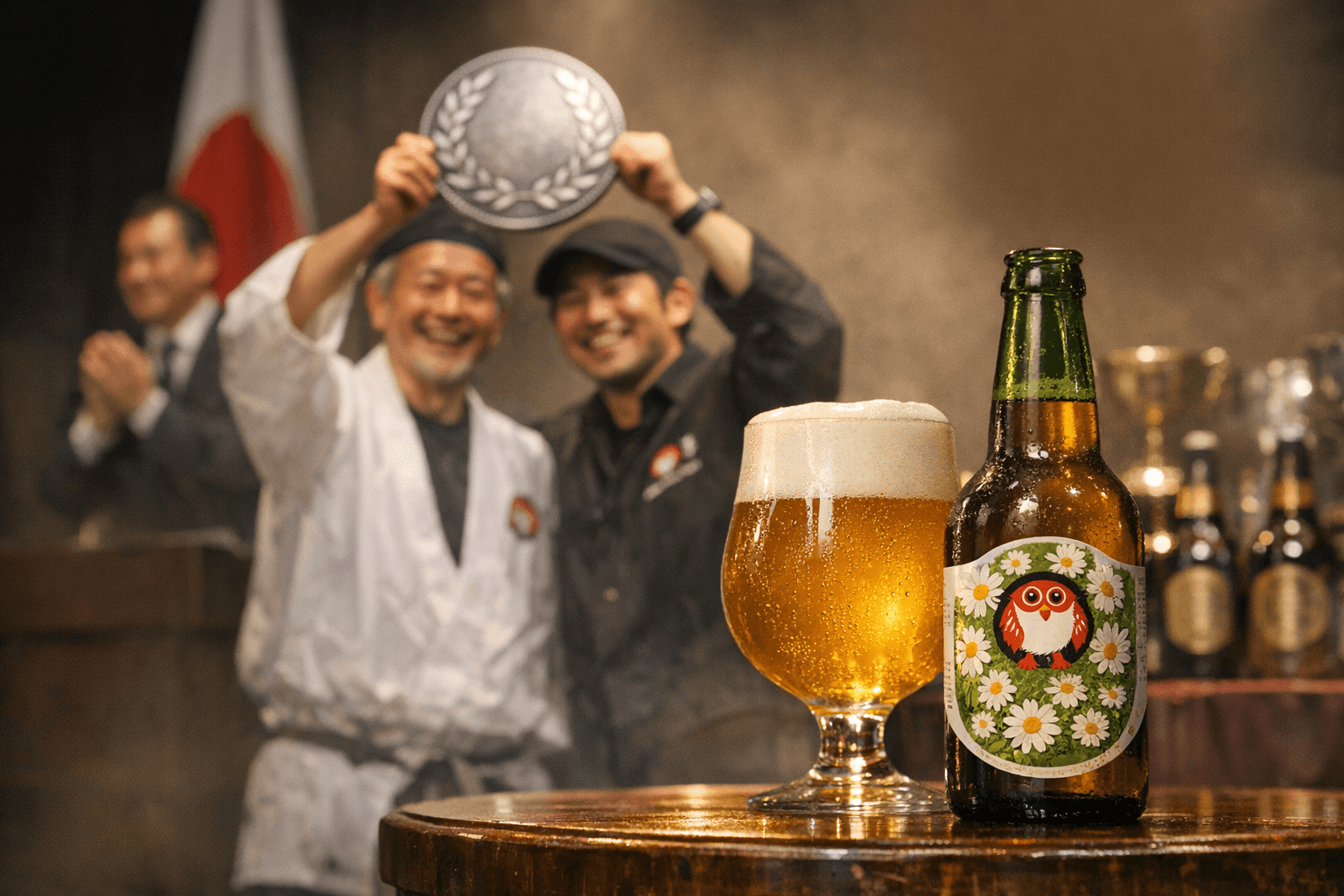
A silver medal at the Japan Great Beer Awards does not care who designed the label. That is the most clarifying thing to understand about what Hitachino Nest's Daisy Ale just pulled off. GS25, the South Korean convenience store chain operated by GS Retail, had already made Daisy Ale a commercial event when it exclusively launched the beer as a collaboration between Hitachino Nest and G-Dragon's fashion brand PEACEMINUSONE. The K-pop angle was inescapable from the start. What the Japan Great Beer Awards silver medal adds, as of April 2026, is something the celebrity machine cannot manufacture: a verdict from judges who tasted blind.
The Japan Great Beer Awards is run by the Japan Craft Beer Association, and Kiuchi Brewery, the Naka City, Ibaraki Prefecture operation behind the Hitachino Nest label, has a track record in that competition. At the 2025 edition, Kiuchi took gold for Sakura Stout, silver for Nipponia, and bronze for Non-Ale, which tells you this is not a brewery that leans on famous friends to pad its trophy case. When Daisy Ale clears that same bar, it means the beer earned it on technical merit.
And technically, the beer has a clear identity. Daisy Ale is a golden ale made with herbal tea from Asteraceae flowers and honey, characterized by a soft, elegant taste, a fresh and refreshing feeling, and pronounced floral notes. Asteraceae is the botanical family that includes chamomile, echinacea, and calendula alongside the daisy itself. Using tea brewed from those flowers, rather than raw botanicals dumped into the kettle or fermenter, is a deliberate restraint move: you get aromatics without resin load, and the honey rounds the finish without pushing the ABV into melomel territory. The packaging incorporates visual design by PEACEMINUSONE, G-Dragon's brand, with the beer's concept rooted in expressing the "daisy" through taste, aroma, and visual design. The brewery pulled that off in a way that judges confirmed in the glass, not just on the can.
For anyone who wants to reverse-engineer this at home, the recipe logic is worth unpacking. The trap with floral ales is overreach: too much dried chamomile in secondary and you are drinking perfume; too much honey and you lose body as the simple sugars ferment dry. The Daisy Ale approach points toward using herbal tea as a late addition, steeped at flameout in the same way dry hops go in, to preserve volatile aromatics that would blow off in a rolling boil. A light honey addition, targeting 5 to 10 percent of fermentables, works best stirred into the fermenter rather than the kettle, giving the yeast enough character to leave a residual softness. For the base, a simple Pilsner malt backbone keeps the beer clean and lets the floral additions carry. Choose a low-ester English or American ale yeast, something that stays neutral below 68°F, so the yeast is not competing with the botanicals. The goal is restraint at every decision point: you want the glass to smell like a flower field, not a soap dish.
Kiuchi Brewery brings over 200 years of brewing history to the project, and the brewery framed Daisy Ale as a beer designed to appeal not only to craft beer enthusiasts but to a new demographic of art and music lovers. The silver at the 2026 Japan Great Beer Awards suggests that crossover ambition and technical execution do not have to be in tension. Kiuchi proved you can chase a new audience without dumbing down the beer to reach them.
This article was produced by Prism’s automated news system from verified source data, official records, and press releases, then run through automated quality and moderation checks before publishing. The system is built and supervised by the people who set the standards it runs under. Read our full AI policy.
Did this article answer your question?