Homebrewing's Golden Age Fades as Costs, Saturation, and Shifting Tastes Mount
AHA membership has dropped 35% since its peak, NYC just lost its last homebrew shop, and the craft beer revolution homebrewers built is now their fiercest competition.
The hobby that seeded an entire industry is running dry. When Charlie Papazian and Charlie Matzen co-founded the American Homebrewers Association in Boulder, Colorado on December 7, 1978, fewer than 50 commercial breweries existed in the United States. Today, nearly 10,000 do, and the sheer convenience of walking into any taproom for a rotating small-batch IPA has quietly done what no prohibition ever could: made homebrewing feel optional.
A Hobby Born from One Signature
Modern American homebrewing traces its legal existence to a single afternoon. On October 14, 1978, President Jimmy Carter signed HR 1337 into law, federally legalizing homebrewing for the first time since Prohibition. The timing matters: the 21st Amendment in 1933 had repealed Prohibition but inadvertently left home beermaking illegal, even while home winemaking was explicitly permitted. It took Senator Alan Cranston championing the amendment to HR 1337 before that inequity was corrected. When the law took effect February 1, 1979, adults could legally brew up to 100 gallons per person per year, or 200 gallons per household.
Just two months after Carter's signing, Papazian and Matzen launched the AHA and published the first issue of Zymurgy magazine in that same December 1978 window. Papazian's catchphrase, "Relax. Don't worry. Have a homebrew." became the defining ethos of an entire generation of DIY brewers, projecting an accessibility and ease that made the hobby feel welcoming rather than intimidating.
The Boom Years and What the Numbers Now Show
For decades, the model worked. Homebrewing and craft beer grew in near-perfect lockstep, each feeding the other. The AHA's membership swelled to a peak of approximately 46,000 dues-paying members around 2016 to 2018, a figure that reflected not just enthusiasts, but an entire cultural moment in American drinking. An early warning sign appeared around 2015 to 2016, when a notable dip in homebrewing activity was first observed compared to a 2012 high point. That dip coincided almost exactly with the moment the Brewers Association counted more than 4,000 commercial breweries nationwide, a correlation that, in hindsight, looks less like coincidence and more like causation.
By 2023, AHA membership had fallen to just 30,000 individuals, a roughly 35% decline in under seven years. Brulosophy's 2023 General Homebrewer Survey sharpened that picture further: the community research effort received only 1,191 responses, nearly 1,000 fewer than the prior year. A drop that steep in survey participation is not a statistical blip; it signals genuine erosion in the population of actively engaged brewers.
Shop Closures: The Most Visible Symptom
Nothing captures the contraction quite like shuttered storefronts. In October 2024, Bitter & Esters, the last homebrew supply shop in New York City, closed after 13 years in operation on Washington Avenue in Brooklyn's Prospect Heights neighborhood. Co-owners John LaPolla and Douglas Amport described the closure as no longer sustainable. At the shop's final homebrew swap, LaPolla called the event "a love letter to our customers," a phrase that carried the weight of a community saying goodbye to something it could not quite save.
Bitter & Esters was far from alone in 2024. Atlantic Brew Supply in Raleigh, North Carolina; Vermont Homebrew Supply in Winooski, Vermont; and Salt City Brew Supply in Salt Lake City, Utah all closed within the same year. Earlier, the Modern Homebrew Emporium in Cambridge, Massachusetts, a beloved institution on Mass Ave, had already shuttered after more than 30 years in business. Local homebrew supply shops (LHBS) have long functioned as community anchors, the places where new brewers get their first grain bill advice and veterans troubleshoot stuck fermentations. When they close, they take institutional knowledge and in-person community with them, losses that no online retailer fully replaces.
The Paradox at the Heart of the Decline
The deepest irony of homebrewing's decline is that the industry it built is partly responsible for killing it. The AHA historically estimated that 90% of professional brewers began as homebrewers, making kitchen-scale kettles the R&D labs of what became a national industry. But with nearly 10,000 professional breweries now operating across the country, consumers have access to an enormous variety of small-batch, locally made beer without ever touching a brew kettle. The question "why make it when you can buy something this good nearby?" has become genuinely difficult to answer for anyone who isn't already hooked on the process itself.
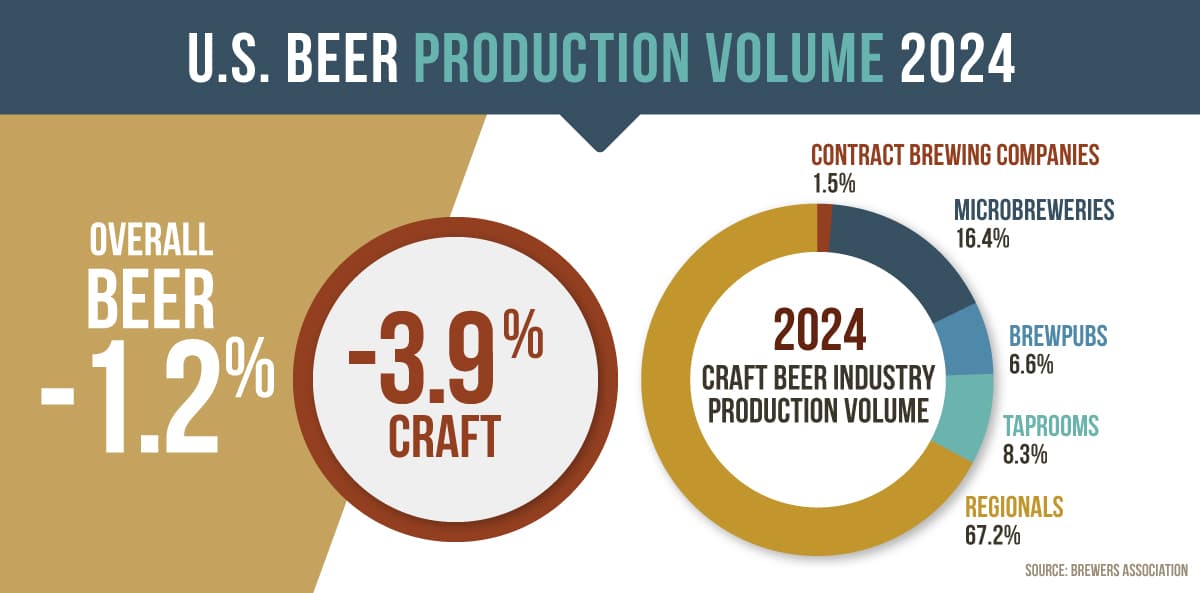
Even the professional tier is feeling the squeeze: over 385 craft breweries closed in the United States in 2023 alone, evidence that market saturation is real even at the commercial level. And USDA data showing an 18% national decrease in hop acreage signals stress running deeper into the supply chain, affecting ingredient availability and cost for homebrewers and professionals alike.
Marshall Schott, a prominent voice in the homebrewing community, told Wine Enthusiast that re-engaging younger generations is "the million-dollar question." AHA Director Gary Glass and Executive Director Julia Herz have both been central to efforts aimed at reversing the membership slide, but the structural forces at work extend well beyond what any membership drive can address.
What's Pulling Brewers Away
Several converging pressures make this more than a simple taste-shift story. Time constraints are cited consistently by community members stepping back from the hobby. Rising ingredient costs have raised the break-even calculation against simply buying craft beer. And the COVID-era bump, while real, proved temporary: the pandemic initially drove a homebrewing surge in 2020 and 2021 as people sought indoor hobbies, but many of those new practitioners did not sustain the habit once life reopened.
There is also a structural pipeline problem that compounds everything else. Aspiring beer professionals once had essentially one path into the industry: homebrew obsessively, get good, get hired. That pathway has been replaced by an ecosystem of college brewing programs and an industry that now supports roughly 100,000 full- and part-time jobs. Someone who wants to work in beer today can pursue a formal credential and walk directly into a production role without ever fermenting a batch at home. The historical conveyor belt from homebrewer to industry professional, which replenished the hobby's ranks for decades, has largely disconnected.
Where This Leaves the Craft
None of this means homebrewing is disappearing. The brewers who love the process, the control, the experimentation, the particular satisfaction of a recipe dialed in over six iterations, are not going anywhere. But the hobby is contracting toward its core practitioners and away from the broader cultural moment it once occupied. Papazian's original invitation to relax and have a homebrew assumed that the homebrew was the whole point. For a growing number of people, an excellent pint from the brewery down the street is point enough.
The 46,000-member peak may never return, but what emerges from this contraction could be a leaner, more technically sophisticated community, one defined less by the DIY boom's democratizing spirit and more by the deep craft of serious practitioners who brew because the process itself is irreplaceable. Whether that's enough to sustain the shops, the clubs, and the culture that made the hobby what it was remains the real open question of American homebrewing's next chapter.
This article was produced by Prism’s automated news system from verified source data, official records, and press releases, then run through automated quality and moderation checks before publishing. The system is built and supervised by the people who set the standards it runs under. Read our full AI policy.
Know something we missed? Have a correction or additional information?
Submit a Tip