Minnesota craft breweries climate-proof beer with local grains
Minnesota breweries are turning to local barley, oats, wheat and Kernza to blunt weather shocks, protect recipes and keep ingredient costs in check.
Grain supplies for beer production are already under pressure from extreme weather. The American Society of Brewing Chemists has tied that pressure to recipe changes, ingredient sourcing headaches and tighter margins. In Minnesota, those risks are pushing craft makers to rethink where their malt, adjuncts and grain bills come from.
Why climate risk shows up in the brewhouse first
Beer depends on a small set of climate-sensitive ingredients, and the scale is huge. Americans drink more than 6 billion gallons of beer a year, with about 80% of it produced in the U.S., so any strain on barley, hops or water lands across a very large supply chain. Climate extremes can hit the regions and ingredients tied to beer production.
The hop side of the equation is already under pressure. A Nature Communications study published on October 10, 2023 found climate-induced declines in the quality and quantity of European hops. Brewers do not get to compartmentalize climate risk by ingredient. If hops are harder to source cleanly and consistently, and grain harvests swing with heat or rain, then even a familiar flagship beer can become a moving target.
Minnesota has a lot to protect
Minnesota is not a fringe beer state. The state ranked 15th nationwide for craft breweries, and Brewers Association data cited by Conservation Minnesota put more than 271 breweries across the state in 2020.
The Minnesota Pollution Control Agency has tied warming temperatures and increased rains caused by climate change to real impacts on farms across the state, and the University of Minnesota Climate Adaptation Partnership places Minnesota’s agricultural production on the front lines of short- and long-term changes in temperature and precipitation. The USDA Climate Hubs’ January 2024 Climate Change Impacts on Minnesota Agriculture report puts crop production in the same changing weather system brewers are trying to navigate.
For breweries, that means grain planning is now business planning. Malt specs, harvest timing and price stability matter as much as brand polish when a brewery is deciding whether to lean on a regional maltster, lock in a contract or build a recipe around what can realistically be grown nearby.
Local grains are becoming a practical brewing tool
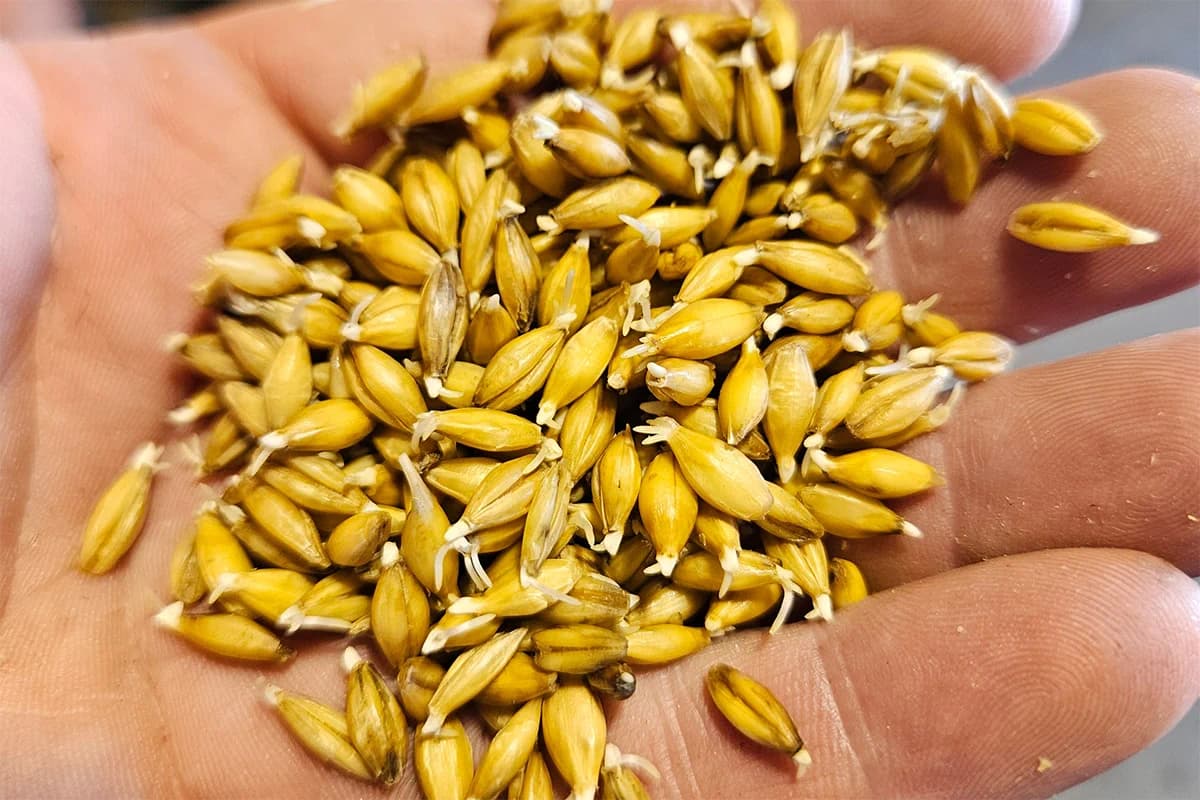
Minnesota’s response has been to test more than just one “alternative” grain. With support from a USDA SARE grant, Doubting Thomas Farms in Moorhead found in October 2020 that Conlon barley, Paul hulless oats and Red Fife wheat could all be malted with good flavor.
Those trials also point to a broader shift in how brewers think about recipe design. Barley remains foundational, but oats and wheat can help create smoother body, different foam behavior and new flavor paths, while also broadening the crop mix a brewery can rely on if a single harvest is compromised. For Minnesota breweries chasing both resilience and local identity, the value is not just that these grains are grown closer to home, but that they already have a track record of producing beer with acceptable flavor.
Kernza has become another important part of the conversation. On April 16, 2024, breweries across the U.S. were showcasing regenerative Kernza grain in beers with Patagonia Provisions. The Land Institute has tied Kernza to beer-makers adapting to climate change through climate-friendly brewing practices.
How breweries are climate-proofing operations now
The breweries moving fastest are not waiting for a single silver-bullet grain. They are diversifying suppliers, testing local and regional malts, and building recipes that can tolerate variation in crop quality from year to year. In practice, that means being ready to swap in grains such as barley, oats, wheat or Kernza when a crop or contract gets shaky, instead of assuming the same ingredient mix will always be available at the same price.
A state with hundreds of breweries, active growers and a strong research network can turn climate adaptation into a shared project instead of an isolated experiment. The work around Doubting Thomas Farms in Moorhead moves beyond theory, while The Land Institute’s brewing-focused climate work and the USDA Climate Hubs report give brewers and growers a clearer picture of the risks they are planning around.
This article was produced by Prism’s automated news system from verified source data, official records, and press releases, then run through automated quality and moderation checks before publishing. The system is built and supervised by the people who set the standards it runs under. Read our full AI policy.
Did this article answer your question?