Northern Brewer Maelstrom stir plate targets bigger, healthier yeast starters
Northern Brewer’s Maelstrom is a serious starter tool, not a gimmick. If you brew big beers, lagers, or step up yeast often, this is the point where a stir plate starts paying for itself.
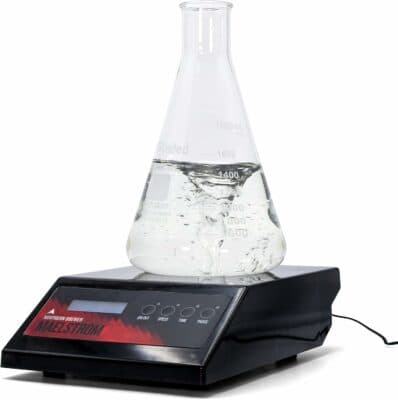
**The real question is not whether a stir plate looks cool. It is whether your yeast starters have become part of your brewing routine enough to justify a $174.99 tool built around them.** That is where Northern Brewer’s Maelstrom lands: a programmable, industrial-grade magnetic stir plate made specifically for starter wort, with five fixed speeds, a 48-hour timer, and rare-earth magnets meant to keep the vortex steady instead of letting the flask wander. Northern Brewer says it is designed for everything from 1,000 mL Erlenmeyer flasks to 5-gallon carboys, and that wide range tells you exactly who this is for: brewers who are no longer winging it with a jar and a shake.
Why a stir plate changes the starter game
A yeast starter is one of the most reliable upgrades you can make to fermentation health, but only if it keeps moving. Northern Brewer says starters are one of the easiest ways to significantly improve homebrew quality because they activate yeast and multiply cell count. The Brewers Association puts the same idea in more technical terms, describing propagation as growing yeast cells to a sufficient count for successful fermentation.
That distinction matters. A starter is not just about waking yeast up. It is about building enough cells to handle the wort you are about to put in front of them, especially when you are brewing higher-gravity beer or pitching into a lager that needs a strong, clean ferment. If you have ever opened a carboy and wondered whether the yeast you pitched was simply outmatched, you already know why starter management stops being optional.
Where the Maelstrom fits in the workflow
The Maelstrom is aimed at brewers who want repeatability, not just motion. Homebrew Finds describes it as a heavy-duty plate with five-speed control and a programmable 48-hour timer, which means you can match the starter to the job instead of improvising with a generic lab plate. That matters in the real world because not every starter needs the same treatment. A small step-up for a modest batch does not need the same agitation you would want for a bigger lager pitch or a larger yeast build.
Northern Brewer also says the unit now includes a stir bar removal tool, a small detail that sounds minor until you have fished for a bar in a flask one too many times. That is the kind of practical touch that tells you this product was built by people who understand the annoyance factor of actual yeast work, not just the product photo.
Who gets the most from a stir plate
This is the part where the buying decision gets honest. If you brew once in a while, use fresh yeast, and mostly make average-strength ales, shake-and-pitch can still be enough. You can get good beer without turning your brewing table into a lab bench. The extra gear only starts earning its place when starters become a habit instead of a rescue plan.
- routinely step up yeast from one starter to the next
- brew lagers that need a cleaner, more robust pitch
- make higher-gravity beers where underpitching becomes a real risk
- want more consistency from batch to batch
- prefer to build yeast health before fermentation instead of hoping it sorts itself out
A stir plate starts making sense when you:
That consistency angle is worth stressing. Brülosophy says stir plates keep yeast in suspension and that the vortex helps pull in additional oxygen, and it also notes that pitching a starter has significantly increased the consistency of its brewing. That is the payoff in plain English: fewer variables, healthier yeast, and a better chance that fermentation starts hard and finishes clean.
Why the Maelstrom feels like a long-term buy
Homebrew Finds frames stir plates as a “buy once, use forever” kind of upgrade for regular starter makers, and that is the right way to think about the Maelstrom. This is not a throwaway accessory you replace next year. It is a dedicated process tool, the same way a good mill or a reliable temperature controller becomes part of the core setup once you stop brewing casually.
The price is what forces the decision. At $174.99, the Maelstrom is not trying to win the value race. It is trying to justify itself through build quality, capacity, and control. The five fixed speeds and 48-hour timer make it more purpose-built than the typical bargain plate, and the claimed range from 1,000 mL flasks up to 5-gallon carboys puts it in a different class from the small starters-only gear most people begin with.
How it compares to cheaper stir plates
Homebrew Finds also pointed to a MoreBeer magnetic stir plate marketed for a 5,000 mL flask at $39.59. That price gap tells the whole story. If you just want to move a starter and do not care much about automation, a cheaper plate can absolutely get you there.
The Maelstrom’s edge is not that it is the only plate that spins wort. It is that it is designed to do it with more control, over a wider vessel range, and with less babysitting. If your starter routine is already serious enough that you are thinking about speed control, timer length, and vessel size, the cheaper option starts looking less like a bargain and more like a compromise.
When shake-and-pitch is still enough
There is no reason to make yeast management fancier than your brewing demands. If you are brewing smaller batches, buying fresh yeast, and pitching into beer that is not especially demanding, a simple shake-and-pitch approach can still be perfectly sensible. That path keeps your setup lean and your brewing process fast.
The Maelstrom becomes worthwhile when you care about cell growth as much as convenience. Once you are building starters often enough that oxygen transfer, suspension, and timing affect your results, the stir plate stops being an indulgence and becomes part of the recipe. That is especially true if you are chasing healthier fermentation in lagers or bigger beers, where a weak pitch can slow everything down before it ever gets going.
The bottom line
Northern Brewer’s Maelstrom is not the stir plate you buy because you think you might make a starter someday. It is the one you buy when starters are already part of how you brew and you want the process to be more repeatable, more hands-off, and more effective. At $174.99, with five speeds, a 48-hour timer, broad vessel compatibility, and a stir bar removal tool included, it is clearly built for brewers who have outgrown improvisation.
If you are still making the occasional small ale with fresh yeast, you can keep shaking and pitching. If you are pushing gravity, brewing lagers, or stepping up yeast often, this is the kind of upgrade that pays you back in healthier fermentations and fewer crossed fingers.
This article was produced by Prism’s automated news system from verified source data, official records, and press releases, then run through automated quality and moderation checks before publishing. The system is built and supervised by the people who set the standards it runs under. Read our full AI policy.
Did this article answer your question?