Summer beer season shifts toward fruit lagers and juicy IPAs
Paradise Peach, Summer Zombie, and Lawson’s Finest Lager show summer beer shelves moving toward fruit, juicy hops, and lighter crushability instead of one dominant seasonal style.
Urban South Brewery’s Paradise Peach, Lone Tree Brewing’s Summer Zombie, and Lawson’s Finest Lager all point in the same direction: summer beer is being won by range, not by one seasonal template. Instead of betting everything on a single patio style, breweries are spreading across fruit lagers, tropical IPAs, and lighter lagers that still feel intentional on the shelf.
Fruit lagers are still one of the cleanest warm-weather plays
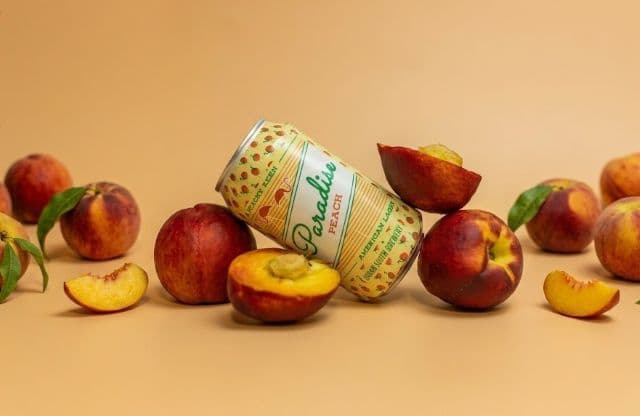
Paradise Peach is the best example of why this lane keeps working. At 4.4 percent ABV and 10 IBU, it keeps the alcohol low, the bitterness soft, and the finish crisp, which is exactly what lets the peach character read as refreshing instead of sticky. The beer is slated for Urban South taprooms and select stores during June 2026, which tells you it is being positioned as a seasonal refresher, not a one-off gimmick.
That balance matters because fruit can go wrong fast in a lager. Push too hard on sweetness and the beer turns into candy; bury the fruit under too much bitterness and you lose the easy-drinking point entirely. Paradise Peach works, on paper at least, because it stays anchored to a familiar American lager frame and lets the fruit brighten the edges rather than dominate the glass.
For brewers, that is the lesson worth stealing. If you want fruit to sell in warm weather, the base beer has to do real work. Clean fermentation, restrained bitterness, and a dry enough finish are what make a peach lager feel like a beer people can order twice, not just one time for the novelty.
Juicy IPA still has shelf power when it arrives with a hook
Lone Tree Brewing’s summer release takes the opposite route and leans all the way into hop intensity. The beer is being released as the Summer Solstice Imperial Juicy IPA, returning on June 20 at 10 percent ABV, with tropical fruit notes and lime brightness giving it a louder, more saturated profile than the lager side of the market. It is sold on tap and in 6-packs to-go for a limited time, which makes it feel less like an everyday fridge filler and more like a planned summer drop.
That matters because breweries are no longer asking juicy IPA to carry itself on flavor alone. Lone Tree wrapped the beer in limited-run Hop Zombie glassware, tied the theme to Point Break, and promised the first ten people in line a free glass. That is not just merch, it is a traffic strategy, and it shows how much taproom energy now comes from scarcity, one-day timing, and a little bit of collectible theater.
From a beer perspective, the name tells the story too. Hop Zombie is not pretending to be subtle, and the 10 percent ABV backs that up. In a crowded warm-weather market, a beer like this earns attention by being unmistakable: big, tropical, lime-bright, and available only long enough to create a small panic when it is gone.
Lawson’s Finest Lager shows how a hop brand can still sell restraint
Lawson’s Finest Liquids brings another piece of the summer puzzle with Lawson’s Finest Lager, a 5 percent limited release from a brewery that built its reputation on hop-heavy Sunshine family IPAs. That contrast is the point. When a brewery with that kind of identity chooses to go lighter and cleaner, it signals confidence that drinkers will follow the brand, not just the hop bill.
The company’s history makes that move easier to understand. Sean Lawson and Karen Lawson founded Lawson’s in Warren, Vermont, in 2008 as a 1-barrel brewhouse and an officially licensed wholesale distributor. The first local keg sale was Sugarhouse IPA to Mad River Glen, and the brewery later grew into a 7-barrel system. By 2014, Lawson’s was brewing Sip of Sunshine and other beers at Two Roads Brewing in Connecticut through an alternating proprietorship arrangement, and a taproom and retail store opened in Waitsfield in October 2018.
That path is useful homebrewing context because it shows how a brand can grow from tiny-scale experimentation into a regional presence without abandoning its identity. The scaling story also explains why a lighter lager matters here. Once a brewery has proven it can make hop demand travel, a restrained beer becomes more than a side project. It becomes proof that the brewery can make something clean, balanced, and easy to drink without hiding behind bitterness or haze.
What this summer mix says about the market
The broader signal is that summer 2026 is not being defined by one universal seasonal beer. Breweries are chasing the same warm-weather drinker from different angles: Urban South with a peach lager that stays crisp, Lone Tree with a 10 percent juicy IPA built for spectacle, and Lawson’s with a lighter lager that widens the portfolio without losing the brand’s voice.
That is a healthy sign for the category. It means breweries are thinking less about a single summer flagship and more about shelf breadth, taproom energy, and the kind of beer that fits a specific drinking moment. The strongest releases this season are not the loudest or the lightest by default, they are the ones that know exactly what role they are meant to play when the weather turns hot and the fridge starts getting crowded.
This article was produced by Prism’s automated news system from verified source data, official records, and press releases, then run through automated quality and moderation checks before publishing. The system is built and supervised by the people who set the standards it runs under. Read our full AI policy.
Know something we missed? Have a correction or additional information?
Submit a Tip