Thornbridge keeps Burton Union brewing history alive in Derbyshire
Thornbridge’s Burton Union is not a museum piece. In Bakewell, the old set still ferments beer, proving heritage only matters when it keeps working.
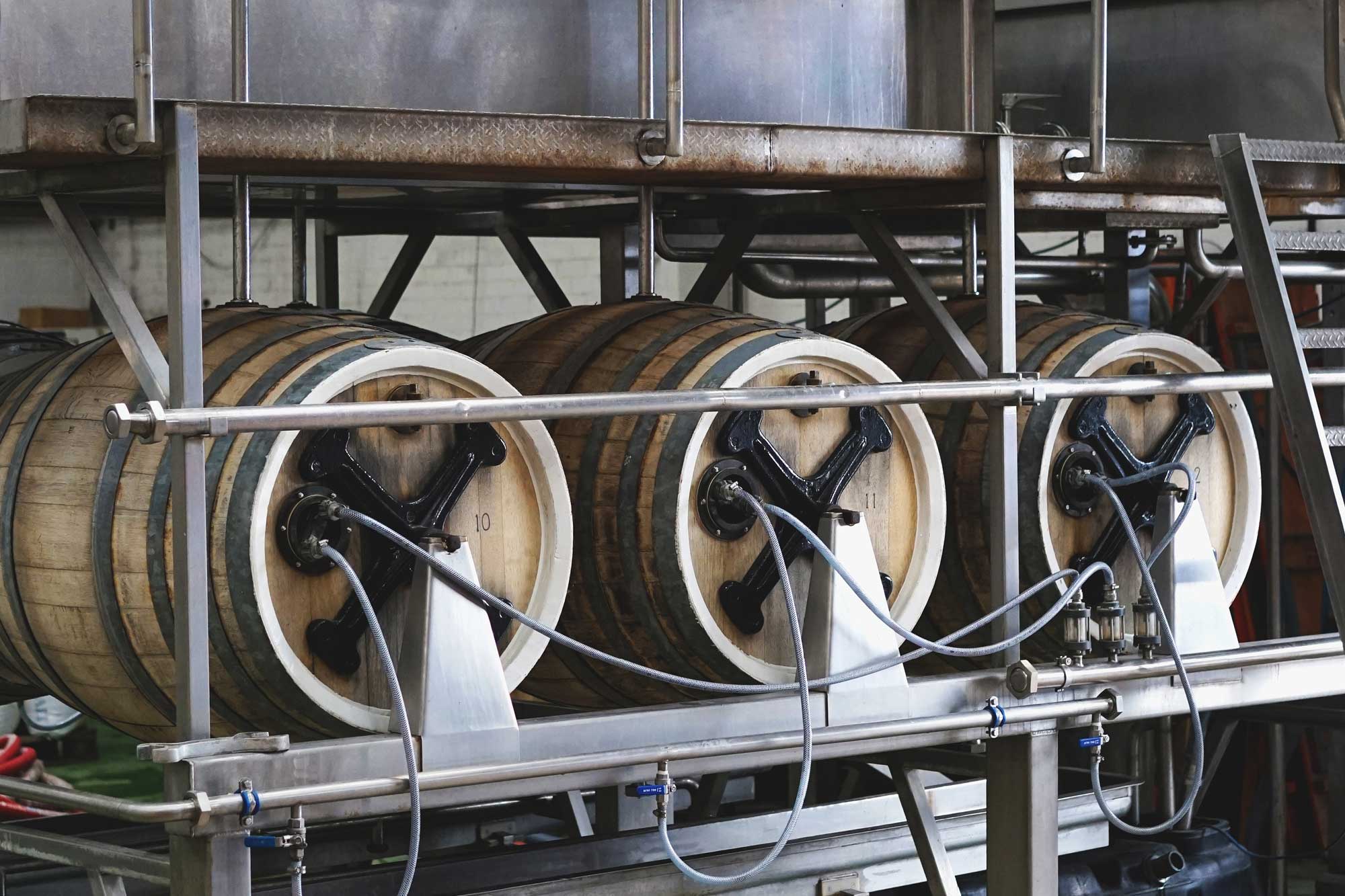
Thornbridge’s Burton Union in Bakewell is a reminder that brewing heritage only survives when it still has a job to do. The brewery’s modern Riverside facility in Derbyshire sits beside a smaller production area where its original 15-hectoliter brewhouse remains in operation, but the old Union set is what turns the place from a history lesson into a working brewery story. Standing about 12 feet tall, it is not preserved as a relic. It is preserved as process.
That distinction matters because Thornbridge did not build its reputation by looking backward. It built it on Jaipur, the 5.9 percent American-style IPA first brewed in mid-2005, and on a growth story that started in 2005 at Thornbridge Hall with founders Jim Harrison and Simon Webster. As demand for Jaipur grew, Thornbridge moved to Riverside Brewery in Bakewell in 2009, and the brewery says it has since won more than 350 domestic and international awards, including over 100 for Jaipur. The Burton Union now sits inside that modern success story, not outside it.

How Thornbridge became the kind of brewery that could save it
Thornbridge’s scale and ambition are part of why this rescue matters. A brewery that began with a second-hand 10-barrel kit and two young brewers eventually became a nationally recognized name, and that kind of growth usually pushes old systems out of the brewhouse. Instead, Thornbridge made room for one. The result is a rare setup in which a contemporary brewery, known for hop-forward beer and broad award recognition, also keeps a piece of English brewing infrastructure alive by using it for actual production.
That active use is the key to the story. Brewing heritage can be polished up and parked in a corner, but Thornbridge’s Burton Union is still being asked to make beer, which means it has to justify the time, skill, and maintenance it demands. In practical terms, that gives the brewery something that a stainless tank cannot: a living link between identity and method. In brand terms, it gives Thornbridge a story that is not borrowed from the past but earned in the present.
What the Burton Union actually does
The Burton Union is not just ornate wooden plumbing. It is a cleansing fermentation method that removes yeast as fermentation finishes and collects it for reuse, a design that suits Burton’s traditional powdery yeast strains because the sedimentation distance is only inches. A set comprises banks of 7-hectoliter unlined wooden casks, and the method’s logic is as practical as it is historical. It manages yeast, shape-shifts around traditional strains, and leaves behind a flavor identity that brewers still find worth the work.
The historical process explains why the Union still fascinates brewers. At Marston’s, fermentation was pitched at 14°C, climbed to around 19°C after about 36 hours, and then transferred into the Burton set. That is a lot of process choreography for a system that could have been retired as soon as modern vessels made life easier. But ease is not always the same thing as value, especially when the goal is character rather than efficiency.
For beer lovers, the important word here is suppleness. Thornbridge says the Union contributes a particular suppleness to the beer, which is why the system matters beyond its silhouette and age. It is not there simply because it looks beautiful in photos or makes a great story for the taproom. It is there because it still changes the beer.
From Marston’s to Bakewell
The revival in Bakewell became possible only because another chapter was closing in Burton-on-Trent. In January 2024, Carlsberg Marston’s Brewing Company announced that it was retiring the four active Burton Union sets at Marston’s Brewery. By May, CMBC and Thornbridge said they had partnered to establish a Burton Union system at Thornbridge’s brewery using Union sets from Marston’s, with CMBC gifting the barrels and providing maintenance and set-up guidance.
That handoff is what kept the method from slipping into the category of lost technology. Thornbridge says it rescued and restored a section of the historic Burton Union system in 2024, and that move made it the only brewery in the world still operating one. Garrett Oliver of Brooklyn Brewery was publicly credited with helping connect Thornbridge to the rescued set, and Rob Lovatt made the brewery’s intent clear: this was about continuing to brew beers in a unique method rather than consigning the process to history.
The context matters because Marston’s had long been regarded as the last brewery in England still using the system, with Pedigree and Owd Roger among the beers associated with it before the 2024 shutdown. Once those sets were retired, the question was whether the Burton Union would become an exhibit or find another home. Thornbridge answered by making space for it in Bakewell.
What Thornbridge gains, and what it costs
The upside is obvious to anyone who cares about process-driven brewing. Thornbridge gains a distinct fermentation character, a piece of brewing identity that no modern marketing department could invent from scratch, and a concrete link to English brewing history that is more persuasive because it is still in motion. The brewery also gains material for special-edition cask beers, collaborations, and future beer development, which means the Union is not just a heritage project but a working tool for new beer.
The cost is equally real. A Burton Union system asks for maintenance, expertise, and patience in a world built around speed and standardization. It is harder to operate than a simpler fermentation setup, and the fact that Thornbridge and CMBC had to coordinate expertise, barrels, and restoration tells you everything about the scale of the commitment. Heritage, in this case, is not sentimental. It is labor.
That is why Thornbridge’s Union matters beyond Derbyshire. In a brewery landscape where old methods are often preserved by description alone, Bakewell shows a different model: history survives because someone keeps using it, keeps fixing it, and keeps brewing with it. The Union stands about 12 feet tall, but its real significance is not its height. It is that it still has a job, and Thornbridge has decided that job is worth doing.
This article was produced by Prism’s automated news system from verified source data, official records, and press releases, then run through automated quality and moderation checks before publishing. The system is built and supervised by the people who set the standards it runs under. Read our full AI policy.
Did this article answer your question?