Urban South Brewery Marks 10 Years With Celebrations, Rereleases, and Expansion Plans
New Orleans' Urban South hits 10 with $1M in donated beer, a Juvenile collab, and a Pilsner-malt lager you can clone at OG 1.044.
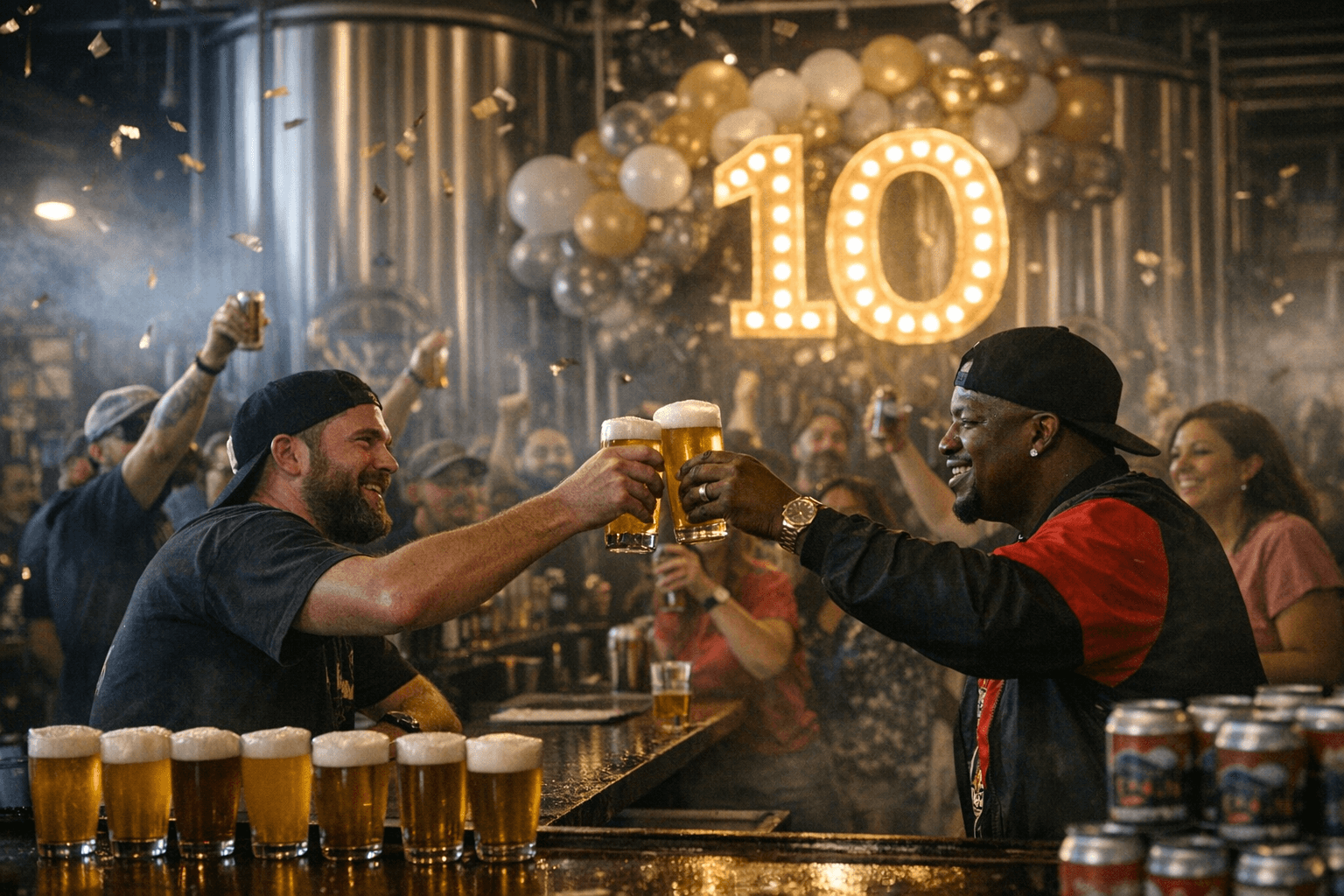
Ten years in New Orleans craft beer is a lifetime, and Urban South Brewery kicked off its anniversary month the way it built its reputation: a block-party weekend at the taproom on March 27 and 28 that pulled crowds for live music and poured a first look at the limited re-releases slated throughout 2026.
The numbers behind the decade frame the scale of what co-founders Jacob Landry and Kyle Huling assembled from a single taproom in 2016. Fifty local jobs created. More than $1 million in donated beer, at retail value, directed toward community organizations, nonprofits, and regional festivals. Multi-state distribution that turned a New Orleans neighborhood spot into a brand with genuine regional reach.
Landry put the philosophy plainly: "We've always believed that if we grow, our community should grow with us. Expanding into new markets is important, but doing it in a way that stays authentic to who we are matters just as much." That authenticity has concrete expressions. Urban South's annual Tailgate Fest fundraiser sent proceeds to Louisiana Children's Hospital in 2024 and Manning Family Children's in 2025. The brewery also partnered with New Orleans hip-hop icon Juvenile to launch Juvie Juice, a hard iced tea built around the artist's preferred Arnold Palmer combination, the kind of culture-forward collaboration that no amount of marketing spend manufactures cleanly.
At the center of the portfolio sits Paradise Park, the American all-malt lager that anchored the brewery's retail push. Named after a trailer park in Landry's hometown, it runs at 4.5% ABV and 10 IBUs, brewed with Pilsner malt and Huell Melon hops, a German variety that delivers subtle tropical and stone-fruit character without punching the bitterness past sessionable. The all-malt designation matters: this isn't a corn- or rice-adjunct macro lager wearing a craft label.
For homebrewers eyeing a clone, Paradise Park is one of the more approachable targets in the style. Target an original gravity of 1.044 to 1.046 and a final gravity around 1.008 to 1.010, keeping Huell Melon additions to a single late charge at 10 minutes to preserve the aroma without creeping the IBU past 12. If Huell Melon is unavailable, Hallertau Blanc carries a similar tropical backbone; Mandarina Bavaria drifts more citrus but stays in character. For fermentation, Fermentis W-34/70 or Wyeast 2124 both perform cleanly here: pitch at 48 to 50°F, hold for two weeks, then lager at 34°F for four weeks before packaging. Notably, earlier descriptions of the recipe cited 2-row malt where current specs read Pilsner malt. The shift is small but deliberate; Pilsner base lightens body and sharpens crispness, a sensible adjustment for a beer engineered to drink well at 90 degrees on the Gulf Coast.
Beyond Paradise Park, Urban South has been building out hemp-compliant seltzers alongside its seasonal lineup as consumer demand diversifies. The 2026 re-releases will move through the full distribution footprint, not just the New Orleans taproom, meaning markets already carrying the brand can expect anniversary programming on shelves.
Huling summed up the road ahead: "The first decade was about building a strong foundation. The next decade is about scaling thoughtfully while staying true to our roots." For a brewery that turned a trailer-park lager into a multi-state cornerstone while writing $1 million in donated beer into the ledger, that's not positioning language; it's a track record.
This article was produced by Prism’s automated news system from verified source data, official records, and press releases, then run through automated quality and moderation checks before publishing. The system is built and supervised by the people who set the standards it runs under. Read our full AI policy.
Did this article answer your question?