Why dry hops can cause bottles to keep overcarbonating
Dry hops can keep fermenting after packaging, pushing bottles past target CO2 and into gushers. Stable gravity and dry-hop timing decide whether bottle conditioning is safe.
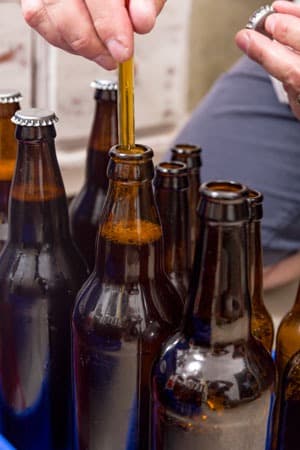
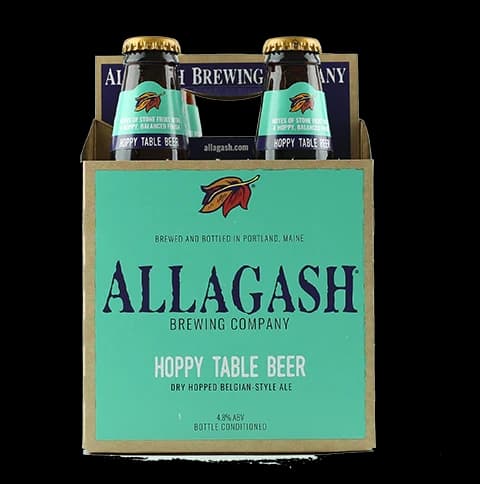
Allagash Brewing Company in Portland, Maine, learned the hard way that a beer can look finished and still keep changing in the package. Its Hoppy Table Beer test batch was aimed at 2.6 volumes of CO2, then climbed to 4.5 volumes, a jump that sent the first 60-barrel batch to the dump and made hop creep a packaging problem, not a lab curiosity.
What dry hops are still doing after primary fermentation
Hop creep starts when dry hops bring more than aroma into the tank. Hop-driven amylolytic activity, including beta-amylase-like behavior, can break long-chain dextrins into fermentable sugars after primary fermentation appears complete. Once yeast is still present, those new sugars can ferment in the bottle and keep pushing pressure upward long after priming sugar has been added.
The Brewers Association’s 2020 technical brief identified three conditions: unfermentable real extract in the beer before dry hopping, hop amylolytic enzymes, and yeast present to ferment the new sugars. When all three line up, a beer can move from a normal target in the 2.5 to 2.7 volumes of CO2 range into gushers or overpressurized bottles. The same slow secondary fermentation can also raise alcohol slightly and create diacetyl, so the problem is not just extra foam.
A 2023 review on Humulus lupulus and microbes treated hop creep as something that can be driven by biotic causes rather than by packaging error alone.
Why modern IPA made the problem louder
Hop creep is not new, but today’s beer styles make it much easier to trigger. Brewing references from 1893, including Horace T. Brown and Morris in The Brewers’ Guardian, already noted maltase activity in dry-hopped cask ales, and a 1941 paper by Janicki, Kotasthane, Parker and Walker examined the diastatic activity of hops and maltase in hops. The mechanism was there long before hazy IPA turned it into a packaging headache.
What changed in the mid-2010s was scale. The rise of highly dry-hopped hazy beers, New England IPA, and other aromatic styles meant far more beer was sitting under heavy late-hop loads, and by 2017 the issue was already back in the center of brewing science conversations alongside work from Thomas H. Shellhammer’s lab at Oregon State University, Allagash, and Bell’s. By 2022, hop creep was a routine production concern, not a weird edge case.
The beer may taste stable in the fermenter, pass a quick gravity check, and still keep fermenting once the bottle is capped and the priming sugar is in play.
When bottle conditioning still makes sense
Bottle conditioning is still viable, but only when the beer has actually stopped moving. If your gravity has held steady over multiple days after dry hopping, if you have given the hop-derived fermentation time to finish, and if you are calculating priming sugar from the beer’s current real extract rather than an earlier reading, bottle conditioning can work the way it always has.
The decision gets more cautious as the beer gets more hop-forward. A modestly dry-hopped pale ale is a different packaging bet from a saturated hazy IPA loaded with late hops, especially when you are chasing a tight carbonation target and there is still yeast in suspension. If the beer is already dropping gravity after the dry hop, the safest assumption is that more fermentable sugar is still being created.
- Proceed with bottles when gravity is stable over several days after the dry hop.
- Wait if the beer still shows signs of hop-driven fermentation.
- Recalculate priming sugar from the post-hop gravity, not the pre-hop number.
- Treat a heavily dry-hopped hazy or juicy recipe as higher risk than a lightly hopped beer.
A practical rule of thumb is simple:
How to reduce the risk without killing aroma
Cold crashing helps, but it is not a magic off switch. Dropping the temperature can slow yeast and make the beer easier to package, yet it does not guarantee that hop enzymes are finished working, so it reduces risk rather than erases it. That is why a cold-crashed IPA can still overcarbonate if it goes into bottles before the dry-hop fermentation has fully settled.
Keg conditioning gives you more room to maneuver than bottle conditioning because you can vent, adjust, and check the pressure before anything is sealed under crown caps. Bottles lock in whatever chemistry is still happening.
The most useful troubleshooting step is also the least glamorous one: wait for gravity stability, then package. Hop creep can mimic poor sanitation, weak attenuation, or a yeast problem, but the Allagash Hoppy Table Beer batch showed how clean the beer can look right before carbonation runs away from the target.
This article was produced by Prism’s automated news system from verified source data, official records, and press releases, then run through automated quality and moderation checks before publishing. The system is built and supervised by the people who set the standards it runs under. Read our full AI policy.
Did this article answer your question?