AKC guide says Scottish Terriers need exercise, grooming, firm training
Small in size, but not in temperament: the Scottie asks for daily movement, early socialization, hand stripping, and a handler who welcomes stubborn charm.
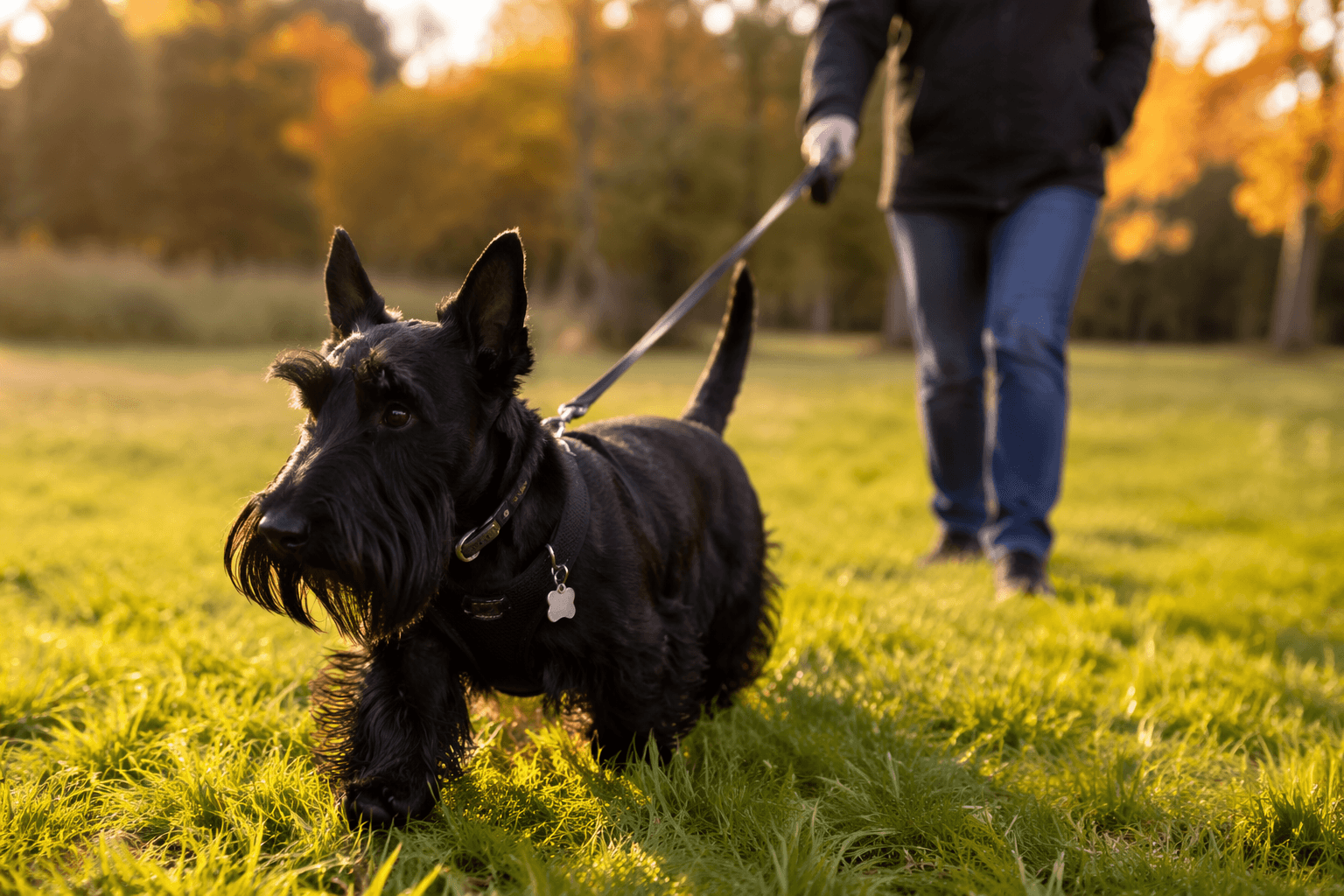
A Scottish Terrier may fit neatly in your lap, but that is where the easy part ends. The breed’s public image has long been polished, from Franklin D. Roosevelt’s famous Fala to the modern AKC profile, yet the dog underneath is still a hard-headed little hunter with a big sense of self. If you want a small companion who is low-drama, this is not that dog. If you want a compact terrier with history, nerve, and real staying power, the Scottie has all of it.
What a Scottie actually is
The American Kennel Club describes the Scottish Terrier as about 10 inches tall, with males typically weighing 18 to 22 pounds and females 18 to 21 pounds. The average life expectancy is about 12 years, which puts the breed squarely in the small-dog category without making it fragile or toy-like. VCA Animal Hospitals adds the traits that matter when you live with one: spirited, clever, curious, mischievous, independent, stubborn, and sensitive.
That mix explains why the Scottie can feel both deeply bonded and slightly self-directed at the same time. AKC says the breed is fiercely independent and full of energy, affectionate with family, but often aloof with strangers. The same profile warns that, if not properly socialized, Scotties may be aggressive toward other dogs and are not a natural fit for homes expecting easy dog park manners or instant child tolerance.
Exercise: compact body, real drive
A Scottie is not built for marathon miles, but that does not mean it can get by on a few token steps around the block. VCA says the breed’s exercise needs can be met with a long walk or short run plus a vigorous game, while AKC specifically points to brisk walks, fetch, and tug-of-war as strong outlets. The important detail is not just movement, but variety, because a Scottie’s brain wants a job as much as its legs want to move.
That makes the breed a good match for a household that likes to do things every day, not just on weekends. A bored Scottie is not a sleepy Scottie, it is a terrier with ideas, and those ideas tend to involve noise, persistence, and a suspicious amount of confidence. The right routine gives the dog enough physical work and enough mental friction to stay content.
Training: short, creative, and firm
This is not a breed for someone who wants a dog to learn through repetition alone. AKC says Scotties are not the easiest choice for first-time owners, and VCA notes that reward-based training using food or games works best. Short sessions matter here, too, with AKC recommending training blocks of about 15 minutes or less.
That advice fits the Scottie’s temperament perfectly. The breed is smart enough to get bored, stubborn enough to resist boredom-breaking, and sensitive enough to respond well when the work feels fair. The sweet spot is creative, varied training that makes the dog think without overwhelming it, paired with clear leadership that never turns into a shouting match.
- Keep sessions short and upbeat.
- Use food or play as the reward.
- Change the game often enough to hold attention.
- Socialize early so strangers and other dogs do not become a problem later.
- Expect independent opinions, then stay consistent anyway.
A practical Scottie training plan looks like this:
That last point matters most. The Scottie is not trying to be difficult just for sport, but it does have a terrier brain that wants to test the boundaries. Owners who like a dog with a little debate built in will understand the appeal quickly.
Grooming: the coat has a job, too
The Scottie’s compact size can fool people into thinking the grooming will be minimal. In reality, the breed’s distinctive double coat is part of the commitment, not an afterthought. AKC says hand stripping is the ideal grooming method and should be introduced early in puppyhood, while VCA says the coat should be combed once or twice weekly and shaped by plucking dead hairs about every three months.
That is a very different maintenance profile from the average short-coated pet. Weekly brushing and combing help, but they do not replace the more specialized care that keeps the coat healthy and looking right. For a Scottie owner, grooming is not cosmetic vanity, it is part of the breed’s baseline care.
A working dog with a public life
The Scottie’s sharp edges make more sense when you remember what the breed was for. VCA says Scottish Terriers were originally used by Highland farmers to catch vermin, which is a useful reminder that this little dog comes from a working background, not a decorative one. The breed’s history was muddled for years because “Scotch terrier” was used broadly for several terriers from Scotland, and VCA says the dogs were divided in 1881 before later subdivision produced the modern Scottish Terrier.
The breed crossed into America in documented form in 1883, and later found a very public boost through Fala, Roosevelt’s Scottish Terrier. The White House Historical Association says Fala was a gift from Margaret “Daisy” Suckley and went to the White House on November 10, 1940, then traveled regularly with Franklin D. Roosevelt and even appeared in wartime publicity, including a 1942 scrap-rubber campaign. That kind of visibility helped turn the Scottie into more than a farm vermin-catcher or a dog-show silhouette.
The household that fits a Scottie
This is the part that clears up the small-dog misconception. A Scottish Terrier suits a household that wants daily activity, real training time, regular grooming, and a tolerance for a dog with opinions. It is a strong match for people who like terrier honesty, meaning a dog that will be affectionate without becoming clingy and animated without becoming soft.
The Scottie is lively, alert, and substantial for its size, which is exactly why it can work so well for the right person and so poorly for the wrong one. Fala may have looked polished at the White House, but the breed underneath was still a terrier with vermin-hunting roots, a stubborn streak, and energy that needs direction. That is the real Scottie: small in frame, serious in spirit, and happiest with a person who understands that compact does not mean easy.
This article was produced by Prism’s automated news system from verified source data, official records, and press releases, then run through automated quality and moderation checks before publishing. The system is built and supervised by the people who set the standards it runs under. Read our full AI policy.
Know something we missed? Have a correction or additional information?
Submit a Tip